What Achievements Define CM Patel’s Three Years in Governance?
Synopsis
As Gujarat Chief Minister Bhupendra Patel completes three years in office, his focus on children's healthcare has transformed public health delivery in the state. Discover how innovative healthcare programs have successfully reached vulnerable communities, ensuring that every child receives the care they need.
Key Takeaways
Healthcare programs have reached the most remote areas of Gujarat.
Over 4.5 crore children have benefited from the RBSK initiative.
Significant surgeries have included cardiac, kidney, and cancer treatments.
28 District Early Intervention Centres are operational to support children's health.
Focus on early diagnosis through the 4D framework enhances health outcomes.
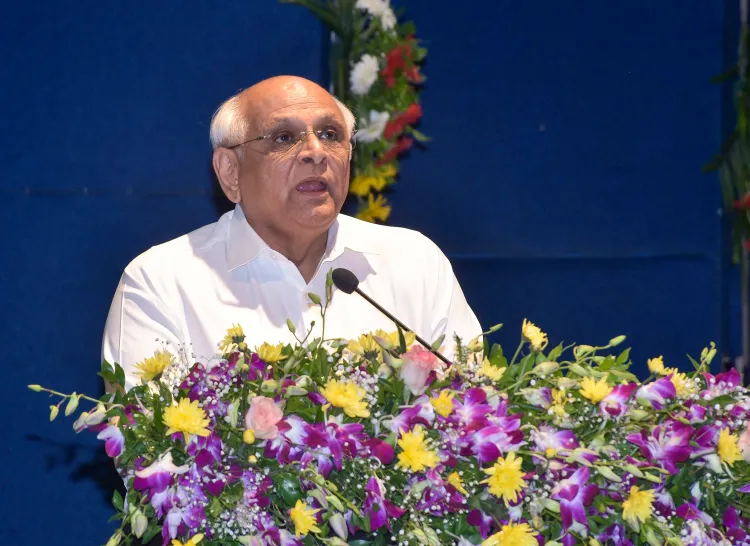
Gandhinagar, Dec 15 (NationPress) As Gujarat Chief Minister Bhupendra Patel marks three years in his role, the state's commitment to public health—particularly for children—has become a cornerstone of his administration.
Under Prime Minister Narendra Modi's guidance and the leadership of the state health department, healthcare initiatives have effectively reached the most isolated and vulnerable communities, turning policy goals into tangible results.
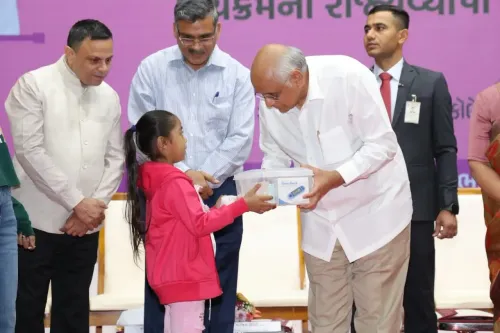
A prime illustration of this is the School Health–Rashtriya Bal Swasthya Karyakram (RBSK), which has benefited over 4.5 crore children in Gujarat during the past three years.
On average, 1.89 crore children receive health screenings each year, with immediate treatment provided whenever feasible. Those needing advanced care are referred to PHCs, CHCs, sub-district and district hospitals, medical colleges, and super-specialty hospitals—all at no cost.
The program's scale and effectiveness are evident: more than 45,000 children have received cardiac surgeries and treatments, alongside 4,149 kidney treatments, 2,336 clubfoot corrections, 1,408 cleft lip and palate surgeries, and care for 692 cancer cases.
Additionally, 751 cochlear implant surgeries, 42 kidney transplants, 23 bone marrow transplants, and 12 liver transplants were performed during this timeframe, marking significant progress in addressing life-threatening and chronic childhood conditions.
To enhance early diagnosis and timely intervention, 28 District Early Intervention Centres (DIEC) are operational across Gujarat, supplemented by 992 RBSK mobile health teams.
These teams perform regular health assessments for anganwadi children up to six years, students from Classes 1 to 12, newborns, and out-of-school children up to 18 years.
Moreover, all delivery points in the state now implement birth defect screening for every newborn, while systematic screening under the “4D” framework—Birth Defects, Developmental Delays, Diseases, and Deficiencies—is conducted for children up to 18 years.
This organized, statewide strategy highlights the Patel administration’s emphasis on preventive healthcare and early treatment.
Point of View
The advancements in Gujarat's public health sector under CM Patel exemplify a well-structured approach to governance. The focus on children's healthcare demonstrates the government's commitment to addressing the needs of the most vulnerable, setting a benchmark for other states to follow.
NationPress
26 Sept 2026
Frequently Asked Questions
What is the RBSK program?
The RBSK program, or Rashtriya Bal Swasthya Karyakram, is a flagship initiative aimed at providing comprehensive health care to children, ensuring early detection and treatment of health issues.
How many children have benefited from healthcare programs in Gujarat?
Over 4.5 crore children have received benefits from various healthcare programs across Gujarat in the past three years.
What types of surgeries have been performed for children?
Significant surgeries include over 45,000 cardiac procedures, 4,149 kidney treatments, and numerous interventions for cleft lip, palate, and cancer cases.
What initiatives support early diagnosis and intervention?
28 District Early Intervention Centres and 992 RBSK mobile health teams provide essential health screenings and services to children across the state.
What is the 4D framework for children's health?
The 4D framework focuses on screening children for Birth Defects, Developmental Delays, Diseases, and Deficiencies, ensuring a comprehensive approach to pediatric health.