Is the Indigenous Td Vaccine a Milestone for India's Atmanirbhar Health Sector?

Synopsis
Union Health Minister JP Nadda recently launched the indigenous Td vaccine, marking a significant leap for India's healthcare self-reliance. This achievement not only enhances public health security but also reinforces India's position as a global vaccine leader. Explore how this initiative aligns with Atmanirbhar Bharat's vision and its implications for future immunization efforts.
Key Takeaways
Indigenous Td vaccine launched by Union Health Minister JP Nadda.
Significant step towards self-reliance in healthcare.
5.5 million doses to be supplied under the Universal Immunization Programme by April 2026.
India recognized as the “pharmacy of the world” .
Highlighting India's digital progress in healthcare with vaccination certificates.
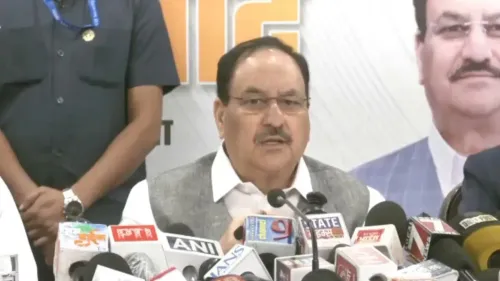
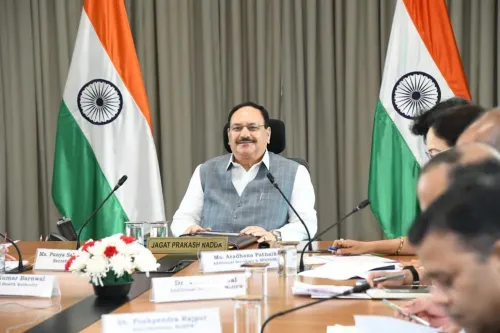
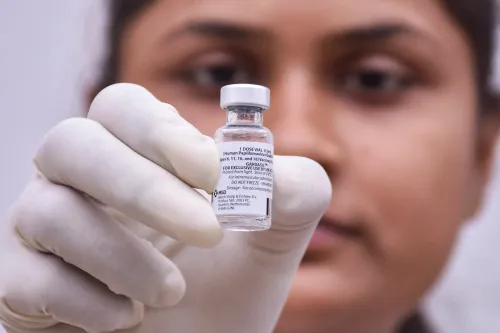
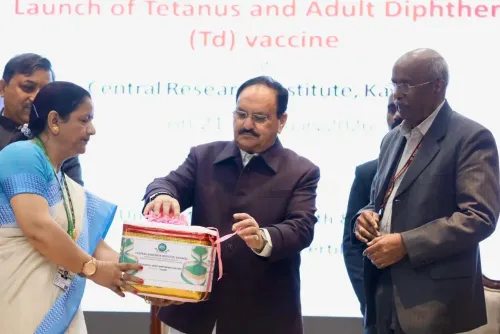
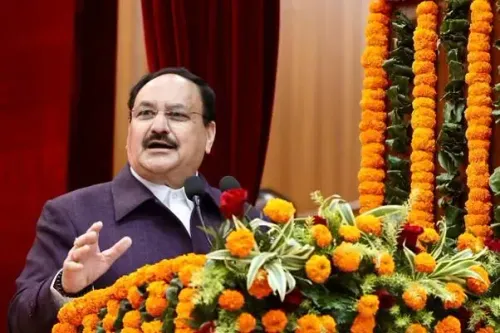
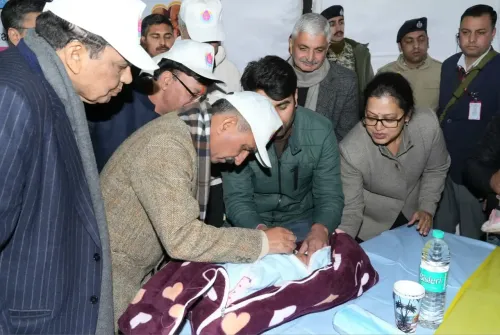
New Delhi, Feb 21 (NationPress) Union Health Minister JP Nadda unveiled the indigenously produced Tetanus and Adult Diphtheria (Td) vaccine at the Central Research Institute located in Himachal Pradesh, deeming it a pivotal advancement in enhancing India’s public health framework and realizing self-sufficiency in healthcare.
The vaccine's launch took place at the Central Research Institute in Kasauli, Himachal Pradesh. During his address to scientists, technical experts, and staff, Nadda commended the institute for its achievement in developing the vaccine within India and termed the event as historic.
“This launch signifies a crucial milestone in reinforcing national health security and fortifying the country’s public health infrastructure,” he remarked.
“Led by Prime Minister Narendra Modi, our government has established definitive goals aimed at attaining self-reliance in the health and pharmaceutical sectors,” the minister emphasized.
Nadda asserted that the indigenous Td vaccine is a tangible step towards the vision of Atmanirbhar Bharat in the healthcare arena.
With its official introduction, the Td vaccine will be made available under the Universal Immunization Programme (UIP).
The Central Research Institute is set to provide 5.5 million doses to the program by April 2026.
Production is anticipated to increase in the forthcoming years to bolster the immunization campaign across the nation.
Nadda highlighted India’s international reputation, indicating that the country is recognized as the “pharmacy of the world” and ranks among the top vaccine manufacturers globally.
“India has attained Maturity Level 3 in the World Health Organisation’s global assessment of regulatory frameworks, showcasing the robustness of its vaccine regulatory system,” he noted.
The Minister also reflected on how vaccine development timelines were significantly longer in the past.
He pointed out that the development of the tetanus vaccine took decades globally, tuberculosis treatments took nearly 30 years to evolve, and the Japanese Encephalitis vaccine required extensive scientific endeavors over the years.
“In stark contrast, during the COVID-19 pandemic, India succeeded in developing two indigenous vaccines within a mere nine months and administered over 2.2 billion doses, including booster shots,” Nadda explained.
He further mentioned that vaccination certificates were issued digitally, demonstrating India’s progress in digital healthcare.
Referring to the Vaccine Maitri initiative, Nadda stated that India supplied COVID-19 vaccines to close to 100 countries, of which 48 received them at no cost.
“Public sector entities like CRI have strengthened India’s capability to satisfy both domestic and international demands,” he concluded.
Point of View
I see the launch of the indigenous Td vaccine as a significant step towards achieving self-reliance in India's healthcare system. This initiative not only strengthens our public health framework but also positions India as a leading vaccine manufacturer on the global stage, reinforcing our commitment to health security for both domestic and international communities.
NationPress
18 Sept 2026
Frequently Asked Questions
What is the Td vaccine?
The Td vaccine is an indigenously manufactured vaccine that protects against Tetanus and Adult Diphtheria, aimed at improving public health in India.
When will the Td vaccine be available for use?
The Td vaccine will be made available under the Universal Immunization Programme, with an initial supply of 5.5 million doses expected by April 2026.
What does Atmanirbhar Bharat mean?
Atmanirbhar Bharat translates to 'self-reliant India,' a vision aimed at achieving self-sufficiency in various sectors, including healthcare.
How does this vaccine contribute to India's public health?
The Td vaccine is expected to enhance national health security and strengthen the public health infrastructure by increasing vaccination coverage.
Which organization recognized India's vaccine regulatory system?
The World Health Organization has recognized India's vaccine regulatory system, granting it Maturity Level 3 in their global benchmarking.