Kerala HC questions Centre: Is better healthcare a bar to AIIMS?
Synopsis
The Kerala High Court has turned the Centre's own logic against it — asking whether a state being good at healthcare should disqualify it from getting an AIIMS. With the proposal pending for nearly a decade and no in-principle approval in sight, the bench's direction to the Union Government to review the matter marks the sharpest judicial push yet on one of Kerala's longest-standing health infrastructure demands.
Key Takeaways
The Kerala High Court on 7 October 2026 questioned whether the state's superior healthcare system bars it from receiving an AIIMS under the PMSSY .
A bench of Chief Justice Soumen Sen and Justice Syam Kumar said it was not satisfied with the criteria cited by the Centre and directed a review.
The AIIMS proposal for Kerala has been pending for nearly a decade ; Kerala sought approval for a site at Kinaloor, Kozhikode in October 2025 .
The Centre told Parliament in July that no in-principle approval had been granted for an AIIMS in Kerala.
On the same day, Kerala constituted the Kerala Holistic Model for Health, Wellness and Longevity Task Force , to submit a report within two months .
The next court hearing is posted after six weeks .
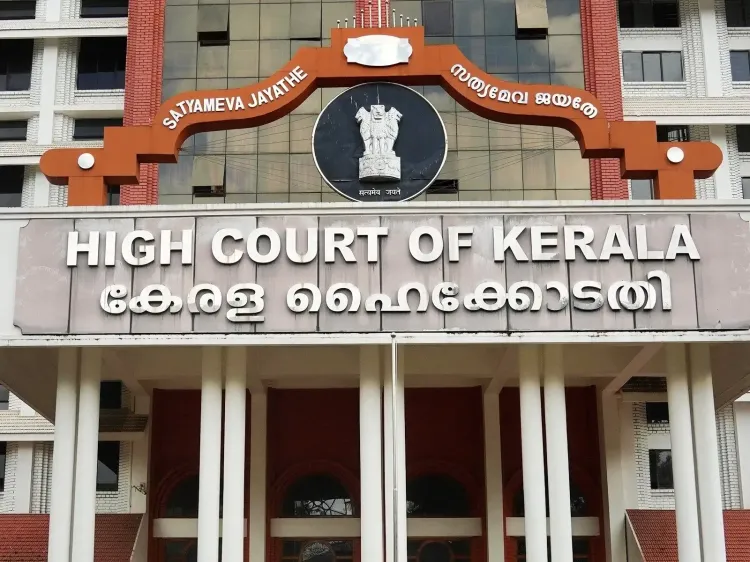
The Kerala High Court on Wednesday, 7 October 2026, sharply questioned the Union Government's stance on the long-pending proposal to establish an All India Institute of Medical Sciences (AIIMS) in Kerala, asking whether the state's comparatively superior healthcare infrastructure had paradoxically become a disqualification for securing the premier medical institution. A division bench of Chief Justice Soumen Sen and Justice Syam Kumar was hearing petitions seeking AIIMS status for Kerala under the Pradhan Mantri Swasthya Suraksha Yojana (PMSSY).
Court's Sharp Rebuke of Centre's Position
The Centre argued before the bench that states with weaker healthcare infrastructure were being prioritised, and that Kerala already possessed comparatively better medical facilities. The court took a tough view of this reasoning, asking whether it meant Kerala did not require an AIIMS at all. The bench also challenged whether the presence of a large number of private hospitals could be treated as a disqualification. 'There are more private hospitals here. Is that a disqualification?' the bench asked, pointing out that Kerala has a high population density.
The court further questioned which specific criteria Kerala had failed to satisfy, and noted that AIIMS institutions had already been established in other relatively affluent parts of the country, including New Delhi. The bench said it was not satisfied with the criteria cited by the Centre and directed the Union Government to review the issue and take necessary steps. The matter has been posted after six weeks.
A Decade of Waiting
The court noted that the AIIMS proposal for Kerala had been pending for nearly a decade, with the state having identified potential sites on earlier occasions. In October 2025, Kerala submitted a memorandum to the Union Health Minister seeking approval for an AIIMS at Kinaloor in Kozhikode. The Centre, however, maintained that identification of land did not amount to formal allocation or approval. This position was reinforced when the Centre told Parliament in July that no in-principle approval had been granted for an AIIMS in Kerala.
Kerala's Parallel Push for a Holistic Health Model
Notably, even as the AIIMS battle continues in court, the Kerala government on the same day constituted a high-level Kerala Holistic Model for Health, Wellness and Longevity Task Force, with the Chief Minister as Chairman and the Health Minister as Vice-Chairman, along with healthcare experts as members. The task force will work on a comprehensive model covering disease prevention, early detection, quality treatment, and healthy ageing.
The body will also examine the integration of modern medicine with traditional systems such as Ayurveda and explore a secure digital health platform to consolidate health information. The task force is expected to submit its report within two months, including two or three pilot projects, a three-year phased action plan, estimated costs, funding options, and mechanisms to monitor implementation and fix departmental responsibilities.
What This Means for Kerala's Healthcare Ambitions
Taken together, the AIIMS demand and the new longevity-focused task force reveal a state simultaneously fighting for access to advanced tertiary care while building a more preventive, integrated, and technology-driven health model. Critics argue that the Centre's current framework penalises states that have already invested in public health — a contradiction that, if left unaddressed, could deter other states from improving their own healthcare systems. The Kerala High Court's direction to the Union Government to review the matter ensures the issue remains in active legal and political focus. The next hearing, six weeks away, is expected to be closely watched.
Point of View
If applied consistently, creates a perverse incentive structure — states that neglect public health infrastructure get rewarded with central institutions, while states that invest get passed over. The Kerala High Court has now put that contradiction on the record. More troubling is the decade-long limbo: Kerala has identified sites, submitted memoranda, and petitioned Parliament, yet no in-principle approval has moved. The judicial direction to 'review and take necessary steps' is meaningful pressure, but without a clear timeline or a reformed eligibility framework, Kerala's AIIMS demand risks another cycle of deferred decisions.
NationPress
7 Oct 2026
Frequently Asked Questions
Why did the Kerala High Court question the Centre over AIIMS?
The Kerala High Court questioned the Centre because it argued that states with weaker healthcare infrastructure were being prioritised for AIIMS, effectively suggesting Kerala's better health facilities worked against it. The bench found this reasoning unsatisfactory and directed the Union Government to review the matter.
What is the current status of Kerala's AIIMS proposal?
The proposal has been pending for nearly a decade. Kerala submitted a memorandum in October 2025 seeking an AIIMS at Kinaloor in Kozhikode, but the Centre told Parliament in July that no in-principle approval had been granted. The High Court has now directed the Union Government to review and take necessary steps, with the next hearing in six weeks.
What is the PMSSY and how does it relate to Kerala's AIIMS demand?
The Pradhan Mantri Swasthya Suraksha Yojana (PMSSY) is a central scheme aimed at correcting regional imbalances in healthcare by setting up AIIMS-type institutions and upgrading government medical colleges across India. The petitions before the Kerala High Court seek AIIMS status for Kerala specifically under this scheme.
What is the Kerala Holistic Model for Health, Wellness and Longevity Task Force?
It is a high-level body constituted by the Kerala government on 7 October 2026, chaired by the Chief Minister and co-chaired by the Health Minister. It will develop a comprehensive health model covering disease prevention, early detection, quality treatment, healthy ageing, integration of Ayurveda, and a unified digital health platform, and is expected to submit its report within two months.
Why does Kerala argue it needs an AIIMS despite having good healthcare?
Kerala argues that existing private hospitals and state facilities do not replace the research, training, and specialist tertiary care functions of an AIIMS. The High Court echoed this, noting that AIIMS institutions exist in other well-served parts of the country, including Delhi, and that Kerala's high population density is an additional justification.