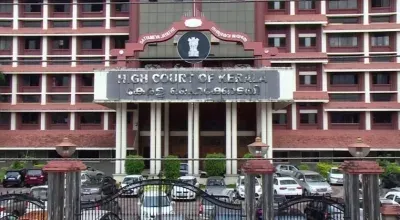
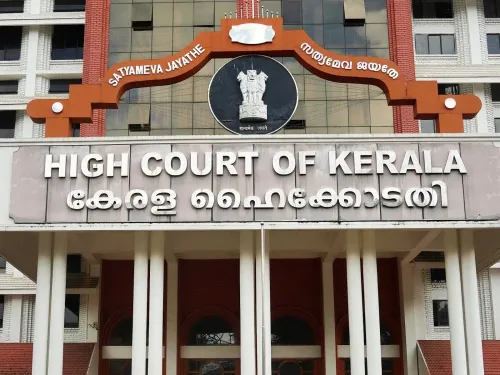
Kerala HC: Court orders cannot be overridden by bureaucrats in KSCDC corruption case

Synopsis
The Kerala High Court has refused to shield a senior IAS officer from contempt proceedings after the State government blocked a CBI corruption case — not once, but three times — by denying prosecution sanction against former KSCDC officials. The ruling is a pointed reminder that bureaucratic discretion ends where judicial findings begin.
Key Takeaways
The Kerala High Court dismissed a petition by Principal Secretary Mohammed Hanish challenging his personal appearance in a contempt case on 15 June .
The contempt case stems from the State government denying CBI prosecution sanction against former KSCDC officials three times despite court directions.
The Division Bench held that a competent authority cannot override judicial findings to reject prosecution sanction.
The original corruption probe was ordered by the Kerala High Court in 2015 following a petition by Kadakampally Manoj .
Former KSCDC chairman R Chandrasekharan and former MD K A Ratheesh are among those against whom the CBI sought prosecution sanction.
Contempt proceedings before the Single Bench will now continue; Hanish retains the right to seek discharge if no contempt is established.
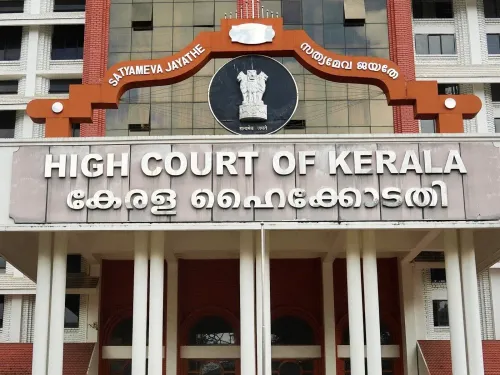
The Kerala High Court on Monday, 15 June dismissed a petition filed by Industries Department Principal Secretary (Cashew) Mohammed Hanish, who had challenged a direction to personally appear before the court in a contempt case linked to alleged corruption in the Kerala State Cashew Development Corporation Limited (KSCDC). The ruling clears the way for contempt proceedings to continue against the senior bureaucrat.
What the Division Bench ruled
A Division Bench comprising Justice K Natarajan and Justice Johnson John upheld the earlier order of Justice A Badharudeen, which had directed Hanish to appear before the court and face contempt proceedings. The Bench held that a competent authority cannot repeatedly reject a prosecution sanction by effectively overriding findings already recorded by the court.
The court came down heavily on Hanish's position that sanction was denied due to a lack of evidence, questioning how an authority could arrive at such a conclusion while disregarding judicial findings already on record. The Bench, however, noted that if Hanish had not committed any contempt, he retained the liberty to seek discharge from the proceedings.
Background: How the contempt case arose
The case traces back to a petition filed by Kadakampally Manoj alleging large-scale corruption and misuse of funds in raw cashew procurement by KSCDC. Acting on the complaint, the Kerala High Court ordered a Central Bureau of Investigation (CBI) probe in 2015.
Following the investigation, the CBI sought prosecution sanction against former KSCDC chairman R Chandrasekharan and former managing director K A Ratheesh, among others. The State government initially refused sanction, prompting the court to order reconsideration — only for the sanction to be denied a second time. Manoj then initiated contempt proceedings.
Three refusals and a court's patience worn thin
The Single Bench quashed the second rejection and again directed the government to reconsider the matter. Despite this, sanction was refused for a third time. Taking note of the repeated defiance, the Single Bench in April ordered Hanish, as the nodal Principal Secretary, to appear before the court in the contempt proceedings.
The Division Bench observed that since the CBI cannot proceed with prosecution without sanction from the competent authority, the government's repeated refusals had effectively blocked further legal action — despite a single judge having already found prima facie material against the accused officials.
What happens next
With the Division Bench dismissing Hanish's petition, the contempt proceedings before the Single Bench will now proceed. The ruling reinforces the principle that executive authorities cannot use administrative discretion to nullify judicial directions in corruption matters. The case is being closely watched as a test of judicial oversight over government decisions to withhold prosecution sanction.
Point of View
After a court-ordered reconsideration, and after a quashing order — is not administrative caution; it is a pattern. The Division Bench's ruling correctly identifies this as an attempt to use executive discretion as a veto over judicial process. What remains unresolved is why sanction was denied each time: the government has not offered a credible alternative evidentiary argument, only the assertion that evidence is lacking — an assertion the court has now found difficult to sustain given its own prima facie findings. The broader concern is systemic: prosecution sanction, designed as a safeguard against frivolous cases, risks becoming a tool to indefinitely shield officials from accountability when wielded selectively.
NationPress
24 Sept 2026
Frequently Asked Questions
Why is Mohammed Hanish facing contempt proceedings in the Kerala High Court?
Mohammed Hanish , the Industries Department Principal Secretary (Cashew) , was directed to appear before the Kerala High Court after the State government denied the CBI 's request for prosecution sanction against former KSCDC officials three times, defying repeated court directions. As the nodal Principal Secretary , he was held accountable for the government's continued refusal.
What is the KSCDC corruption case about?
The case involves alleged large-scale corruption and misuse of funds in the procurement of raw cashew by the Kerala State Cashew Development Corporation Limited (KSCDC) . The Kerala High Court ordered a CBI probe in 2015 following a petition by Kadakampally Manoj , after which the CBI sought prosecution sanction against former chairman R Chandrasekharan and former MD K A Ratheesh , among others.
What did the Kerala High Court Division Bench rule on 15 June?
The Division Bench of Justice K Natarajan and Justice Johnson John dismissed Hanish 's petition challenging his personal appearance in the contempt proceedings. The Bench held that a competent authority cannot repeatedly reject prosecution sanction by overriding findings already recorded by the court, and found no error in the Single Bench 's direction to summon him.
Can Mohammed Hanish still avoid contempt action?
Yes. The court noted that if Hanish had not personally committed any contempt, he retains the liberty to seek discharge from the proceedings once he appears before the Single Bench . The dismissal of his petition means the contempt case will proceed, but it does not pre-determine the outcome.
Why could the CBI not proceed with prosecution without government sanction?
Under Indian law, prosecution sanction from the competent government authority is a mandatory prerequisite before the CBI can charge-sheet certain categories of public officials. The Kerala government 's repeated refusals effectively stalled the case, which is why the High Court treated those refusals as potential contempt of its earlier directions.