JP Nadda clears 100 MBBS seats for Kerala, reaffirms AIIMS push
Synopsis
Union Health Minister JP Nadda has cleared 100 MBBS seats at a Kerala medical college that sat idle for nearly a decade — calling the delay 'criminal negligence' — while reaffirming an AIIMS for the state and promising India's first Genetic Institute. If the commitments hold, Tuesday's meeting could be the most consequential Centre-Kerala health dialogue in years.
Key Takeaways
JP Nadda gave in-principle approval for 100 MBBS seats at K.
Karunakaran Memorial Government Medical College, Thiruvananthapuram , from the next academic year.
The Centre reaffirmed its commitment to sanction an AIIMS for Kerala .
Nadda called the decade-long delay in starting MBBS admissions 'criminal negligence' , estimating 1,100 students were denied medical education.
Kerala was asked to submit a proposal for India's first Genetic Institute , to be established in the state.
Trauma Care Centres in every district, upgraded Mental Health Centres , HPV vaccine rollout for girls, and enhanced NHM funding were among additional commitments.
Central assistance for the State Virology Institute and access to select cancer and non-communicable disease medicines was also assured.
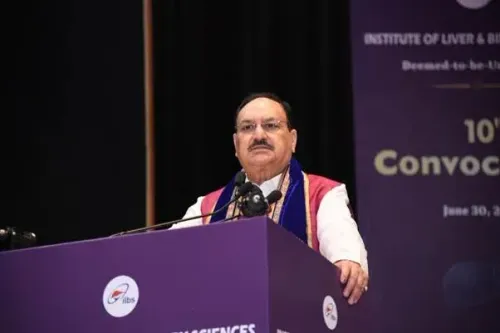
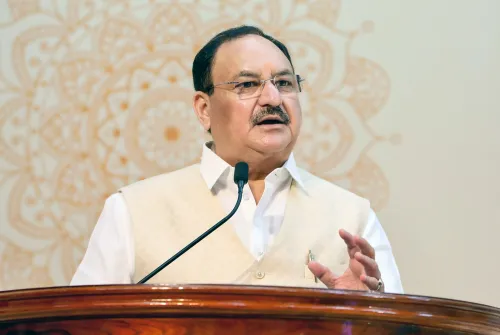
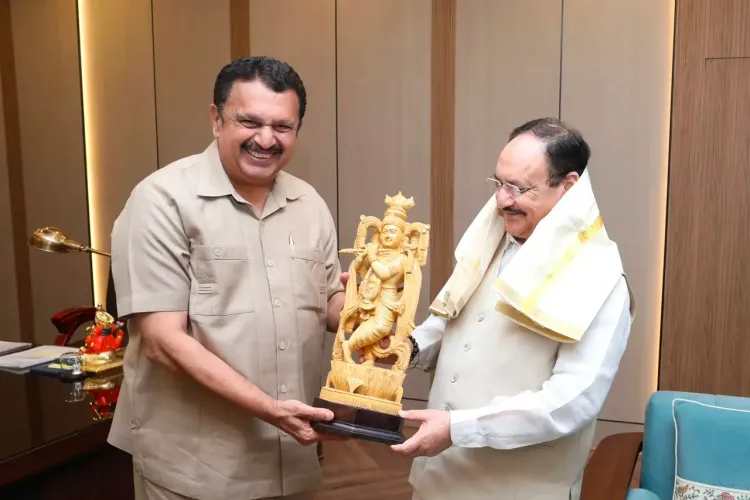
Union Health Minister J.P. Nadda on Tuesday, 28 July gave in-principle approval for 100 MBBS seats at the K. Karunakaran Memorial Government Medical College in Thiruvananthapuram, effective from the next academic year, and reaffirmed the Centre's commitment to sanction an AIIMS for Kerala. The assurances were delivered during a high-level meeting in New Delhi with a Kerala delegation led by State Health Minister K. Muraleedharan.
The Medical College Delay
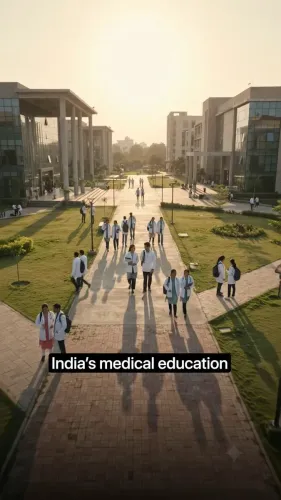
Nadda reportedly expressed sharp concern over the prolonged delay in commencing MBBS admissions at the K. Karunakaran Memorial Government Medical College, noting that infrastructure worth hundreds of crores had been in place for nearly a decade without a single student being enrolled. He described the delay as criminal negligence, observing that an estimated 1,100 students could have benefited from medical education had admissions begun on schedule. The in-principle clearance for 100 MBBS seats from the next academic year marks the first concrete step toward operationalising the long-dormant institution.
Key Healthcare Commitments
Beyond medical education, Nadda extended Central support across several critical areas. He asked Kerala to submit a formal proposal for establishing India's first Genetic Institute in the state — a move that would position Kerala at the frontier of genomic medicine. He also committed to setting up Trauma Care Centres in every district by strengthening existing district hospitals.
The Union Minister gave in-principle approval to Kerala's request for enhanced insurance coverage under the Centre's health insurance scheme and assured support for upgrading the state's three Mental Health Centres. Central assistance for administering the Human Papillomavirus (HPV) vaccine to girls was also promised, reflecting a push on preventive healthcare.
NHM Funding and Specialised Support
Kerala raised concerns over the adequacy of existing allocations under the National Health Mission (NHM), and Nadda said the Centre would consider increasing financial support after reviewing the state's submission. The Union Minister also agreed to enhance Central assistance for the State Virology Institute, acknowledging Kerala's established role in public health surveillance — a capacity that proved critical during successive outbreak responses in the state.
The Kerala delegation additionally sought help in ensuring availability of medicines for non-communicable diseases, select cancer drugs, and certain medicines not currently manufactured in India. Nadda assured that the matter would be examined and appropriate steps taken.
Political and Policy Context
According to Minister Muraleedharan, Nadda described the meeting as cordial and responded positively to the state's demands. This comes amid a broader Centre-state dynamic where Kerala has historically sought greater federal support for its relatively advanced but resource-stretched public health system. Notably, the state's push for an AIIMS has been pending for several years, and Tuesday's reaffirmation — while not a formal sanction — signals continued engagement at the ministerial level.
If the commitments translate into actionable timelines, Kerala's health sector stands to gain substantially, from expanded medical education capacity to specialised institutions that currently do not exist anywhere in the country.
Point of View
But the fine print matters: in-principle approvals and assurances of 'examining' proposals are not the same as sanctioned funds or formal orders. The K. Karunakaran Medical College story is instructive — infrastructure built with hundreds of crores sat unused for nearly a decade despite being under central purview. If the same gap between announcement and execution persists, Kerala's health sector will have gained little beyond goodwill. The AIIMS reaffirmation, in particular, has been made before; what is missing is a timeline. The proposal for India's first Genetic Institute is the most genuinely novel element here, and its fate will test whether this meeting was a policy inflection or routine ministerial optics.
NationPress
27 Oct 2026
Frequently Asked Questions
What did JP Nadda approve for Kerala at the 28 July meeting?
Nadda gave in-principle approval for 100 MBBS seats at the K. Karunakaran Memorial Government Medical College in Thiruvananthapuram from the next academic year, and reaffirmed the Centre's commitment to sanction an AIIMS for Kerala. He also committed support across multiple healthcare areas including a Genetic Institute, Trauma Care Centres, and HPV vaccination.
Why was the K. Karunakaran Medical College delayed?
According to Union Health Minister JP Nadda, the college had failed to commence MBBS admissions despite infrastructure worth hundreds of crores being in place for nearly a decade. Nadda reportedly described the delay as 'criminal negligence', estimating that around 1,100 students could have benefited had admissions started on time.
What is the proposed Genetic Institute for Kerala?
Nadda asked Kerala to submit a formal proposal for establishing India's first Genetic Institute in the state. No location or timeline has been specified yet; the commitment is at the proposal-submission stage.
Will Kerala receive more National Health Mission funding?
The Centre said it would consider increasing NHM financial support after Kerala highlighted the inadequacy of existing allocations. A formal decision is pending review of the state's submission.
Who led the Kerala delegation at the New Delhi meeting?
The Kerala delegation was led by State Health Minister K. Muraleedharan, who described the meeting as cordial and said Union Minister Nadda responded positively to the state's demands.