Did JP Nadda Just Launch an Indigenously Developed Tetanus and Adult Diphtheria Vaccine?
Synopsis
In a historic event, Union Minister J. P. Nadda has launched an indigenously produced tetanus and adult diphtheria vaccine, marking a significant step toward enhancing India's health security and self-reliance in the pharmaceutical sector. This launch is a pivotal achievement for public health in India, demonstrating the nation’s commitment to innovation and global health leadership.
Key Takeaways
The Td vaccine launch is a historic milestone for India’s health sector.
5.5 million doses will be supplied under the UIP by April.
India is recognized as the 'pharmacy of the world'.
CRI has achieved Maturity Level III in vaccine regulatory systems.
The UIP protects against 12 vaccine-preventable diseases.
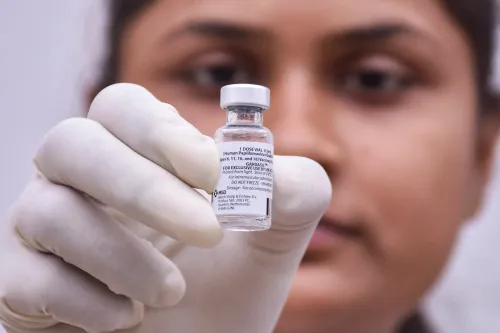
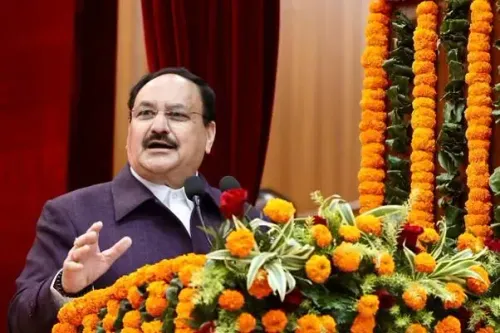
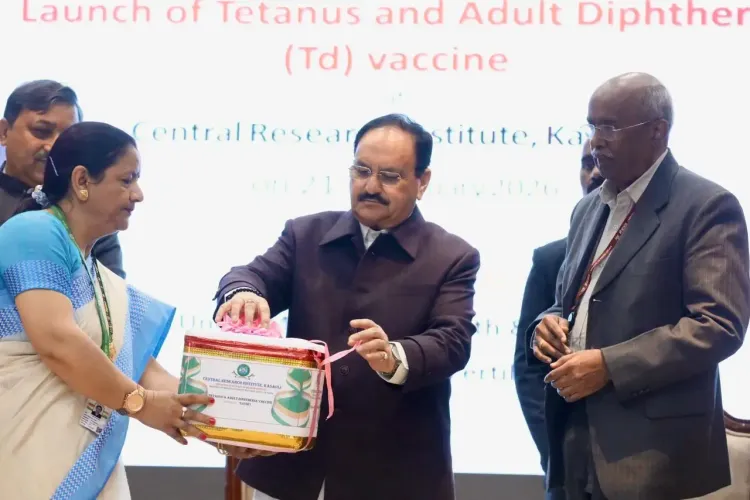
Kasauli, Feb 21 (NationPress) Union Minister for Health and Family Welfare J. P. Nadda inaugurated the locally produced tetanus and adult diphtheria (Td) vaccine at the Central Research Institute (CRI) in Himachal Pradesh.
During his speech, Minister Nadda applauded the scientists, technical experts, and staff at CRI, calling this indigenous vaccine launch a historic milestone.
He emphasized that this event is a crucial advancement towards enhancing national health security and fortifying India’s public health system.
Under the guidance of Prime Minister Narendra Modi, the government has established clear objectives to achieve self-sufficiency in the health and pharmaceutical arenas.
Nadda noted that the introduction of the locally manufactured Td vaccine is a tangible step towards the vision of Aatmanirbhar Bharat in health and medicine.
With the official launch of the Td vaccine, it will now be available for distribution under the Universal Immunization Programme (UIP).
The Central Research Institute is set to provide 5.5 million doses to the UIP by April, with production expected to increase in the following years, thereby enhancing the government's Universal Immunization Programme.
Highlighting India's international reputation, Nadda pointed out that India is known as the “pharmacy of the world” and ranks among the top vaccine producers globally.
He mentioned that India has attained Maturity Level III in the World Health Organization's global assessment of regulatory systems, showcasing the strength of its vaccine regulatory framework.
Institutions like CRI have significantly contributed to achieving these benchmarks.
Nadda reflected on the lengthy timelines historically associated with vaccine and drug development—tetanus vaccines took decades, tuberculosis treatments evolved over nearly 30 years, and the Japanese Encephalitis vaccine required almost a century of research. In stark contrast, during the COVID-19 pandemic, India developed two vaccines in just nine months and administered over 220 crore doses, including booster shots.
He also highlighted the delivery of COVID-19 vaccination certificates digitally, showcasing India’s advancements in public health technology.
In terms of global assistance, he mentioned that under the Vaccine Maitri initiative, India supplied vaccines to nearly 100 countries, with 48 nations receiving them free of charge.
Nadda stated that public sector institutions like CRI have bolstered India’s capacity to meet both domestic and international health needs.
He reiterated that CRI is the first government facility to manufacture vaccines adhering to Good Manufacturing Practices (GMP), showcasing the modernization of public sector vaccine production.
Describing the Universal Immunization Programme (UIP) as the world's largest immunization initiative, he noted that the UIP currently offers 11 vaccines against 12 vaccine-preventable diseases, with CRI making significant contributions.
He remarked that approximately 2 to 2.5 crore children are born annually, with a similar number of women becoming pregnant.
From pregnancy registration onward, beneficiaries are monitored through digital platforms such as U-WIN.
The government guarantees expectant mothers receive five antenatal check-ups, including at least one with a specialist. The immunization and monitoring process continues until the child turns 16, encompassing 27 doses within the programme.
Point of View
The launch of the Td vaccine is not just a significant milestone for India's healthcare system, but also a testament to the country's growing capabilities in pharmaceuticals. This event symbolizes a pivotal shift towards self-reliance in health, emphasizing the government's commitment to enhancing public health infrastructure and global health leadership.
NationPress
26 Sept 2026
Frequently Asked Questions
What is the significance of the newly launched Td vaccine?
The Td vaccine launch signifies a major advancement in India’s public health system, enhancing national health security and supporting the government’s self-reliance goals in health and pharmaceuticals.
How many doses will be supplied under the UIP?
The Central Research Institute will supply 5.5 million doses of the Td vaccine to the Universal Immunization Programme by April.
What is the Universal Immunization Programme?
The Universal Immunization Programme (UIP) is India's largest immunization initiative, currently providing vaccines for 12 vaccine-preventable diseases.
How has India demonstrated its vaccine manufacturing capabilities?
India has achieved Maturity Level III in the WHO's global benchmarking of regulatory systems, reflecting its strong vaccine regulatory framework.
What role did the COVID-19 pandemic play in vaccine development?
During the COVID-19 pandemic, India developed two indigenous vaccines within nine months and administered over 220 crore doses, showcasing its rapid vaccine development capabilities.