Historic ESIC Hospital Opens in Kashmir: 50,000+ Workers to Benefit
Synopsis
India's first ESIC hospital in Kashmir opened at Ompora, Budgam — a Rs 165 crore, 30-bed facility covering 50,000+ workers. With J&K's social security coverage rapidly expanding post-Article 370 revocation, this inauguration marks a historic step in integrating Kashmir's workforce into India's mainstream labour welfare system.
Key Takeaways
First-ever ESIC hospital in Kashmir inaugurated at Ompora, Budgam, Srinagar on April 25, 2025 .
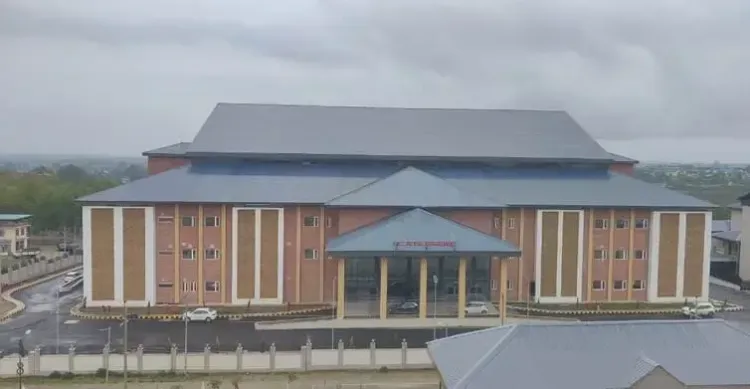
The facility is a 30-bed hospital built at a cost of Rs 165 crore , with expansion capacity up to 100 beds .
Over 50,000 insured workers and their families are expected to directly benefit from the new hospital.
The ESI Scheme in J&K UT currently covers 1,83,119 insured persons and approximately 7 lakh beneficiaries across all districts.
India's social security coverage rose from 19% in 2015 to 64.3% in 2025 , per ILO data cited by Union Minister Dr.
In 2025 , the International Social Security Association (ISSA) awarded India the Excellence in Social Security Award .
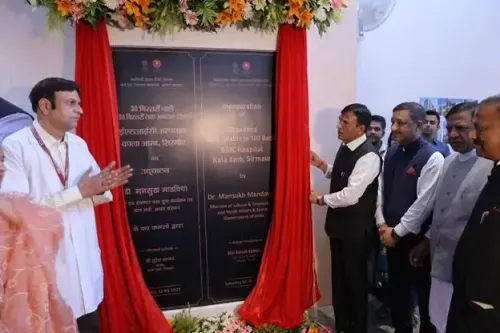
The Employees' State Insurance Corporation (ESIC) launched its first-ever hospital in Kashmir on Friday, April 25, 2025, with the inauguration of a 30-bed facility at Ompora, Budgam, near Srinagar. Built at a cost of Rs 165 crore, the hospital is set to directly benefit over 50,000 insured workers and their family members in the region, marking a landmark expansion of organised labour welfare infrastructure in Jammu and Kashmir.
A Milestone for Worker Welfare in J&K
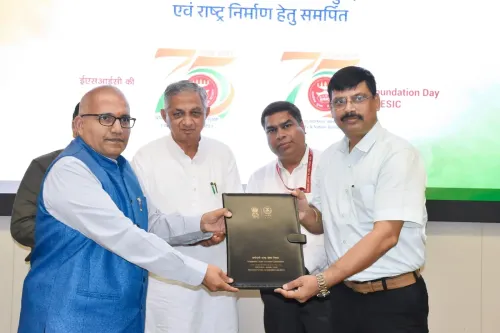
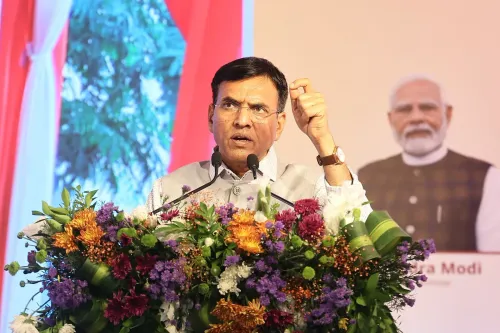
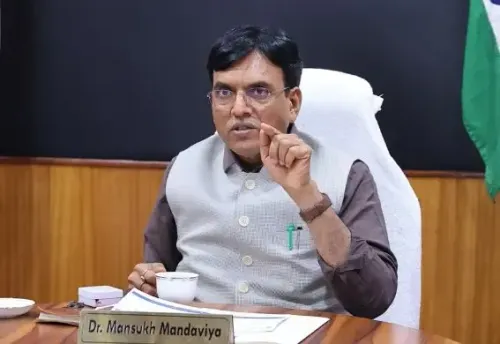
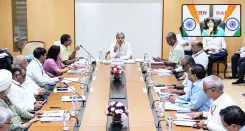
The hospital was inaugurated by Dr. Mansukh Mandaviya, Union Minister for Labour and Employment and Youth Affairs and Sports, in a ceremony that underscored the Centre's focus on extending social security to workers in the newly formed Union Territory. The facility has been designed with provision for expansion up to 100 beds as demand grows.
This inauguration is not merely a brick-and-mortar milestone — it represents the formal integration of Jammu and Kashmir's workforce into India's mainstream social security architecture, something that gained fresh momentum after the revocation of Article 370 in August 2019.
Scale of ESI Scheme in Jammu and Kashmir
The ESI Scheme is currently operational across all districts of J&K UT, covering approximately 1,83,119 insured persons and nearly 7 lakh total beneficiaries. The scheme is administered through the ESIC Regional Office at Jammu and the Jammu-Kashmir Employees' State Insurance Society (JKESIS).
Prior to this hospital, workers in the Kashmir Valley had to rely on tie-up arrangements with private or government hospitals for ESIC-covered treatment — a gap that often led to delayed care and financial stress for low-income workers. The Ompora facility closes that critical gap.
What the Minister Said
Speaking at the inauguration, Dr. Mandaviya highlighted the transformative role of the new Labour Codes enacted last year, which guarantee workers annual health check-ups, mandatory appointment letters, and minimum wages. He stated that annual health checks through ESIC hospitals will allow early detection of diseases, ensure preventive healthcare for workers, and secure their future.
The minister also pointed to the convergence of ESIC with the Ayushman Bharat Pradhan Mantri Jan Arogya Yojana (PM-JAY), which has expanded access to cashless treatment for beneficiaries at empanelled hospitals nationwide — a move that multiplies the effective reach of ESIC coverage without proportional infrastructure investment.
India's Social Security Coverage: A Dramatic Turnaround
Since its founding in 1952, ESIC has grown into one of the world's largest social health insurance systems. Today, it covers 3.84 crore insured persons and nearly 15 crore beneficiaries across India — numbers that reflect decades of incremental expansion but also the sharp acceleration seen post-2019.
Citing International Labour Organisation (ILO) data, Dr. Mandaviya noted that India's social security coverage has surged from 19 per cent in 2015 to 64.3 per cent in 2025 — a near-tripling in a decade. In 2025, the International Social Security Association (ISSA) honoured India with the prestigious Excellence in Social Security Award, recognising this trajectory.
Broader Implications and What Comes Next
The opening of the Ompora ESIC hospital is part of a wider push to mainstream J&K into India's social welfare ecosystem — a process that has accelerated since 2019. With the four Labour Codes now in effect, analysts expect ESIC enrolment in J&K to grow significantly as formal employment in the UT expands through new industrial and infrastructure investments.
The facility's planned expansion to 100 beds signals that authorities anticipate rising demand. As J&K's economy formalises further and more workers register under ESIC, this hospital could become the nucleus of a broader network of worker healthcare infrastructure in the Valley. Stakeholders and labour unions will be watching whether the operational quality and staffing of the new hospital match its physical promise — a challenge that has historically plagued newly inaugurated government health facilities across India.
Point of View
Embedding J&K's workforce into the same social security framework that governs the rest of India, something structurally impossible before 2019. What the mainstream narrative misses is the accountability question: with 7 lakh beneficiaries in J&K and only one functional hospital now opened, the infrastructure gap remains vast. The real test will be whether this facility is adequately staffed and supplied, or whether it joins the long list of inaugurated-but-underperforming government hospitals. India winning the ISSA Excellence in Social Security award is commendable, but ground-level delivery in regions like Kashmir must match the optics.
NationPress
19 Sept 2026
Frequently Asked Questions
Where is the first ESIC hospital in Kashmir located?
The first ESIC hospital in Kashmir is located at Ompora, Budgam, near Srinagar. It is a 30-bed facility with provision for expansion up to 100 beds.
How much did the ESIC hospital in Kashmir cost to build?
The ESIC hospital at Ompora, Budgam was built at a cost of Rs 165 crore. The facility is designed to be expandable to 100 beds to meet future demand.
How many workers will benefit from the new ESIC hospital in Kashmir?
The new ESIC hospital is expected to directly benefit over 50,000 insured workers and their family members. The ESI Scheme in J&K currently covers approximately 1,83,119 insured persons and nearly 7 lakh total beneficiaries.
Who inaugurated the ESIC hospital in Ompora, Budgam?
Dr. Mansukh Mandaviya, Union Minister for Labour and Employment and Youth Affairs and Sports, inaugurated the hospital on April 25, 2025. He highlighted the role of new Labour Codes and the ESIC-Ayushman Bharat convergence in expanding worker welfare.
What is the current status of the ESI Scheme in Jammu and Kashmir?
The ESI Scheme is implemented across all districts of J&K UT, covering around 1,83,119 insured persons and nearly 7 lakh beneficiaries. It is administered through the ESIC Regional Office at Jammu and the Jammu-Kashmir Employees' State Insurance Society (JKESIS).