Is Kerala's Health Sector in Denial Over Its Issues?

Synopsis
Kerala's health system is praised yet criticized as shocking incidents emerge. The gap between claims and reality raises questions about accountability and reform. Can Kerala's healthcare regain its credibility amidst growing public anger?
Key Takeaways
Kerala's health system has been a model but faces serious scrutiny.
Recent surgical errors reveal systemic failures.
Public outcry emphasizes the need for accountability.
The gap between government promises and reality is widening.
Reform is essential for restoring trust in healthcare.
Thiruvananthapuram, Feb 20 (NationPress) For many years, Kerala’s public health system has been heralded as a benchmark for the rest of India—efficient, accessible, and on par with the finest globally.
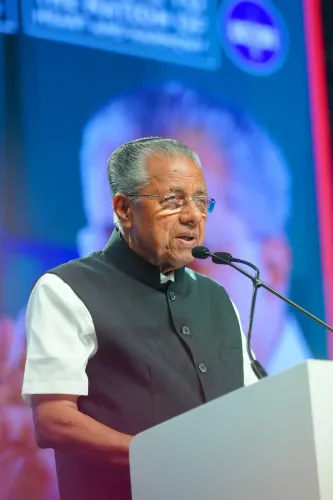
The State Health Minister, Veena George, a former journalist turned legislator from the CPI-M, has consistently claimed that the healthcare standards in the state stand against global norms.
However, when a pair of surgical scissors is discovered inside a patient’s abdomen—an incident disclosed on Friday—the claims start to feel tragically empty.
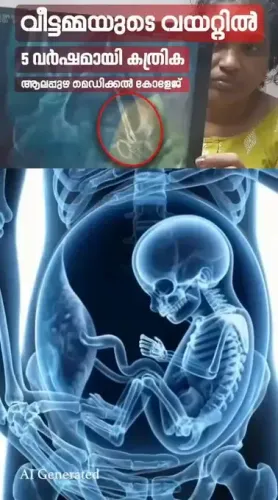
An earlier victim recounted her agony before cameras.
Harshina, a housewife from Kozhikode, revealed that she unknowingly bore the burden of scissors in her stomach for years after a surgical procedure at a government facility, expressing her support for another victim affected by a similar event at Alappuzha Medical College.
Although her own scissors were eventually extracted, she states that justice remains elusive.
"The Health Minister recycles the same narrative each time: a serious issue, an investigation, stern actions. Yet, I am still seeking justice," she stated.
This cyclical refrain of inquiry, suspensions, and warnings has become monotonous.
Every shocking incident seems to follow a predictable pattern.
Meanwhile, television networks on Friday aired a montage of previous medical errors alongside official declarations promising accountability.
The pattern is clear: outrage dissipates, committees are established, and the system continues without any significant reform.
Opposition leaders have seized this moment.
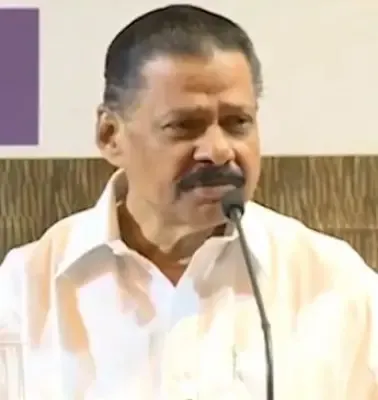
The Leader of the Opposition, V.D. Satheesan, contends that beyond mere statements, Kerala’s health sector is essentially on life support.
Protests by Congress and BJP supporters in Alappuzha highlight the increasing public frustration with what they label governmental negligence.
The issue is not merely the negligence of a solitary surgical team.
It reflects a broader issue of a system reluctant to acknowledge its own vulnerabilities.
Chronic staffing shortages, overwhelmed hospitals, and ineffective monitoring cannot be concealed by jubilant press conferences filled with claims of being the first in the world, first in India, or first in Kerala.
As Assembly elections approach, the disparity between the narrative and the actual experience may have political ramifications.
While Kerala’s health sector possesses genuine strengths, credibility diminishes when repeated errors are met with scripted responses.
A system that cannot guarantee compliance with basic surgical protocols cannot boast of world-class status.
Until accountability is evident and reforms are tangible, every overlooked instrument will wound deeper than the last.
Point of View
It is clear that while Kerala's health sector has notable strengths, the ongoing issues demand immediate attention. The gap between the government's proclamations and the lived experiences of patients highlights the urgent need for meaningful reform. As national editors, we advocate for transparency and accountability in healthcare.
NationPress
24 Sept 2026
Frequently Asked Questions
What recent incident raised concerns about Kerala's health sector?
A patient discovered surgical scissors left inside her abdomen after surgery, highlighting serious lapses in the healthcare system.
Who is the current Health Minister of Kerala?
The current Health Minister is Veena George, a member of the CPI-M.
What has been the public's response to healthcare failures in Kerala?
Public protests have erupted, with citizens expressing anger over perceived governmental negligence and lack of accountability.
How does the opposition view Kerala's healthcare situation?
Opposition leaders describe the health sector as being on 'life support', criticizing the government's inability to implement necessary reforms.
What are the main issues facing Kerala's health system?
Chronic staff shortages, overwhelmed hospitals, and ineffective monitoring mechanisms are significant challenges in the health sector.