MP toddler's vision loss linked to Vitamin A deficiency, malnutrition: probe

Synopsis
A preliminary inquiry has shifted the narrative in a disturbing Madhya Pradesh case: the 19-month-old who allegedly lost his vision at a government hospital was not blinded by a medication error, but by severe Vitamin A deficiency and malnutrition — a preventable condition. Yet the question of how and why the child received nasal drops remains unanswered, keeping the negligence probe alive.
Key Takeaways
A three-member Health Department committee found that Vinay , a 19-month-old from Sagar district, Madhya Pradesh , lost his vision due to severe Vitamin A deficiency and malnutrition causing corneal ulcers .
The inquiry ruled out that normal saline nasal drops administered at Banda Civil Hospital caused the blindness.
The child's father, Indraj Vishwakarma , had alleged nasal drops were mistakenly given instead of eye drops on 29 May .
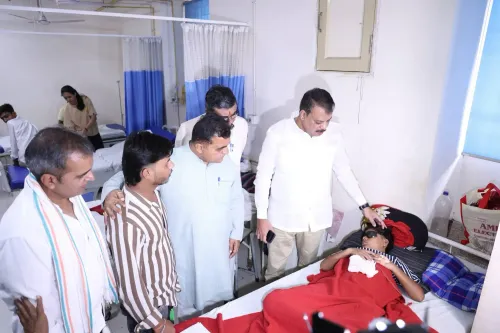
Vinay is currently at AIIMS Bhopal , where a corneal transplant has been planned.
The circumstances under which the child received the nasal drops remain under investigation by both the Health Department and police .
Officials confirmed action will be taken if negligence is established in the ongoing probe.
A preliminary inquiry into the alleged loss of vision of a 19-month-old child following treatment at Banda Civil Hospital in Sagar district, Madhya Pradesh, has concluded that the infant was suffering from severe Vitamin A deficiency and malnutrition, which caused corneal ulcers and the subsequent deterioration of sight. The three-member committee, constituted by the Health Department, submitted its findings after a two-day inquiry.
What the Inquiry Found
The panel ruled out the family's allegation that normal saline nasal drops administered at the hospital caused the child's blindness. Acting Chief Medical and Health Officer (CMHO) Devesh Pateriya said the batch of nasal drops alleged to have been used was not traceable in the hospital's stock, and that doctors had confirmed normal saline nasal drops are incapable of causing vision loss.
'The child was malnourished and had developed corneal ulcers due to Vitamin A deficiency. The batch of nasal drops alleged to have been used was not available in the hospital's stock. Doctors have also clarified that normal saline nasal drops cannot cause loss of vision,' Pateriya said.
The committee noted that such drops could, at most, cause temporary irritation — not permanent blindness.
The Family's Complaint
The case came to light after the child's father, Indraj Vishwakarma, alleged that nasal drops were mistakenly dispensed in place of eye drops when he brought his son Vinay to Banda Civil Hospital on 29 May. The infant had been brought in with complaints of a cold and redness in the eyes.
According to the family, Vinay complained of severe burning immediately after the drops were administered and subsequently lost his vision. As his condition worsened, he was referred first to the district hospital in Sagar and later transferred to AIIMS Bhopal for specialised care.
Child's Current Condition and Treatment
Vinay is currently undergoing treatment at AIIMS Bhopal, where doctors have planned a corneal transplant. Pateriya confirmed that the government has committed to providing all possible assistance for the child's treatment.
The inquiry is ongoing, specifically to determine the circumstances under which the child allegedly received the nasal drops — a question the preliminary report has not yet resolved.
Negligence Probe and Police Action
Police have registered a complaint lodged by the family and are conducting a parallel investigation. Officials stated that appropriate action will be taken if negligence is established through the continuing probe. This comes amid broader concerns about the quality of paediatric care and nutritional monitoring at public health facilities in Madhya Pradesh, where child malnutrition rates have remained a persistent policy challenge.
Notably, Vitamin A deficiency — a preventable condition — is a leading cause of childhood blindness in India, with corneal ulceration being a known and severe complication in cases of acute deficiency among infants. The case raises questions about whether the child's nutritional status was identified and addressed at earlier points of contact with the health system.
What Happens Next
The three-member committee's final report is awaited, and both the Health Department and police investigations remain active. The outcome of the corneal transplant at AIIMS Bhopal will be closely watched. Officials have indicated accountability measures will follow if any lapse in care is confirmed.
Point of View
Not just a hospital visit gone wrong. India's Universal Immunisation Programme includes Vitamin A supplementation precisely to prevent this outcome; the question of whether Vinay received those doses, and why his deficiency went undetected, is as urgent as the medication-error allegation. The negligence inquiry must widen its lens beyond the dispensing counter.
NationPress
30 Sept 2026
Frequently Asked Questions
What caused the 19-month-old's vision loss in Madhya Pradesh?
According to the preliminary inquiry, the child lost his vision due to severe Vitamin A deficiency and malnutrition, which led to corneal ulcers. The committee ruled out the family's allegation that normal saline nasal drops administered at Banda Civil Hospital caused the blindness.
What did the family allege happened at Banda Civil Hospital?
The child's father, Indraj Vishwakarma, alleged that nasal drops were mistakenly dispensed instead of eye drops when he brought his 19-month-old son Vinay to the hospital on 29 May. The family said Vinay complained of severe burning after the drops were given and subsequently lost his vision.
Is the hospital being investigated for negligence?
Yes. The Health Department constituted a three-member committee that has submitted preliminary findings, and police have also registered the family's complaint. Officials have said appropriate action will follow if negligence is established in the continuing probe.
Where is the child being treated now?
Vinay is currently receiving treatment at AIIMS Bhopal, where doctors have planned a corneal transplant. The government has committed to providing all possible assistance for his care.
Can normal saline nasal drops cause blindness?
No, according to doctors cited in the inquiry. Normal saline nasal drops can at most cause temporary irritation and are not capable of causing vision loss or blindness, the committee concluded.