NCDs Cause 60% Deaths: Nadda Unveils India's Multi-Pronged Health Strategy
Synopsis
India's Health Minister Nadda revealed that NCDs kill 60% of Indians annually — yet over 1.3 crore diagnosed diabetics may not be receiving treatment. With 1.85 lakh Ayushman centres and new district cancer units announced, India's NCD battle is scaling up, but a dangerous diagnosis-to-treatment gap remains the real crisis.
Key Takeaways
NCDs account for 60% of all deaths in India, making them the country's leading cause of mortality, as stated by Health Minister Jagat Prakash Nadda on April 21, 2025 .
The government has established over 1.85 lakh Ayushman Arogya Mandirs in six years to serve as frontline NCD screening and care contact points for 1.45 billion Indians .
Since 2017 , 41.5 crore people were screened for hypertension, 41.3 crore for diabetes, 35.3 crore for oral cancer, and over 16.5 crore for breast cancer.
A significant treatment gap exists: of 7.1 crore diagnosed with hypertension , only 5.7 crore are notified ; of 4.7 crore diabetics detected , only 3.4 crore are under treatment .
The Union Budget 2025-26 announced a day care cancer centre in every district , complementing the existing 107 NCD clinics and 233 cardiac care units at district level.
India's NCD strategy is rooted in the National Health Policy 2017 , which expanded the healthcare mandate to include preventive, promotive, curative, geriatric, rehabilitative, and palliative care .
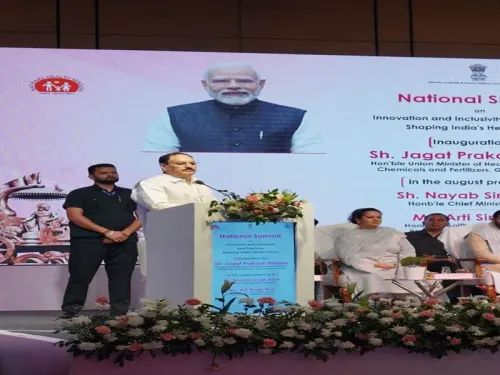
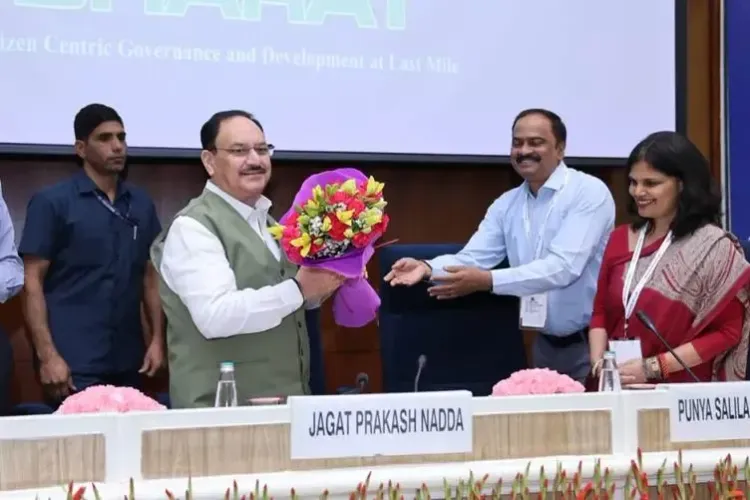
New Delhi, April 21: Union Health and Family Welfare Minister Jagat Prakash Nadda on Tuesday declared that combating Non-Communicable Diseases (NCDs) is among the government's highest healthcare priorities, citing that NCDs account for a staggering 60 per cent of all deaths in India. Speaking at the 18th Civil Services Day celebrations, Nadda outlined a comprehensive, multi-pronged national strategy spanning prevention, early detection, and curative care.
India's NCD Crisis: Scale and Urgency
India faces a dual disease burden — while the country has made significant strides in controlling communicable diseases, the rising tide of NCDs including diabetes, hypertension, cancer, and cardiac conditions now dominates the mortality landscape. Nadda acknowledged that outcomes in NCDs take longer to manifest, and a persistent knowledge gap among both patients and healthcare providers continues to hinder timely intervention.
This challenge is not new. According to publicly available health data, India has been grappling with rising NCD prevalence for over two decades, driven by rapid urbanisation, sedentary lifestyles, tobacco use, and dietary shifts. Critics have long argued that India's public health infrastructure was historically skewed toward infectious disease management, leaving NCD care underfunded and understaffed at the primary level.
National Health Policy 2017: The Policy Backbone
Nadda traced the government's current approach to the National Health Policy of 2017, which he described as a "holistic and inclusive" framework. The policy, he noted, explicitly focused on preventive, promotive, curative, geriatric, rehabilitative, and palliative care — a significant broadening of India's traditional disease-control model.
Under this framework, the National Programme for Prevention and Control of NCDs was strengthened with four core pillars: infrastructure development, early diagnosis and detection, health promotion, and timely referral systems. The minister stressed that health promotion remains a cornerstone of this approach, alongside disease management and referral pathways.
Ayushman Arogya Mandirs: Frontline Infrastructure
One of the government's most visible NCD interventions has been the rapid expansion of Ayushman Arogya Mandirs (AAMs). Nadda revealed that over 1.85 lakh such centres have been established in the past six years, serving as the primary interface between India's 1.45 billion citizens and the formal health system.
Each centre is staffed by at least one ASHA (Accredited Social Health Activist) worker, with additional frontline health staff deployed wherever feasible. These centres are critical for reaching rural and semi-urban populations who would otherwise have no access to NCD screening or early detection services.
Beyond primary care, the government has also established 107 NCD clinics at district level and 233 cardiac care units across the country. In the Union Budget 2025-26, it was further announced that every district will receive a dedicated day care cancer centre — a move that could significantly reduce the burden on tertiary cancer hospitals in metro cities.
Screening Data: Massive Outreach, Significant Gaps
The scale of India's NCD screening programme since 2017 is substantial. According to Nadda's address:
- 41.5 crore people screened for hypertension; 7.1 crore diagnosed; 5.7 crore notified
- 41.3 crore people screened for diabetes; 4.7 crore found diabetic; 3.4 crore under treatment
- 35.3 crore people screened for oral cancer; 2.3 lakh detected; approximately 2 lakh under treatment
- Over 16.5 crore people screened for breast cancer
While these figures represent an unprecedented scale of public health outreach, a closer look reveals a treatment gap that demands attention. For hypertension alone, 1.4 crore diagnosed individuals are not yet notified or under active management — a gap that, if unaddressed, could translate into avoidable strokes, kidney failures, and cardiac events.
Similarly, for diabetes, over 1.3 crore diagnosed individuals are not confirmed to be receiving treatment. Public health experts have consistently flagged that detection without treatment continuity yields limited health outcomes at the population level.
What Comes Next: Policy Implications and Road Ahead
The government's announcement of district-level day care cancer centres in the latest budget signals a shift toward decentralised cancer care — a model that has shown success in countries like Thailand and Sri Lanka, which have invested heavily in community oncology infrastructure. If implemented effectively, this could reduce the financial and logistical burden on cancer patients who currently travel hundreds of kilometres to access treatment.
Notably, this push comes amid India's broader Ayushman Bharat initiative, which aims to provide health coverage to the economically vulnerable. The convergence of insurance coverage with expanded NCD infrastructure could, in theory, create a more complete continuum of care — from screening to treatment to rehabilitation.
Going forward, the government's ability to close the diagnosis-to-treatment gap, strengthen specialist capacity at district hospitals, and sustain community-level health promotion will determine whether India's NCD burden is genuinely reversed or merely better counted. The next major policy milestone to watch will be the mid-term review of the National NCD Programme and the rollout of the promised cancer day care centres across all districts.
Point of View
35 crore for oral cancer — but the minister's own data exposes a troubling treatment gap that the government has yet to directly confront. Detecting disease without ensuring treatment continuity is an incomplete public health victory, and in a country where out-of-pocket health expenditure remains crippling, that gap has real human consequences. The push for district cancer centres is welcome, but India's NCD challenge is fundamentally a health system capacity problem — not just an infrastructure one. Until specialist shortages, drug supply chains, and patient follow-up mechanisms are fixed at the district level, the numbers will keep growing faster than the solutions.
NationPress
27 Sept 2026
Frequently Asked Questions
What percentage of deaths in India are caused by non-communicable diseases?
Non-communicable diseases (NCDs) account for 60 per cent of all deaths in India, according to Union Health Minister Jagat Prakash Nadda. This makes NCDs the leading cause of mortality in the country, surpassing communicable diseases.
How many people have been screened for diabetes and hypertension in India since 2017?
Since 2017, over 41.5 crore people have been screened for hypertension and 41.3 crore for diabetes under India's National NCD Programme. Of those screened, 7.1 crore were diagnosed with hypertension and 4.7 crore with diabetes.
What are Ayushman Arogya Mandirs and how do they help with NCDs?
Ayushman Arogya Mandirs are government-run health and wellness centres that serve as the first point of contact between citizens and the health system. Over 1.85 lakh such centres have been set up in the past six years, each staffed with ASHA workers to support NCD screening and early detection.
What new cancer care infrastructure has the Indian government announced?
The Union Budget 2025-26 announced that every district in India will have a dedicated day care cancer centre. Additionally, 107 NCD clinics at district level and 233 cardiac care units have already been established across the country.
What is India's National Programme for Prevention and Control of NCDs?
India's National Programme for Prevention and Control of NCDs is a government initiative focused on strengthening health infrastructure, enabling early diagnosis, promoting health awareness, managing chronic diseases, and ensuring timely patient referrals. It operates under the broader National Health Policy of 2017.