Did the NBEMS Play a Role in the NEET-PG Qualifying Percentiles Reduction?
Synopsis
The NBEMS has clarified its lack of involvement in the NEET-PG cut-off reduction, asserting its primary duty is to conduct exams as mandated by relevant authorities. This response comes amidst legal challenges questioning the legitimacy of the updated qualifying standards.
Key Takeaways
NBEMS confirms it did not influence the NEET-PG cut-off changes.
The decision to lower qualifying percentiles was made by the Ministry of Health .
Legal challenges are questioning the legitimacy of the new standards.
95,913 more candidates are eligible for counselling due to the cut-off reduction.
The Supreme Court is involved, indicating the issue's significance.
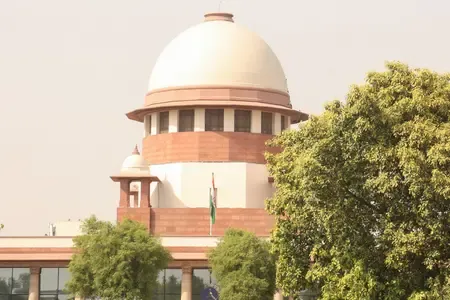
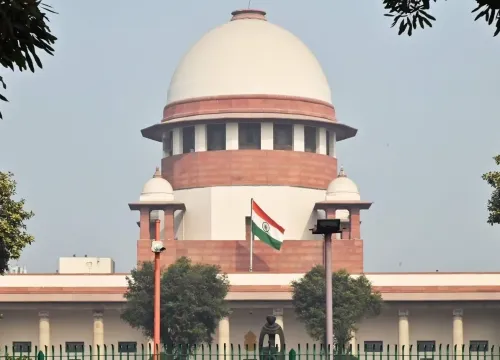
In New Delhi, on February 17, the National Board of Examinations in Medical Sciences (NBEMS) informed the Supreme Court that it had absolutely no involvement in the decision to lower the qualifying cut-off percentile for NEET-PG 2025–26. The board emphasized that its responsibilities are strictly confined to administering the examination and releasing results as directed by the appropriate authorities.
In a concise statement provided by NBEMS Law Officer Mohd. Sameen, it was asserted that the petition contesting the January 13 notification from the NBEMS—which lowered the qualifying cut-off percentiles for postgraduate medical admissions to unusually low, zero, and even negative levels after the results were published and two rounds of counselling were completed—is "not maintainable and should be dismissed".
"The responding entity respectfully clarifies that the NBEMS's role is solely to conduct the NEET PG examination transparently and fairly, assess answers, and deliver the final results to the relevant Counselling Authority, specifically the Medical Counselling Committee (MCC)," the affidavit detailed.
It was made clear that it had "no role whatsoever in the decision regarding the reduction of the qualifying percentile for NEET PG 2025" and that such decisions "exclusively fall under the purview" of the Directorate General of Health Services (DGHS), the Ministry of Health and Family Welfare, and the National Medical Commission (NMC).
The affidavit noted that the Union Ministry of Health and Family Welfare had communicated on January 9, informing it that the qualifying percentile cut-off for the third round of NEET-PG 2025–26 counselling had been reduced and instructed it to publish revised results accordingly.
"In compliance with this directive, the responding entity published the contested notification dated 13.01.2026, announcing the revised cut-off scores for NEET PG 2025," the statement indicated, adding that the updated results were sent to the MCC on the same day.
According to the new criteria, the minimum qualifying percentile for Unreserved (UR) candidates was adjusted to the 7th percentile (cut-off score 103 out of 800), for UR-PwD candidates to the 5th percentile (90 marks), and for SC/ST/OBC candidates to the 0th percentile, with a cut-off score of minus 40.
The NBEMS informed the apex court that, due to the cut-off adjustment, an additional 95,913 candidates became eligible to participate in counselling.
"From examining the aforementioned table, it is evident that the lowering of the cut-off resulted in 95,913 additional candidates now qualifying for counselling for NEET PG 2025," the affidavit expressed.
It further argued that any ruling made in the current writ petition would directly impact these candidates, who are not represented before the Supreme Court, and thus, "on this basis alone, the present petition should be dismissed".
The NBEMS also highlighted a similar case dismissed by the Delhi High Court in the matter of Sanchit Seth vs National Board of Examinations in Medical Sciences & Ors.
In its ruling on January 21, the Delhi High Court found no arbitrariness in the cut-off reduction and concluded that concerns regarding patient safety and merit dilution were "unfounded and lacking empirical evidence".
It further stated that "simply lowering the eligibility criteria for counselling does not compromise merit, as actual admissions will be based on merit" and that broadening the candidate pool would facilitate optimal use of postgraduate medical seats.
Earlier, the Supreme Court had issued notices to the Union government, the NBEMS, the NMC, and the MCC in response to a public interest litigation (PIL) calling for the reinstatement of the original qualifying standards as outlined in the NEET-PG 2025 Information Bulletin.
The petition, submitted by advocate Satyam Singh Rajput, argued that the contested reduction is arbitrary, unconstitutional, and violates Articles 14 and 21 of the Constitution, posing a significant risk to patient safety, public health, and the integrity of postgraduate medical education.
It contended that allowing candidates with zero or negative scores into specialist training undermines merit at the highest level of medical education and compromises minimum standards of professional competence.
Describing the action as "unprecedented and extreme," the petition asserted that the NEET-PG, intended as a national screening mechanism, has been transformed into "an instrument certifying failure as eligibility". The PIL also challenged the reduction on the grounds that the "rules of the game" cannot be modified once the selection process has begun and results have been announced.
Point of View
It is vital to approach this matter with an unbiased lens, recognizing the NBEMS's clarification about its limited role in the NEET-PG percentile reduction. While the legal challenges and public concerns surrounding the cut-off adjustments are valid, it is equally crucial to ensure that the discourse remains focused on transparent and fair practices in medical education.
NationPress
26 Sept 2026
Frequently Asked Questions
What is the NEET-PG?
NEET-PG is the national eligibility cum entrance test for postgraduate medical courses in India.
Why was the qualifying percentile reduced?
The reduction was directed by the Ministry of Health and Family Welfare, allowing more candidates to qualify for counselling.
Who is responsible for NEET-PG conduct?
The National Board of Examinations in Medical Sciences (NBEMS) is responsible for conducting the NEET-PG exams.
What has been the response from the Supreme Court?
The Supreme Court has issued notices in response to a public interest litigation challenging the reduction in qualifying standards.
How many additional candidates qualified due to the reduction?
Approximately 95,913 additional candidates became eligible to participate in counselling.