Swine flu spike: No need to panic, testing not mandatory for all, says former ICMR DG
Synopsis
India's swine flu numbers look alarming on the surface, but a former ICMR chief says the reality is more manageable — Delhi's 2,300 cases mirror Bengaluru's count from last year, cases are now falling, and testing is unnecessary for most. The real concern is targeted: children under five, the elderly, and those with serious comorbidities face genuine risk and need immediate attention.
Key Takeaways
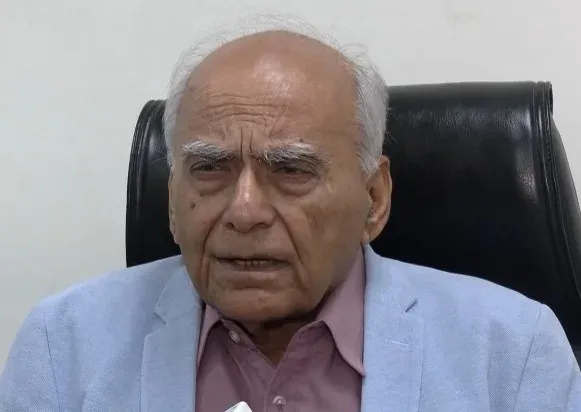
Prof Nirmal Kumar Ganguly , former ICMR Director General, says there is no need to panic over rising H1N1 (swine flu) cases in India.
Delhi reported around 2,300 cases as of 25 August ; Bengaluru logged roughly 4,000 cases through August this year.
Testing is not mandatory for most — 98 per cent of flu cases this season are H1N1; home management with paracetamol, fluids, and rest is advised for mild symptoms.
High-risk groups include children under 5 , seniors aged 65+ , and those with diabetes, cardiovascular disease, cancer, immunodeficiency, organ transplants, or chronic kidney disease.
The antiviral oseltamivir is effective against H1N1 but must be administered within the first 48 hours of symptom onset.
Influenza vaccine is available at approximately ₹800–900 ; cases in Delhi have been declining over the past two weeks .
There is no need to panic over the rising swine flu cases in India, Prof Nirmal Kumar Ganguly, former Director General of the Indian Council of Medical Research (ICMR) and Padma Bhushan recipient, said on Wednesday, 26 August. Speaking in an exclusive interview, Prof Ganguly noted that H1N1 cases in Delhi are already declining and stressed that testing is not mandatory for the general population since the virus is well-known and not new.
What Is H1N1 and How Serious Is the Current Outbreak
Prof Ganguly traced the influenza virus back to the First World War, when it devastated populations in Spain and France as the Spanish Flu — a pandemic that struck without prior immunity. Since then, the virus has continued to mutate and resurface periodically. The current dominant strain, H1N1, belongs to the Influenza A family. A second variant, H3N2, is also circulating in small numbers in India and more widely across Europe.
According to Prof Ganguly, approximately 1,14,000-plus cumulative cases have been recorded since 2011. This year alone, Delhi reported around 2,300 cases as of 25 August, while Bengaluru has logged roughly 4,000 cases through August. Cities including Kolkata, Chennai, Hyderabad, and Kerala have each reported between 2,500 and 3,000 cases. Notably, Delhi's current case count mirrors Bengaluru's figures from the previous year — a signal of seasonal spread rather than an unprecedented surge.
Who Is at Risk and Who Should Get Vaccinated
Prof Ganguly identified specific high-risk groups who need heightened vigilance. Children under five are particularly vulnerable, as respiratory tract infections are a leading cause of mortality in that age group. Senior citizens aged 65 and above are also at elevated risk. Other vulnerable categories include patients undergoing chemotherapy, individuals with immunodeficiency, and those with diabetes, cardiovascular conditions, organ transplants, or chronic kidney disease.
Hospital staff and patients with comorbidities are being advised to get vaccinated. The influenza vaccine is currently available at an affordable price of around ₹800–900. Prof Ganguly also flagged the need to evaluate vaccine access for vulnerable populations living in slum areas.
Testing Guidance: When Is It Necessary
With 98 per cent of flu cases this season attributed to H1N1, Prof Ganguly said blanket testing is unnecessary. For most people with flu-like symptoms, the recommended course of action is to take paracetamol, increase fluid and nutritional intake, and rest at home.
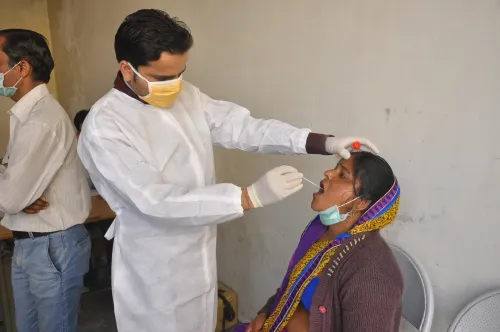
Testing becomes advisable only when a patient experiences breathing difficulty or chest pain. The antiviral drug oseltamivir — specific to influenza viruses — is effective when administered within the first 48 hours of symptom onset and is given in hospital settings. Prof Ganguly also noted that a trivalent influenza vaccine is currently suitable for treatment, while a quadrivalent vaccine is not required at this stage.
How H1N1 Differs from Covid-19
Prof Ganguly drew a clear distinction between the two viruses. Influenza viruses belong to the myxovirus family, while Covid-19 is a coronavirus — a fundamentally different classification. Because influenza viruses are longstanding, many young adults have developed immunity over time, meaning they are less frequently infected. Covid-19, being a novel virus, affected young adults and the elderly equally.
Clinically, influenza involves less neurological and brain involvement compared to Covid-19, and cardiac complications are largely specific to Covid. Both viruses can cause pneumonia, though it was most severe during the Covid-19 pandemic.
Precautions to Follow Right Now
Prof Ganguly urged citizens to stay informed through reliable sources and avoid acting on rumours. He advised maintaining social distancing in schools and colleges, avoiding cinema halls and large gatherings, and wearing an N95 mask in crowded settings for effective protection against droplet transmission.
Regular hand hygiene — washing hands and avoiding touching the mouth, eyes, or nose — is essential whether or not one is infected. Anyone experiencing flu-like symptoms should isolate immediately. If symptoms include persistent fever, chest pain, or breathing difficulty, hospital care should be sought without delay.
With cases trending downward in Delhi over the past two weeks, the immediate outlook appears stable — but health authorities and high-risk groups are advised to remain watchful as the season progresses.
Point of View
But it should not obscure a structural gap: India's influenza surveillance remains patchy, and the case counts from Delhi, Bengaluru, and other cities are almost certainly undercounts given how few mild cases ever get reported. The 1,14,000-plus cumulative figure since 2011 reflects tested cases only. More pressing is the vaccine access question Prof Ganguly himself raised — at ₹800–900 a dose, the trivalent vaccine is out of reach for slum-dwelling populations who are precisely the high-risk group that needs it most. A seasonal flu preparedness framework, rather than reactive expert interviews, is what the public health system owes its most vulnerable citizens.
NationPress
26 Aug 2026
Frequently Asked Questions
Is there a reason to panic over the swine flu spike in India?
No, according to former ICMR Director General Prof Nirmal Kumar Ganguly. He noted that Delhi's 2,300 cases as of 25 August are proportionally low relative to the city's population, and that case counts have been declining over the past two weeks.
Who should get tested for H1N1 swine flu?
Testing is not mandatory for most people, as 98 per cent of flu cases this season are H1N1. Testing is recommended only if a patient develops breathing difficulty or chest pain. For mild flu-like symptoms, home rest, paracetamol, and increased fluid intake are advised.
Who is most at risk from H1N1 swine flu?
Children under five years of age and senior citizens aged 65 and above face the highest risk. Other vulnerable groups include individuals with diabetes, cardiovascular disease, chronic kidney disease, organ transplants, immunodeficiency, or those undergoing chemotherapy for cancer.
How is H1N1 swine flu different from Covid-19?
H1N1 is a myxovirus (influenza family), while Covid-19 is a coronavirus — a different viral classification. Influenza causes less neurological involvement and no cardiac complications, unlike Covid-19. Pneumonia can occur in both, but was most severe during Covid. Young adults have greater immunity to influenza due to prior exposure, whereas Covid-19 affected all age groups equally.
What precautions should people take against swine flu right now?
Prof Ganguly advises maintaining social distancing in schools and colleges, avoiding large gatherings, and wearing an N95 mask in crowded spaces. Regular handwashing, avoiding touching the face, isolating if symptomatic, and seeking hospital care for persistent fever, chest pain, or breathing difficulty are the key steps.