Delhi swine flu spike: DoE issues school advisory, Minister Sood urges calm

Synopsis
Delhi's Directorate of Education has put every school — government and private — on notice over a swine flu spike, setting a 31 August compliance deadline for hygiene protocols. With Education Minister Ashish Sood simultaneously urging calm, the advisory walks a careful line between institutional vigilance and avoiding public panic during a seasonal H1N1 uptick.
Key Takeaways
The Directorate of Education (DoE) issued a swine flu advisory to all Delhi schools on 25 August .
Schools must enforce respiratory hygiene, handwashing, surface cleaning, and social distancing from symptomatic individuals.
The advisory warns against taking antibiotics or medicines without medical advice .
DDEs must submit compliance reports to healthschoolbranch@gmail.com by 31 August .
Education Minister Ashish Sood said there is 'no emergency' but stressed that seasonal vigilance is necessary.
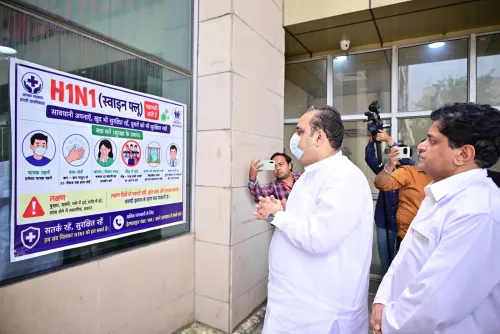
The Directorate of Education (DoE) on Tuesday, 25 August issued a formal advisory to all government, government-aided, and private unaided recognised schools in New Delhi, directing them to reinforce respiratory and hand hygiene practices amid a spike in swine flu cases in the national Capital. Delhi Education Minister Ashish Sood separately told reporters there was no cause for alarm, even as health officials urged schools to stay vigilant.
What the Advisory Directs
The DoE advisory frames the response around a 'Healthy School – Healthy Community' approach. Schools have been instructed to promote covering the nose and mouth while coughing or sneezing, proper disposal of tissues, and regular handwashing with soap and water — particularly before eating and after coughing or sneezing.
Schools must also maintain appropriate distance from individuals showing respiratory symptoms. 'Masks may be used where considered necessary,' the advisory states. Classrooms, common areas, and frequently touched surfaces are to be cleaned regularly, with adequate ventilation ensured wherever feasible. Students and staff have been advised against spitting on school premises or in public places.
Hygiene and Health Guidance for Students and Staff
Beyond respiratory precautions, the advisory asks schools to encourage adequate hydration, nutritious food, sufficient rest, and general personal hygiene. Staff and students have been specifically advised to avoid frequently touching their eyes, nose, and mouth. Crucially, the DoE cautioned that 'antibiotics and other medicines should not be taken without medical advice.'
Schools have been asked to disseminate the advisory through morning assemblies, classroom interactions, notice boards, parent communication channels, and the school's digital platforms — ensuring the guidance reaches families directly.
Compliance Deadline and Monitoring
All District/Zone Deputy Directors of Education (DDEs) have been directed to monitor compliance and submit a compiled report to healthschoolbranch@gmail.com by 31 August. The structured reporting requirement signals that the DoE intends to track implementation rather than treat the advisory as a routine circular.
Minister Sood's Reassurance
Delhi Education Minister Ashish Sood, speaking to reporters, sought to temper public concern. 'There is no need to panic. There is no such emergency situation in the country or in Delhi. However, precaution is always better than cure,' he said. Sood noted that the advisory specifically calls for attention to young children and school students on social distancing, handwashing, school hygiene, classroom hygiene, and personal hygiene, adding: 'Such seasonal illnesses occur during this time of year, so there is a need to remain aware and vigilant.'
Context and What Comes Next
Swine flu — caused by the H1N1 influenza virus — tends to see seasonal surges in India during the monsoon and post-monsoon months, when respiratory illnesses spread more readily in crowded, enclosed spaces such as classrooms. This advisory follows a pattern of institutional action seen during previous H1N1 upticks in the Capital. Schools that have not yet briefed students and parents will need to act before the 31 August compliance deadline. Health authorities are expected to update case counts as the situation develops.
Point of View
But the absence of specific case numbers in the public communication makes it harder for parents to assess actual risk. Transparency on case counts would strengthen trust without stoking panic.
NationPress
9 Oct 2026
Frequently Asked Questions
Why has Delhi's DoE issued a swine flu advisory to schools?
The Directorate of Education issued the advisory on 25 August following a spike in swine flu (H1N1) cases in New Delhi. The advisory aims to reinforce hygiene and respiratory precautions in school environments, where close contact among students can accelerate transmission.
What does the DoE advisory ask schools to do?
Schools must promote handwashing, respiratory etiquette (covering mouth and nose when coughing or sneezing), regular cleaning of classrooms and common areas, adequate ventilation, and social distancing from symptomatic individuals. Masks may be used where necessary, and students are advised against self-medicating with antibiotics.
Is there a swine flu emergency in Delhi?
Education Minister Ashish Sood has stated there is no emergency situation in Delhi or nationally. However, the DoE advisory acknowledges a case spike and calls for timely awareness and preventive action, particularly in schools.
What is the compliance deadline for schools?
All District/Zone Deputy Directors of Education must monitor school compliance and submit compiled reports to healthschoolbranch@gmail.com by 31 August.
Who is most at risk from the current swine flu spike?
The advisory specifically flags young children and school students as requiring special attention. Swine flu tends to spread more readily in enclosed, crowded spaces like classrooms, making schools a priority focus during seasonal H1N1 upticks.