Pakistan Now a Major Poliovirus Reservoir: WHO Report

Synopsis
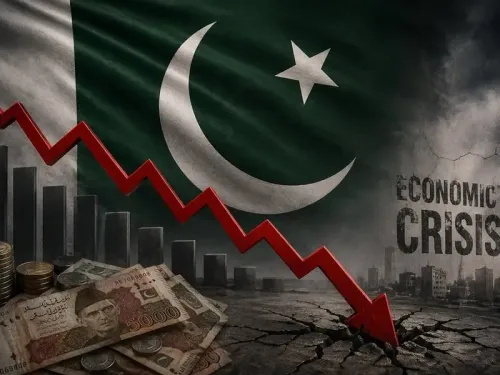
Despite receiving over $100 million in international aid since 2023, Pakistan has reported 100+ Wild PolioVirus type 1 cases and now has active transmission across all major provinces — including Lahore and Gilgit-Baltistan's first case in eight years. Experts blame corruption, extremist narratives, and political neglect for turning Pakistan into a global poliovirus reservoir.
Key Takeaways
Pakistan has reported more than 100 active WPV1 cases over the past two years, making it one of only two polio-endemic countries globally alongside Afghanistan .
Despite receiving over $100 million in international funding since 2023 , Pakistan's polio eradication efforts have failed to contain the virus.
The WHO's Polio IHR Emergency Committee confirmed active WPV1 transmission into 2025 , including in Lahore and multiple districts of the central epidemiological corridor.
Gilgit-Baltistan recorded its first WPV1 case in over eight years , indicating the virus is spreading into previously cleared regions.
Experts including Nawab Ali Khattak and Assadullah Channa attribute the crisis to corruption, extremist misinformation, logistical failures, and sustained political neglect.
Afghanistan , under Taliban governance, has achieved a notable reduction in polio cases — a stark contrast to Pakistan's worsening trajectory despite democratic governance and international support.
Pakistan has emerged as one of the world's most dangerous reservoirs of Wild PolioVirus type 1 (WPV1), with international health experts warning that the country risks becoming a global hub for cross-border polio transmission. A report by Athens-based geopolitical research outlet Geopolitico, published in April 2025, attributes this alarming resurgence to deep-rooted systemic failures — including corruption, administrative dysfunction, vaccine hesitancy, and political negligence — despite over $100 million in international funding poured into the country's polio eradication programme since 2023.
Pakistan and Afghanistan: The Last Two WPV1-Endemic Nations
Pakistan and Afghanistan remain the only two countries in the world where Wild PolioVirus type 1 is still endemic. What makes Pakistan's situation particularly alarming is the contrast with its neighbour: Afghanistan, even under Taliban governance, has recorded a significant reduction in polio cases, while Pakistan has reported more than 100 active WPV1 cases over the past two years.
This divergence is striking. A country governed by a fundamentalist regime has managed to reduce polio incidence, while a nation receiving massive international health aid continues to see the disease spread unchecked. Critics argue this exposes not just a public health failure, but a governance crisis of the highest order.
WHO Findings: Virus Spreads Across All Major Provinces
The World Health Organisation (WHO) has confirmed that WPV1 has now been detected across all major provinces of Pakistan — from the relatively urbanised Punjab to the conflict-affected Khyber Pakhtunkhwa. According to the WHO's Polio IHR Emergency Committee, active transmission is continuing into 2025, with confirmed cases in Lahore and multiple districts within the country's central epidemiological corridor.
The committee noted that the upward trend in cases became clearly visible as early as mid-2023, particularly in Khyber Pakhtunkhwa, Sindh, and Balochistan. Of particular alarm is the reappearance of the virus in Gilgit-Baltistan, which recorded its first WPV1 case in over eight years — a development that underscores how deeply entrenched transmission zones have been allowed to persist.
Structural Failures Driving the Crisis
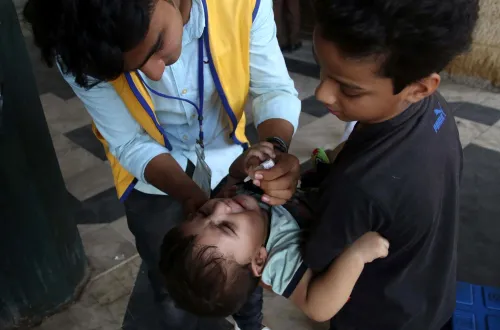
Health experts and development professionals point to a cluster of structural weaknesses within Pakistan's healthcare system as the root cause of this failure. These include inadequate transportation for medical teams in remote regions, insufficient training for frontline health workers, recurring vaccine shortages, poor inter-agency coordination, and political interference in public health operations.
Pakistani development consultant Nawab Ali Khattak echoed these concerns, noting that the polio resurgence is being sustained by a combination of logistical constraints, active security threats to vaccination teams, widespread misinformation, and entrenched corruption at multiple levels of the health administration.
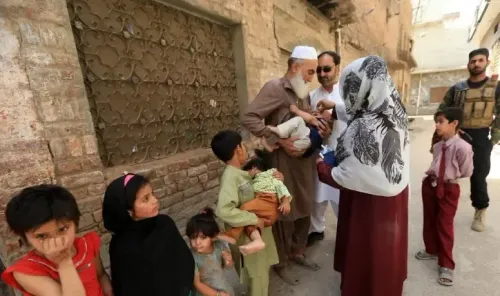
The unequal distribution of quality healthcare further compounds the problem, with adequate medical services remaining largely accessible only to urban elites, while rural and tribal communities — precisely where polio transmission is most active — are left without reliable healthcare infrastructure.
Extremist Narratives and Political Neglect
Assadullah Channa, a Pakistan-based educator, argues that a significant portion of the crisis is rooted in the government's sustained failure to counter extremist and anti-vaccine narratives. He contends that successive Pakistani administrations have deliberately avoided confronting fundamentalist elements, allowing years of misinformation to shape public perception and drive mass vaccine rejection in key communities.
According to Channa, the persistence of polio also reflects a pattern of political neglect — with current leadership preoccupied with judicial and political manoeuvring rather than addressing urgent public health priorities. This abdication of responsibility has created a vacuum that anti-vaccination propagandists have effectively exploited.
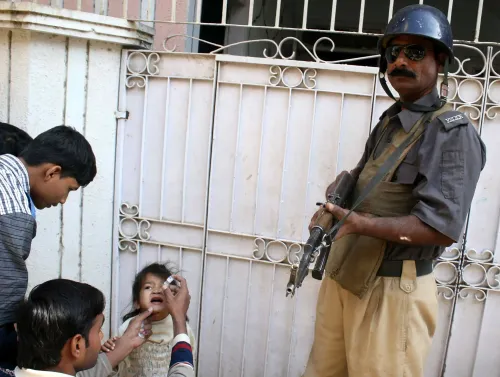
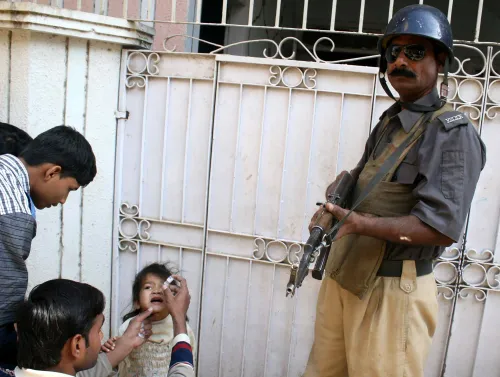
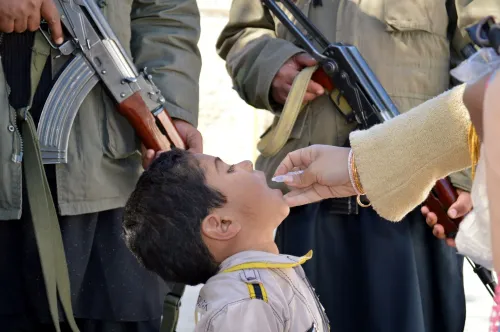
Notably, vaccination workers in Pakistan have faced targeted attacks for years, with dozens killed in the line of duty. Rather than providing robust security and countering the ideological roots of these attacks, authorities have often responded with temporary suspensions of vaccination campaigns — inadvertently rewarding extremist pressure.
Global Implications and What Comes Next
The international community's concern extends well beyond Pakistan's borders. Poliovirus does not respect national boundaries, and the detection of WPV1 in sewage samples in multiple countries — including the United Kingdom and United States — has previously been linked to travel from endemic regions. A Pakistan that continues to serve as an active reservoir poses a measurable risk of re-importing polio into countries that have long been declared polio-free.
With the WHO's Polio IHR Emergency Committee continuing to monitor the situation into 2025, and with international donors already questioning the effectiveness of the $100 million+ already disbursed, pressure is mounting on Islamabad to demonstrate concrete accountability. If systemic reforms — including transparent fund utilisation, security guarantees for health workers, and a credible counter-misinformation strategy — are not implemented swiftly, Pakistan's status as a global polio threat will only deepen, with potentially irreversible consequences for regional and global public health.
Point of View
Yet the virus is spreading to provinces it had previously abandoned. This is the anatomy of institutional rot: funds disbursed without accountability, extremist narratives left unchallenged by design, and political elites too consumed by judicial battles to protect their own children's generation from a disease the world nearly eradicated decades ago. The global community must now ask whether unconditional aid is enabling, rather than solving, this crisis.
NationPress
25 Sept 2026
Frequently Asked Questions
Why is Pakistan considered a poliovirus reservoir in 2025?
Pakistan has reported over 100 active Wild PolioVirus type 1 (WPV1) cases in the past two years, with the virus now detected across all major provinces. Systemic failures including corruption, vaccine hesitancy, extremist misinformation, and poor healthcare infrastructure have prevented eradication despite massive international funding.
How much international funding has Pakistan received for polio eradication?
Pakistan has received over $100 million in international funding for polio eradication since 2023. Despite this investment, case numbers have risen sharply, raising serious questions about fund utilisation and accountability.
Which countries still have Wild PolioVirus type 1 (WPV1)?
As of 2025, only Pakistan and Afghanistan remain endemic for Wild PolioVirus type 1. Notably, Afghanistan under Taliban rule has seen a reduction in cases, while Pakistan's numbers have continued to climb.
What provinces in Pakistan have active polio transmission in 2025?
The WHO has confirmed WPV1 transmission across all major Pakistani provinces, including Punjab, Khyber Pakhtunkhwa, Sindh, Balochistan, and Gilgit-Baltistan. Gilgit-Baltistan recorded its first WPV1 case in over eight years, signalling a dangerous expansion of the outbreak.
Why are polio vaccination campaigns failing in Pakistan?
Vaccination campaigns in Pakistan face multiple obstacles including security threats against health workers, extremist anti-vaccine propaganda, logistical failures in remote areas, and political interference. Experts also cite government inaction in countering fundamentalist narratives as a key driver of vaccine rejection.