Supreme Court Calls for Paternity Leave Recognition as Social Security
Synopsis
In a landmark ruling, the Supreme Court urged the Indian government to legally recognize paternity leave as a vital social security benefit, while also invalidating age-based restrictions on maternity leave for adoptive mothers. This decision emphasizes the importance of equitable caregiving roles for all parents.
Key Takeaways
Supreme Court urges legal recognition for paternity leave.
Maternity leave restrictions for adoptive mothers annulled.
Emphasis on equal caregiving roles for parents.
Current law provides maternity leave but not paternity leave.
Promotes gender equality in childcare responsibilities.
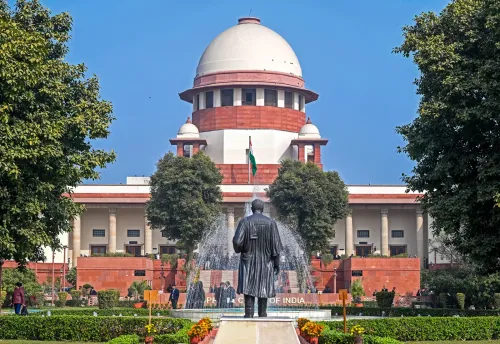
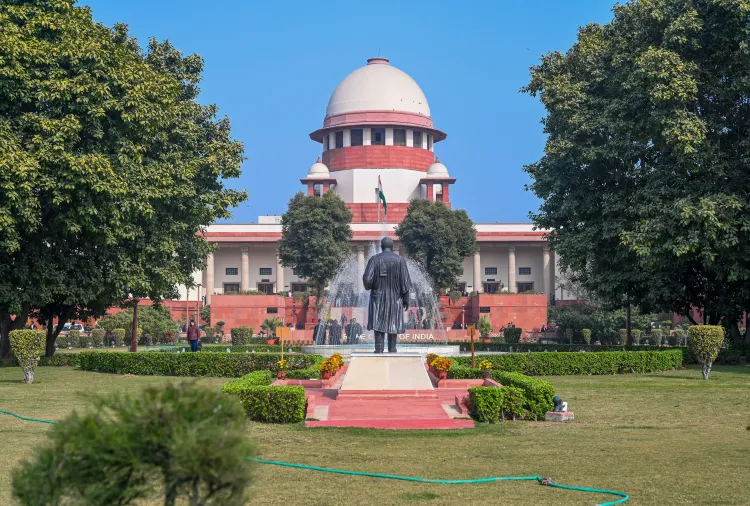
New Delhi, March 17 (NationPress) On Tuesday, the Supreme Court called upon the Union government to formulate legislation that recognizes paternity leave as a key social security benefit. This appeal coincided with the court's decision to annul a regulation that restricted maternity benefits for adoptive mothers based on the age of the child.
A bench comprising Justices J.B. Pardiwala and R. Mahadevan noted that the duration and conditions surrounding paternity leave fall under the purview of the Centre, emphasizing the necessity for a legal structure that acknowledges fathers as equal caregivers.
"We encourage the Union to introduce a provision that acknowledges paternity leave as a social security benefit. The length of this leave should be established in a way that adequately addresses the needs of both parent and child," remarked the Justice Pardiwala-led bench.
This commentary emerged as the apex court delivered its ruling on a public interest litigation (PIL) contesting the constitutional validity of certain provisions that limited maternity leave for adoptive mothers.
In its ruling, the Supreme Court invalidated Section 60(4) of the Social Security Code, 2020, which stipulated that adoptive mothers could claim maternity leave only if the adopted child was under three months old.
The bench determined that this provision established an unreasonable classification, thereby infringing upon the equality guarantee enshrined in Article 14 of the Constitution.
"The requirements of an adoptive child are no different from those of a biological child. While biology has historically been the primary lens for understanding kinship, adoption represents an equally valid form of family formation. Biological factors alone do not define family. An adopted child is on equal footing with a natural child," the apex court asserted.
The PIL initially contested Section 5(4) of the Maternity Benefit Act, 1961, amended in 2017, which granted 12 weeks of maternity leave to adoptive mothers only if the adopted child was below three months old.
During the case's progression, a similar rule was incorporated into the Social Security Code, 2020.
Labeling the restriction as unconstitutional, the bench declared that maternity leave benefits should be uniformly available to all adoptive mothers, regardless of the child's age at adoption.
The apex court further underscored that the needs of an adoptive child are identical to those of a biological child, particularly during the crucial early stages of assimilating into a new family setting. It also stressed the significance of shared parenting and the necessity to recognize fathers' roles in early childcare, suggesting that such acknowledgment could yield improved developmental outcomes for children while fostering greater gender equality in caregiving responsibilities.
Currently, Indian law entitles eligible women to paid maternity leave of up to 26 weeks under the Maternity Benefit Act, but there is no comprehensive legal framework for paternity leave.
Point of View
I view the Supreme Court's call for paternity leave recognition as a crucial step toward ensuring equitable parenting responsibilities. The ruling not only emphasizes the importance of fathers in child-rearing but also reinforces the principle of equality for all families, regardless of their composition.
NationPress
26 Sept 2026
Frequently Asked Questions
What is the Supreme Court's recent ruling about?
The Supreme Court urged the Union government to enact a law recognizing paternity leave as a social security benefit and invalidated restrictions on maternity leave for adoptive mothers.
Why was Section 60(4) of the Social Security Code struck down?
It was deemed to create unreasonable classifications and violate the equality guarantee under Article 14 of the Constitution.
What are the implications for adoptive mothers?
The ruling ensures that maternity leave benefits are available to all adoptive mothers, regardless of the child's age at adoption.
What does this mean for fathers?
The emphasis on recognizing paternity leave highlights the role of fathers as equal caregivers, promoting shared parenting.
Is there currently a statutory framework for paternity leave in India?
No, Indian law provides for maternity leave but lacks a comprehensive legal framework for paternity leave.