Supreme Court Grants Passive Euthanasia: Father Ashok Rana Shares Heartfelt Thanks
Synopsis
In a landmark ruling, the Supreme Court has allowed passive euthanasia for Harish Rana, a young man in a vegetative state since 2013. His father, Ashok Rana, expresses heartfelt gratitude, highlighting the ruling's wider implications for families across India facing similar struggles.
Key Takeaways
Supreme Court allows passive euthanasia for Harish Rana.
Ashok Rana expresses gratitude towards the judiciary.
The ruling could signal hope for many families facing similar circumstances.
Legal journey involved both the High Court and Supreme Court.
Healthcare professionals played a crucial role in the Rana family's journey.
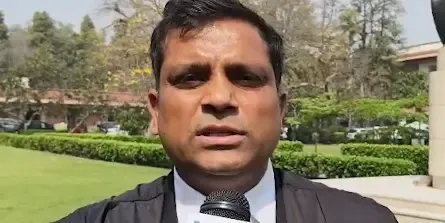
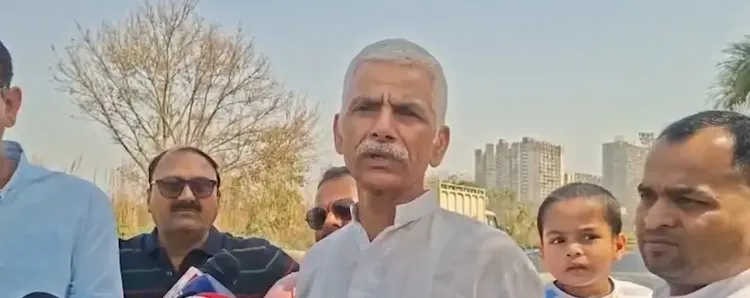
Ghaziabad, March 11 (NationPress) The Supreme Court's recent decision to allow passive euthanasia for Harish Rana, who has been in a vegetative state since 2013, has prompted his father, Ashok Rana, to express profound gratitude towards the judiciary. He emphasized that this ruling holds significance not just for his family but also for numerous others grappling with similar hardships across India.
In a discussion with reporters, Ashok Rana reflected on the emotionally taxing journey the family has faced during their legal battle.
"Four years ago, my wife suggested we seek help from the Prime Minister or the President on this matter. At that time, I dismissed the idea as unrealistic," he shared.
He later reached out to the Brahma Kumari institution, an organization he has been affiliated with, for guidance.
"I confided in a senior member of the Brahma Kumari institution regarding our plight. She connected us with a lawyer, Manish Jain, who assisted us throughout the legal proceedings," he explained.
The family initially sought intervention from the High Court before escalating the issue to the Supreme Court.
"We first approached the High Court and subsequently escalated our case to the Supreme Court. We are eternally thankful to the esteemed judges of the Supreme Court for their ruling," he articulated.
Ashok Rana expressed his appreciation for the medical professionals who have supported his son over the years.
"The Supreme Court has issued a commendable directive to the state government. I wish to extend my gratitude to everyone, particularly the doctors who stood by us during this arduous journey," he stated.
He acknowledged the toll this situation has taken on both him and his wife as they age.
"We are advancing in age—I'm about 63 and my wife is 60. My son was declared brain dead a long time ago. This issue transcends our family; many others in India are enduring similar predicaments," he added.
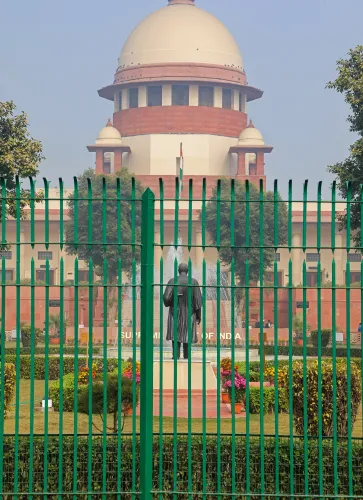
Earlier today, the Supreme Court authorized passive euthanasia for Harish Rana, a 31-year-old resident of Ghaziabad, who has been in a persistent vegetative state for nearly 13 years following severe head injuries sustained during a fall.
A Bench comprising Justices J.B. Pardiwala and K.V. Viswanathan permitted the cessation of life-sustaining treatment for Harish Rana, noting that the medical board is to exercise its clinical discretion in line with the guidelines established by the apex court in its pivotal 2018 ruling in the Common Cause vs. Union of India case.
Endorsing the family's plea, the Justice Pardiwala-led Bench directed that Rana be moved to the palliative care unit at the All India Institute of Medical Sciences (AIIMS), New Delhi, where the withdrawal of medical treatment can be executed.
"In our considered opinion, the medical board may exercise its clinical discretion regarding the discontinuation of treatment in accordance with the directives outlined in Common Cause vs. Union of India," the apex court remarked.
Rana has been enduring a permanent vegetative state, with complete disability and quadriplegia, necessitating ongoing medical support for breathing, feeding, and daily care routines.
Previously, the Supreme Court mandated the formation of a Primary Medical Board to evaluate the feasibility of withdrawing life-sustaining treatment.
A team of medical experts who assessed Rana at his home reported that he was bedridden with a tracheostomy tube for respiration and a gastrostomy tube for feeding, indicating negligible chances of recovery.
Point of View
The Supreme Court's decision to allow passive euthanasia for Harish Rana is a pivotal moment in the discourse surrounding end-of-life care in India. It not only addresses the specific needs of the Rana family but also sets a precedent for countless others facing similar dilemmas, reflecting a growing recognition of the complexities surrounding compassionate medical care.
NationPress
20 Sept 2026
Frequently Asked Questions
What is passive euthanasia?
Passive euthanasia refers to the withdrawal of life-sustaining treatment, allowing a patient to die naturally without aggressive medical intervention.
What did the Supreme Court rule?
The Supreme Court permitted the withdrawal of life-sustaining treatment for Harish Rana, allowing for passive euthanasia in accordance with established legal guidelines.
What are the implications of this ruling?
This ruling may provide relief to countless families in similar situations, legitimizing their struggles and offering a compassionate approach to end-of-life care.
How did the Rana family reach this decision?
The Rana family pursued legal avenues, initially approaching the High Court and later escalating the case to the Supreme Court with the assistance of legal counsel.