West Bengal Medical Council launches 17-year registration audit to root out fake doctors

Synopsis
West Bengal Medical Council has launched a 17-year retrospective audit of doctor registrations, triggered by a formal police complaint against the council's own top officials — including former TMC legislators — over alleged fake registration fraud. Deregistration and criminal FIRs await anyone caught in the net.
Key Takeaways
West Bengal Medical Council launched a 17-year registration audit of practising doctors on 21 September 2026 .
Agencies have been asked to submit doctor credentials — including MBBS degrees and university names — in Excel format for cross-verification.
Doctors found with fake registrations face MBBS cancellation and a police FIR .
Rajeev Pandey of the Association of Private Hospitals and Nursing Homes (APHN) filed a complaint on 15 September naming council President Sudipta Roy , Secretary Sushanta Roy , Registrar Manas Chakraborty , and MLA Nirmal Maji .
Both Sudipta Roy and Nirmal Maji are reportedly former Trinamool Congress legislators.
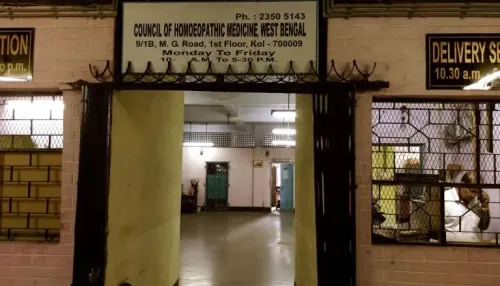
The West Bengal Medical Council on Monday, 21 September 2026, launched a sweeping registration audit of practising medical practitioners across the state, covering a 17-year period, amid rising concerns over the presence of fraudulently registered doctors. The exercise marks one of the most comprehensive scrutiny drives undertaken by the council in recent memory.
Scope of the Audit
Under the audit, registration data spanning the past 17 years will be examined to identify fake, inconsistent, or fraudulent registrations. Agencies concerned have been asked to submit information in Excel format, covering doctor names, registration numbers, fathers' names, gender details, current addresses, primary educational qualifications, and the name of the university that awarded the MBBS degree.
Additional qualifications and the degree-granting institutions for those qualifications will also be scrutinised. A council source said: 'Arrangements are being made to check not only the registration numbers or the doctor's names, but also the information about the detailed educational qualifications and the degree-granting institutions.'
Consequences for Fake Registrations
The council has made clear that strict action awaits anyone found to have obtained registration fraudulently. 'If a fake doctor is found, his MBBS registration will be cancelled, and an FIR will be lodged with the police against the persons concerned for legal action,' a council source said. This dual-track response — deregistration and criminal action — signals the council's intent to go beyond administrative penalties.
The Complaint That Preceded the Audit
The audit follows a formal complaint filed on 15 September by Rajeev Pandey, secretary of the Association of Private Hospitals and Nursing Homes (APHN), with the Bidhannagar Police Commissionerate. The complaint sought an investigation into senior West Bengal Medical Council officials over what it described as an alleged increase in registrations of fake doctors in the state.
The complaint named Sudipta Roy, the council's President; Sushanta Roy, its Secretary; Manas Chakraborty, the Registrar; and council member MLA Nirmal Maji, among others. Notably, both Roy and Maji are reportedly former Trinamool Congress (TMC) legislators, lending the case a political dimension that critics argue demands independent oversight.
Broader Implications for Healthcare in West Bengal
The surfacing of fake doctors in West Bengal is not an isolated concern — it reflects a systemic vulnerability in credential verification that, experts argue, puts patients at direct risk. This is the first time the council has initiated a retrospective audit of this scale since registration irregularities began drawing scrutiny. The outcome of the exercise is expected to have implications not only for individual practitioners but also for the private hospitals and nursing homes that may have employed them without adequate background checks.
All eyes are now on how swiftly the council processes the data and whether the findings lead to prosecutions — a test of both institutional resolve and the state's ability to self-correct in a politically sensitive environment.
Point of View
But whether findings lead to prosecutions rather than quiet cancellations. If private hospitals that employed unverified practitioners face no liability, the structural incentive for credential fraud remains intact.
NationPress
21 Sept 2026
Frequently Asked Questions
Why has the West Bengal Medical Council started a registration audit?
The West Bengal Medical Council launched the audit on 21 September 2026 to detect fake or inconsistently registered doctors, following a formal police complaint alleging that fraudulent registrations had increased under the current council leadership. The exercise covers all registrations over the past 17 years.
What happens if a fake doctor is found during the audit?
According to the council, any doctor found to have obtained registration fraudulently will have their MBBS registration cancelled and a police FIR will be filed against them for criminal action. The council is pursuing both administrative and legal remedies simultaneously.
Who filed a complaint against the West Bengal Medical Council?
Rajeev Pandey, secretary of the Association of Private Hospitals and Nursing Homes (APHN), filed a complaint with the Bidhannagar Police Commissionerate on 15 September, naming council President Sudipta Roy, Secretary Sushanta Roy, Registrar Manas Chakraborty, and council member MLA Nirmal Maji, among others.
What information is being collected under the registration audit?
Agencies have been asked to provide doctor names, registration numbers, fathers' names, gender details, current addresses, primary educational qualifications, and the university that awarded their MBBS degree. Additional qualifications and their degree-granting institutions are also required.
What is the political connection in the West Bengal fake doctors case?
Two individuals named in the police complaint — council President Sudipta Roy and council member Nirmal Maji — are reportedly former Trinamool Congress legislators. Critics argue this connection warrants independent oversight of the audit process to ensure impartiality.