Fake doctors complaint filed against West Bengal Medical Council officials
Synopsis
A Kolkata medical association has formally complained to police against senior West Bengal Medical Council officials, alleging fake doctor registrations went unchecked for nearly a decade — and that some of those unqualified practitioners even enrolled under the state's Swasthya Sathi health scheme. With multiple medical bodies now lining up to file similar complaints, the pressure on the WBMC is mounting fast.
Key Takeaways
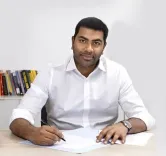
Rajeev Pandey , secretary of APHN , filed a complaint with Bidhannagar Police Commissionerate on 15 September 2026 against senior WBMC officials.
The complaint names WBMC president Sudipta Roy , secretary Sushanta Roy , registrar Manas Chakraborty , and former TMC MLA Nirmal Maji .
APHN alleges fake doctor registrations rose steadily between 2017 and 2025 , with district health authority warnings allegedly ignored by the council.
Some individuals allegedly posing as doctors reportedly enrolled under the state's Swasthya Sathi health scheme.
WBMC president Sudipta Roy denied the allegations, saying the current council took charge only in November 2022 and called the charges politically motivated.
APHN countered that several disputed registrations were issued in 2023, 2024, and 2025 — during Roy's tenure.
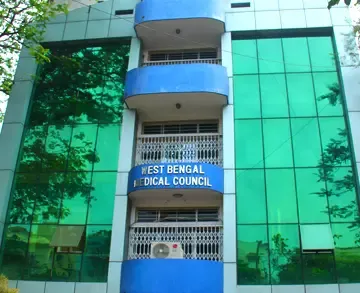
A formal complaint has been lodged with the Bidhannagar Police Commissionerate in Kolkata against senior officials of the West Bengal Medical Council (WBMC), alleging a sustained rise in fraudulent doctor registrations in the state between 2017 and 2025. The complaint was filed by Rajeev Pandey, secretary of the Association of Private Hospitals and Nursing Homes (APHN), on 15 September 2026, seeking a police investigation into the council's conduct.
Who Has Been Named
The complaint names several senior WBMC figures, including council president Sudipta Roy, secretary Sushanta Roy, registrar Manas Chakraborty, and council member and former Trinamool Congress (TMC) MLA Nirmal Maji, among others. Separately, Kaushik Chaki, president of the West Bengal Doctors Forum (WBDF), has also reportedly approached the police, and several other medical bodies are said to be considering similar action.
The Core Allegations
APHN contends that the WBMC, which is responsible for verifying medical credentials and preventing unqualified individuals from entering practice, failed to discharge this duty over an extended period. According to the association, warnings from district health authorities about fake practitioners went unheeded by the council. The organisation further alleged that some individuals posing as doctors not only practised medicine illegally but also secured enrolments under the state government's Swasthya Sathi health scheme.
Many of the accused reportedly claimed to have graduated from medical colleges outside West Bengal before obtaining permission to practise in the state — a process, critics argue, that should have involved rigorous scrutiny by the council. APHN has also alleged that attempts were made to remove or destroy relevant documents from the council office, a charge the council leadership has strongly denied.
The Council's Response
Council president Sudipta Roy pushed back firmly against the allegations, stating that the current council assumed charge only in November 2022 and questioned why it was being held responsible for events that allegedly predated its tenure. Roy denied any attempt to tamper with records, asserting that electronic copies of all documents are maintained. He suggested the allegations were politically motivated.
APHN Stands Its Ground
Rajeev Pandey countered Roy's defence, maintaining that a number of the registrations now under scrutiny were issued in 2023, 2024, and 2025 — squarely within the current council's watch. Pandey argued that the council must answer for the alleged irregularities regardless of when the broader problem began. In his complaint, he requested police to examine whether the irregular registrations could have occurred without the knowledge or patronage of the named officials.
Broader Implications
The complaint marks a significant escalation in scrutiny over West Bengal's medical registration system. If the allegations are substantiated, they would point to systemic failures in credential verification, with potential public health consequences given that unqualified practitioners may have been treating patients under a state-backed scheme. The episode also places the WBMC at the centre of a political and regulatory storm, with multiple medical bodies now reportedly aligning to demand accountability. How the Bidhannagar Police Commissionerate responds to the complaint will be closely watched by medical professionals and patient advocacy groups across the state.
Point of View
Practise, and even access state insurance schemes for nearly a decade, the failure goes well beyond a few officials. The council's defence — that it took charge only in 2022 — is undercut by APHN's pointed assertion that disputed registrations continued into 2023, 2024, and 2025. Politically, the naming of a former TMC MLA as a council member will intensify opposition scrutiny. But the deeper question is structural: West Bengal, like many states, relies on the medical council as the first and often only line of defence against bogus practitioners, and that model clearly has not worked here.
NationPress
15 Sept 2026
Frequently Asked Questions
What is the complaint filed against West Bengal Medical Council officials about?
The complaint, filed with Bidhannagar Police Commissionerate, alleges that senior WBMC officials failed to prevent a steady rise in fake doctor registrations in West Bengal between 2017 and 2025. It also alleges that some unqualified individuals enrolled under the state's Swasthya Sathi health scheme and that the council ignored repeated warnings from district health authorities.
Who has been named in the complaint against WBMC?
The complaint names WBMC president Sudipta Roy, secretary Sushanta Roy, registrar Manas Chakraborty, and council member and former TMC MLA Nirmal Maji, among others. The complaint was filed by Rajeev Pandey, secretary of APHN.
What has the West Bengal Medical Council said in response?
WBMC president Sudipta Roy denied all allegations, stating the current council took charge only in November 2022 and questioned why it was being blamed for earlier events. He also denied any attempt to destroy documents and called the allegations politically motivated.
How does APHN counter the council's defence?
APHN secretary Rajeev Pandey argued that several of the registrations under scrutiny were issued in 2023, 2024, and 2025 — during Sudipta Roy's presidency — and maintained that the council must answer for those specific cases regardless of what happened before 2022.
What is the Swasthya Sathi scheme and why is it relevant here?
Swasthya Sathi is the West Bengal government's health insurance scheme providing cashless treatment to beneficiaries. Its relevance here is that some individuals allegedly posing as doctors reportedly secured registration under the scheme, meaning public funds may have been accessed by unqualified practitioners.