Empowering Women: The Key to India's Viksit Bharat by 2047, Says Dr. Priti Adani
Synopsis
Dr. Priti Adani asserts that women's empowerment is vital for India's development journey toward becoming a Viksit Bharat by 2047. The Adani Foundation's initiatives illustrate how economic participation can transform lives.
Key Takeaways
Women's empowerment is essential for India's development toward Viksit Bharat by 2047.
Access to information enhances productivity and income for women farmers.
Self-help groups have strengthened women's roles in the dairy sector .
Initiatives like 'SuPoshan' and 'Swabhimaan' promote health and sustainable livelihoods for women.
Recent policies support the transition of women from micro-credit to entrepreneurship .
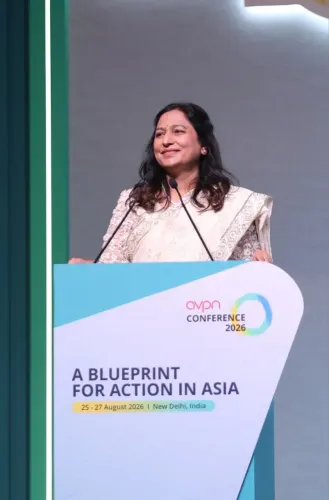
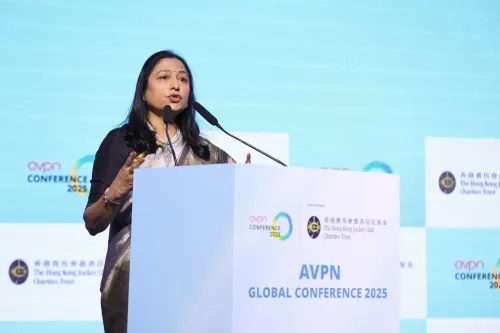
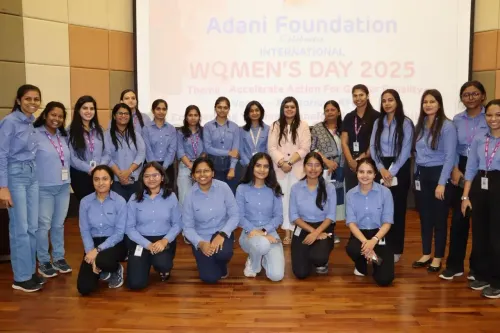
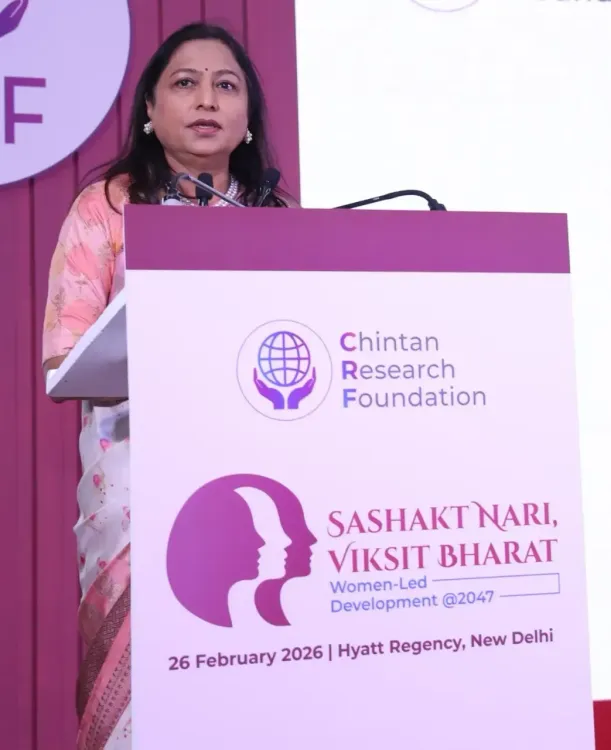
New Delhi, Feb 26 (NationPress) Dr. Priti Adani, the Chairperson of the Adani Foundation, emphasized on Thursday that women should be acknowledged as pivotal contributors to India's development narrative as the nation aspires to become a developed country by 2047.
At the ‘Sashakt Nari, Viksit Bharat’ conference organized by the Chintan Research Foundation (CRF) in the capital, Dr. Priti Adani highlighted that women's economic engagement is crucial for realizing the vision of Viksit Bharat 2047.
In her welcoming remarks for Union Minister for Women and Child Development Annapurna Devi, she noted the strong policy support for women-centric growth.
However, she called for a shift from mere intentions to consistent economic engagement at the grassroots.
Drawing from her firsthand experiences, Dr. Priti Adani stated that empowerment starts with access. In rural regions where formal education is often scarce, women farmers aided by the Adani Foundation have adopted user-friendly agricultural mobile applications.
These applications assist them with tasks such as irrigation planning, fertilizer management, seed selection, and tracking market prices.
She pointed out that improved access to information has led to enhanced productivity, increased incomes, and boosted self-confidence among women farmers.
Moreover, she illustrated advancements in the dairy sector, where collaborative efforts have significantly improved women's earning capabilities.
Currently, over 3,500 women are engaged in self-help group-managed milk collection centers supported by the Adani Foundation, processing more than 7.5 million liters of milk each year.
Through transparent pricing, quality assessments, and organized procurement, these initiatives have fostered income stability and enhanced bargaining power.
Referring to the Adani Foundation's maternal and women's health initiative ‘SuPoshan’, Dr. Priti Adani mentioned that trained local women volunteers have facilitated better health outcomes for over 325,000 women in their reproductive years.
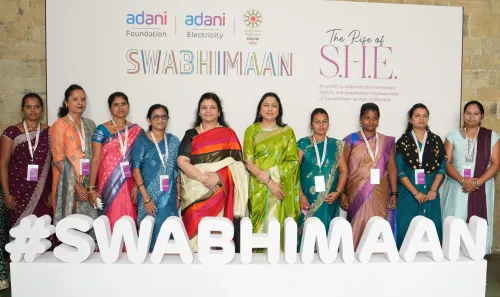
Furthermore, the ‘Swabhimaan’ program has empowered more than 4,500 women through 300 self-help groups, enabling them to create sustainable livelihoods.
Dr. Priti Adani reiterated that empowerment transcends charity; it is about broadening access to skills, finance, markets, and leadership roles.
She acknowledged that recent policy initiatives, such as the Self-Help Entrepreneurs initiative introduced in the Union Budget, represent vital strides in transitioning women from micro-credit participants to enterprise owners with access to growth capital.
Point of View
Dr. Priti Adani's insights underscore the critical role of women in India's socio-economic growth. As the nation aims for a developed status by 2047, it is imperative to prioritize women's empowerment through policy support and grassroots initiatives.
NationPress
27 Sept 2026
Frequently Asked Questions
Why is women's economic participation important for India's development?
Women's economic participation is crucial as it contributes to overall economic growth, improves household incomes, and enhances community well-being, which is essential for achieving the vision of a developed India by 2047.
What initiatives has the Adani Foundation undertaken to support women?
The Adani Foundation has launched several initiatives, including agricultural mobile applications for women farmers and self-help groups for dairy collection, enhancing access to resources and improving livelihoods.
How does the 'SuPoshan' program impact women's health?
'SuPoshan' empowers local women volunteers to support better health outcomes for women in reproductive age, significantly improving maternal health in the community.
What is the significance of the 'Swabhimaan' program?
The 'Swabhimaan' program enables women to build sustainable livelihoods, fostering economic independence and empowerment through self-help groups.
What recent policy measures support women's entrepreneurship?
Recent policies, like the Self-Help Entrepreneurs initiative in the Union Budget, aim to transition women from micro-credit participation to becoming enterprise owners, facilitating access to growth capital.