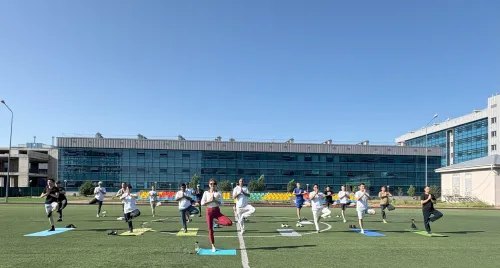
Can Yoga Accelerate Opioid Withdrawal Recovery and Alleviate Anxiety and Sleep Issues?

Synopsis
Discover how yoga can be a powerful ally in overcoming opioid withdrawal. A new study reveals its benefits for recovery, anxiety reduction, and improved sleep. This innovative approach could reshape treatment protocols for opioid use disorder, making a significant impact on public health.
Key Takeaways
Yoga significantly enhances recovery from opioid withdrawal.
Participants practicing yoga stabilized withdrawal 4.4 times faster than controls.
Yoga addresses core autonomic dysregulation.
Improvements in anxiety , sleep , and pain were observed.
Integrating yoga into treatment protocols could offer economic benefits.
New Delhi, Jan 10 (NationPress) Yoga has been shown to facilitate a quicker recovery for individuals undergoing opioid withdrawal, while also enhancing anxiety, sleep, and pain management, according to recent research.
Withdrawal symptoms from opioids can manifest physically with issues such as diarrhea, insomnia, fever, pain, anxiety, and depression, as well as autonomic responses like pupil dilation, runny nose, goosebumps, anorexia, yawning, nausea, vomiting, and sweating. These symptoms arise from the overactivity of the sympathetic nervous system due to a disruption in noradrenergic outflow.
The study, spearheaded by scientists from the National Institute of Mental Health and Neurosciences (NIMHANS) in Bengaluru and Harvard Medical School in the USA, advocates for the incorporation of yoga into withdrawal treatment protocols as a neurobiologically informed strategy. The researchers emphasized that yoga could tackle fundamental regulatory processes beyond mere symptom relief.
“In this trial, yoga significantly improved recovery from opioid withdrawal through concrete autonomic and clinical enhancements, advocating for its inclusion in withdrawal treatment protocols as a neurobiologically informed approach,” remarked Suddala Goutham from the Department of Integrative Medicine at NIMHANS.
Opioid use disorder (OUD), defined by recurrent opioid consumption leading to serious physical, psychological, and social challenges, poses a significant public health crisis globally.
In 2022, approximately 60 million individuals globally engaged in nonmedical opioid use, yet only 1 in 11 with substance use disorders received necessary treatment. A national survey in India from 2019 reported a 2.1% prevalence of opioid use.
Opioid withdrawal is characterized by sympathetic hyperactivity and diminished parasympathetic tone, issues that standard pharmacological treatments may not sufficiently mitigate, leading to a higher risk of relapse.
To assess yoga as a supplementary treatment for hastening opioid withdrawal recovery, the researchers conducted a randomized clinical trial involving 59 male participants (30 receiving yoga and 29 in a control group) diagnosed with opioid use disorder.
Participants who practiced yoga in conjunction with standard buprenorphine treatment achieved withdrawal stabilization 4.4 times faster than those in the control group. They also exhibited notable enhancements in heart rate variability, anxiety, sleep, and pain metrics.
“In this randomized clinical trial, adjunctive yoga therapy significantly expedited recovery from opioid withdrawal while addressing autonomic dysregulation. The simultaneous physiological, psychological, and symptomatic advancements indicate that yoga may restore basic regulatory mechanisms beyond symptom management,” the research team stated in their paper published in JAMA Psychiatry.
“By focusing on parasympathetic restoration, yoga might bridge a crucial therapeutic gap in standard OUD care, advocating for its integration into withdrawal protocols as a neurobiologically informed strategy with potential economic advantages,” they concluded.
Point of View
It's crucial to highlight the transformative potential of yoga as an adjunct therapy for opioid withdrawal recovery. Given the alarming statistics around opioid use disorder and the limited treatment access, this research presents a promising avenue for enhancing patient outcomes. As we strive for a comprehensive approach to addiction treatment, integrating holistic practices like yoga could significantly bolster recovery efforts.
NationPress
26 Sept 2026
Frequently Asked Questions
How does yoga help with opioid withdrawal?
Yoga aids in opioid withdrawal recovery by enhancing physiological and psychological well-being, addressing autonomic dysregulation, and improving anxiety and sleep.
What are the common symptoms of opioid withdrawal?
Common opioid withdrawal symptoms include diarrhea, insomnia, fever, pain, anxiety, and depression, among others.
How many people use opioids nonmedically worldwide?
In 2022, approximately 60 million people worldwide used opioids nonmedically.
What is opioid use disorder?
Opioid use disorder (OUD) is characterized by recurrent opioid use that results in significant physical, psychological, and social problems.
Can yoga replace traditional treatments for opioid withdrawal?
While yoga can significantly aid recovery, it should complement traditional treatments rather than serve as a replacement.