Balochistan enforced disappearances: 3 more civilians allegedly taken by Pakistani forces
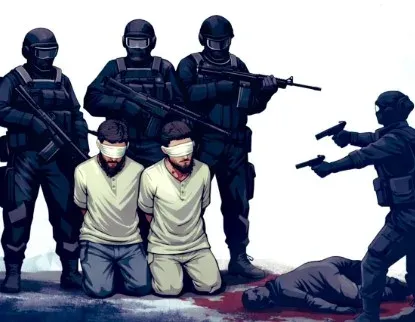
Synopsis
A 15-year-old rickshaw driver, a labourer, and a young man — all allegedly snatched by Pakistani security forces within days of each other. The BYC's latest disclosures land just days after six members of a single family, including a three-month-old infant, were allegedly abducted in Mastung. Rights groups warn the pattern is no longer episodic — it is systemic.
Key Takeaways
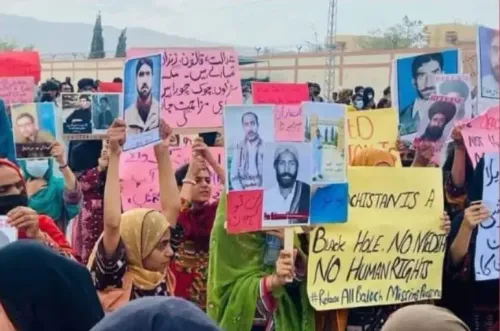
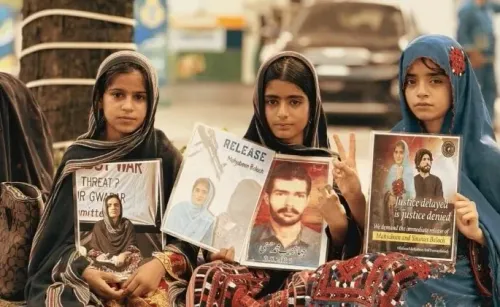
The Baloch Yakjehti Committee (BYC) alleged on 27 July that three civilians were forcibly disappeared by Pakistani security forces in Balochistan .
Aziz Baloch , 15 , was allegedly abducted from Quetta's Saryab Road on 23 July ; the ISI/CTD were named as alleged perpetrators.
Khalil Ahmed , 30 , and Gull Muhammad , 27 , were both allegedly abducted from Nigar, Surab on 12 July ; the FC/Army were named.
On 21 July , security forces allegedly abducted six members of a family in Mastung district , including a three-month-old infant .
The Baloch Women Forum (BWF) has called the practice 'one of the most alarming human rights issues of the 21st century' and urged international intervention.
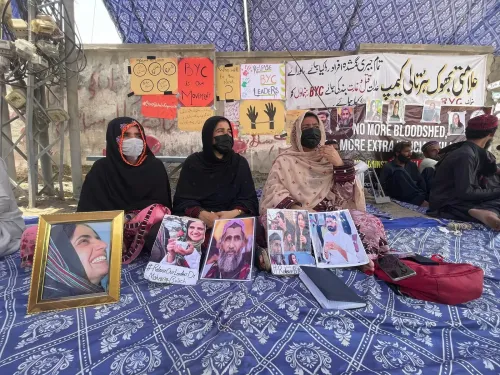
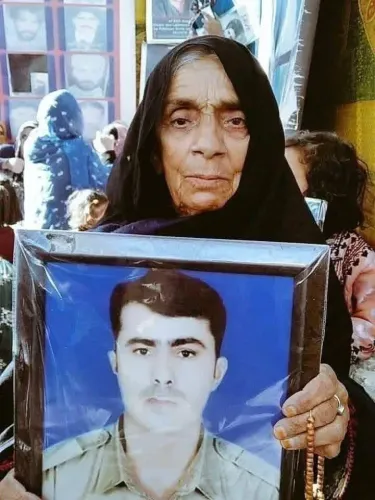
Three more civilians have allegedly been forcibly disappeared by Pakistani security forces in Balochistan, according to a statement released by the Baloch Yakjehti Committee (BYC) on 27 July. The allegations, which Pakistani authorities have not publicly addressed, add to a growing body of documented cases that rights groups say constitute a systematic pattern of enforced disappearances across the province.
The Three Alleged Cases
Aziz Baloch, 15, a rickshaw driver, was allegedly abducted from Quetta's Saryab Road on 23 July. The BYC alleged that personnel from Pakistan's Inter-Services Intelligence (ISI) and the Counter-Terrorism Department (CTD) were responsible for the abduction.
Khalil Ahmed, 30, a labourer, was allegedly taken from his home in Nigar, Surab, on 12 July at 5 pm local time. The BYC alleged that Pakistan's Frontier Corps (FC) and Army personnel carried out the abduction. On the same date and in the same locality, Gull Muhammad, 27, also a labourer, was allegedly abducted from his home, with the BYC again naming the FC/Army as the alleged perpetrators.
The Mastung Incident That Preceded the Allegations
The latest disclosures follow a widely condemned incident on 21 July in the Killi Kongarh area of Mastung district, where security forces allegedly raided a house and abducted six members of a single family. The victims were identified as Bibi Rafia, 33; her three children aged three months, four years, and six years; her brother Muhammad Arif, 40; and her niece Bibi Nida, 18.
The incident drew sharp condemnation from the Baloch Women Forum (BWF), which described it as 'not just a tragedy for one family but a link in this broader chain of enforced disappearances in Balochistan.'
Rights Groups Warn of Escalating Pattern
The BWF, which raised the alarm last week, said the practice of enforced disappearances has become 'one of the most alarming human rights issues of the 21st century.' The forum specifically highlighted the gravity of disappearing women and children, noting that international law explicitly recognises both as categories warranting special protection.
'When it comes to a mother, the situation becomes even more serious, because the disappearance of a mother is not merely the disappearance of an individual — it plunges the entire family, especially minor children, into severe psychological, economic, and social crises,' the BWF stated. 'If even infants or minor children are deprived of their freedom, the matter takes on an even more grave nature, which has now assumed an even more serious form in Balochistan today.'
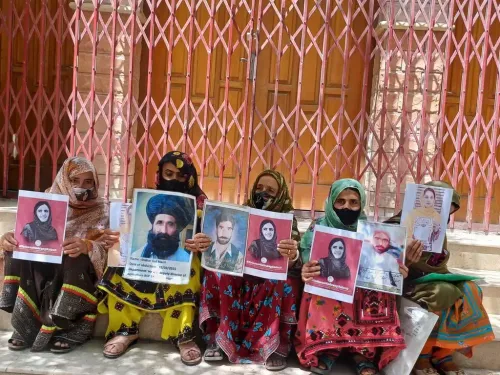
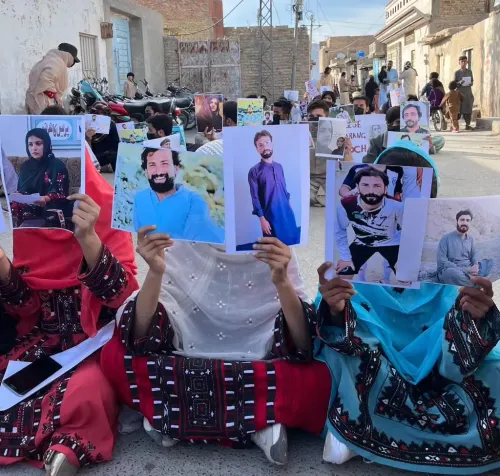
The forum added: 'Numerous families have been waiting for years for the return of their loved ones; numerous victims have passed away while waiting for their loved ones; yet this policy of coercion shows no signs of ending.'
Broader Context and What Comes Next
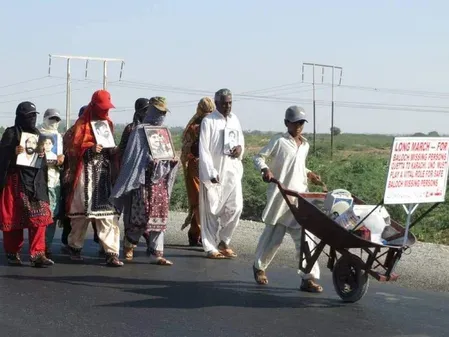
Enforced disappearances in Balochistan have been documented by multiple international human rights organisations over the past two decades. Critics argue that Pakistani state institutions — including the military and intelligence apparatus — have used the practice as a counter-insurgency tool, allegations the Pakistani government has consistently denied. The BYC and BWF have both called on international human rights bodies to intervene and hold the authorities accountable. With incidents reportedly continuing unabated, pressure on international forums is expected to mount in the weeks ahead.
Point of View
Two labourers, all from working-class backgrounds with no reported militant links. That pattern, if accurate, suggests the net is being cast far beyond any counter-insurgency logic. The Mastung case — a nursing mother and a three-month-old among the alleged abductees — marks an escalation in the alleged targeting of civilians that international bodies can no longer treat as peripheral. Pakistan's consistent non-response to these allegations has itself become the story: silence in the face of documented, named cases is a posture that is increasingly difficult to sustain before UN human rights mechanisms.
NationPress
26 Oct 2026
Frequently Asked Questions
Who are the three civilians allegedly disappeared in Balochistan on 27 July?
The three are Aziz Baloch, 15, a rickshaw driver allegedly abducted from Quetta's Saryab Road on 23 July; Khalil Ahmed, 30, a labourer allegedly taken from Nigar, Surab on 12 July; and Gull Muhammad, 27, a labourer allegedly abducted from the same locality on the same date. All three cases were documented by the Baloch Yakjehti Committee (BYC).
Which Pakistani security agencies have been named in the alleged abductions?
The BYC has named the Inter-Services Intelligence (ISI) and the Counter-Terrorism Department (CTD) in the case of Aziz Baloch, and the Frontier Corps (FC) and Army in the cases of Khalil Ahmed and Gull Muhammad. Pakistani authorities have not publicly responded to these specific allegations.
What happened in Mastung district on 21 July 2025?
Security forces allegedly raided a house in the Killi Kongarh area of Mastung district and abducted six family members, including Bibi Rafia, 33, her three children (the youngest just three months old), her brother Muhammad Arif, 40, and her niece Bibi Nida, 18. The incident was condemned by the Baloch Women Forum as emblematic of a broader pattern.
What is the Baloch Yakjehti Committee (BYC)?
The BYC is a Balochistan-based rights and civil society organisation that documents and publicises alleged human rights violations, including enforced disappearances, in the province. It regularly releases statements attributing such incidents to Pakistani security forces, allegations the Pakistani government has denied.
Why are enforced disappearances in Balochistan considered a serious human rights issue?
Rights groups, including the Baloch Women Forum, say the practice has persisted for over two decades and affects civilians with no reported militant links, including women, children, and infants. International law explicitly prohibits enforced disappearances and mandates special protections for women and children, making the alleged incidents a matter of concern for UN human rights bodies.