Pakistani forces kill four civilians in Balochistan, rights body alleges
Synopsis
The Baloch Yakjehti Committee has documented four alleged extrajudicial killings by Pakistani security forces across Balochistan — including a 17-year-old student whose mutilated body was dumped after an eight-day disappearance. The cases, spanning August to November, trace a chilling pattern: abduction, secret detention, and bodies discarded in remote areas, with killings framed as fake encounters.
Key Takeaways
The Baloch Yakjehti Committee (BYC) alleged that at least four civilians were extrajudicially killed by Pakistani forces in Balochistan , with the claims made on 5 November 2026 .
Elahi Baksh , 60, and Muneer Ahmad , 32, were found dead in the Naal region on 2 November , after allegedly being disappeared by the Pakistan Frontier Corps and a 'death squad' respectively.
Salahuddin was allegedly killed in a 'fake encounter' on 31 October ; he had reportedly been missing since 7 August .
17-year-old student Reyan Ulfath's mutilated body was found in the Pasni region on 22 October , eight days after his alleged disappearance.
The BYC has called on the United Nations and international human rights bodies to take immediate action over the alleged killings.
Pakistan's government had not issued a public response to these specific allegations at the time of reporting.
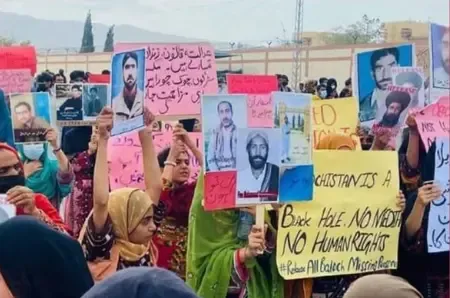
Pakistani security forces have allegedly killed at least four civilians through extrajudicial means in Balochistan, with their bodies dumped across multiple districts, according to allegations made by the Baloch Yakjehti Committee (BYC) on 5 November 2026. The human rights organisation has called on the United Nations and the global community to take immediate notice of what it describes as a systematic pattern of enforced disappearances and killings in the restive province.
Key Incidents Documented by BYC
According to the BYC, the bodies of 60-year-old shopkeeper Elahi Baksh and 32-year-old driver Muneer Ahmad were found dumped in the Laghorzard area of Naal region on 2 November, days after both men were allegedly subjected to enforced disappearances. The rights body alleged that Baksh was forcibly taken from his home on 30 October by personnel of the Pakistan Frontier Corps (FC), while Muneer was reportedly abducted from his residence on 2 October by what the BYC described as a 'Pakistan-backed death squad'.
In a separate incident, a man identified as Salahuddin was allegedly killed in a 'fake encounter' on 31 October, with his body found near the Zardain Koti area of Kharan district. He had reportedly been forcibly disappeared alongside his brother Azar on 7 August from their home, according to the BYC.
The fourth case involves 17-year-old student Reyan Ulfath, whose mutilated body was allegedly found dumped in the Kulanch area of Pasni region on 22 October, after he had been missing for eight days. The BYC alleged that Ulfath was forcibly disappeared by death squads from his home on 16 October.
What the Rights Body Said
The BYC issued strong condemnations across each case, stating that the killings reflect a deeply troubling pattern. 'Enforced disappearance and extrajudicial killing are grave violations of the fundamental rights to life, liberty, and human dignity. No one should be taken from their home, held in secret, and deprived of life outside the protection of the law,' the organisation said, specifically demanding accountability in Elahi Baksh's case.
On the broader pattern, the BYC stated: 'Such incidents reflect a disturbing pattern in Balochistan, where individuals subjected to enforced disappearance are later found dead, with their killings presented as fake encounters. These practices deny victims their right to due process and deprive their families of truth and justice.'
Regarding the killing of the 17-year-old student, the BYC said: 'Young students should be protected, not subjected to disappearance and violence. Their lives, dignity, and fundamental freedoms must be respected and safeguarded under domestic and international human rights standards.'
Pattern of Alleged Atrocities in Balochistan
The incidents documented span a period from 7 August to 2 November, across geographically dispersed areas of Balochistan including Naal, Kharan, and Pasni. Critics and human rights observers have long argued that enforced disappearances in Balochistan follow a recognisable sequence — abduction by security forces or affiliated groups, an extended period of unknown detention, and eventual discovery of the victim's body under circumstances authorities often frame as an encounter with militants.
Notably, this pattern has drawn repeated censure from international bodies, including UN special rapporteurs on enforced disappearances, though Islamabad has historically disputed such characterisations. Pakistan's government had not issued a public response to these specific allegations at the time of reporting.
International Appeal and What's Next
The BYC has formally appealed to international human rights organisations, the United Nations, and the broader global community to intervene and hold accountable those responsible for the killings. The rights body has also called for independent investigations into each of the four deaths.
With Balochistan's human rights situation continuing to draw scrutiny, the BYC's latest documentation is likely to intensify pressure on Pakistan at multilateral forums, particularly as the UN Human Rights Council's universal periodic review cycle continues.
Point of View
Kharan, and Pasni are not adjacent, which challenges any framing of these as localised security operations gone wrong. The involvement of a 17-year-old student with no alleged militant links is particularly significant, as it undercuts the 'encounter with militants' narrative that Pakistani authorities have historically deployed. With UN rapporteurs already on record about enforced disappearances in Balochistan, the question is whether multilateral pressure will translate into any accountability mechanism — or whether these cases join thousands of others that remain unresolved.
NationPress
5 Nov 2026
Frequently Asked Questions
What did the Baloch Yakjehti Committee allege about Pakistani forces in Balochistan?
The Baloch Yakjehti Committee (BYC) alleged that Pakistani security forces and affiliated groups extrajudicially killed at least four civilians in Balochistan between October and November 2026. The victims were reportedly subjected to enforced disappearances before their bodies were found dumped across several districts.
Who were the four civilians allegedly killed in Balochistan?
The four alleged victims are 60-year-old shopkeeper Elahi Baksh and 32-year-old driver Muneer Ahmad, whose bodies were found in the Naal region on 2 November; Salahuddin, allegedly killed in a fake encounter on 31 October in Kharan district; and 17-year-old student Reyan Ulfath, whose mutilated body was found in the Pasni region on 22 October.
What is enforced disappearance and why is it significant in Balochistan?
Enforced disappearance refers to the arrest, detention, or abduction of a person by state agents or affiliated groups, followed by a refusal to disclose the person's fate or whereabouts. In Balochistan, human rights organisations have long documented a pattern where disappeared individuals are later found dead, with authorities framing the deaths as militant encounters — a practice the BYC describes as a systematic denial of due process.
Has Pakistan's government responded to these allegations?
Pakistan's government had not issued a public response to these specific allegations at the time of reporting. Islamabad has historically disputed characterisations of its security operations in Balochistan by international human rights bodies, including UN special rapporteurs.
What action has the BYC demanded over the killings?
The BYC has called for independent investigations into each of the four deaths, accountability for those responsible, and justice for the victims' families. It has also formally appealed to international human rights organisations and the United Nations to take immediate notice of the deteriorating human rights situation in Balochistan.