Yemen conflict: 44 killed in 24-hour Taiz and Lahj clashes
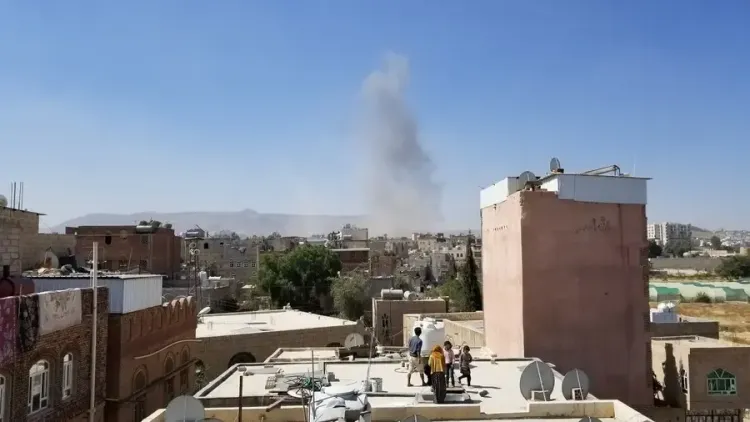
Synopsis
At least 44 people died in 24 hours of intense Yemeni government-Houthi clashes across Taiz and Lahj provinces — and the stakes are rising fast. With Houthis having seized the port city of Mocha and Perim Island in the Bab al-Mandeb strait this month, the latest fighting is not just a frontline skirmish; it is a battle for control of one of the world's most critical shipping chokepoints.
Key Takeaways
At least 44 people were killed in Yemen fighting between government forces and Houthis over 24 hours ending 19 September 2026 .
In Taiz , 6 government soldiers and 11 Houthi fighters died in clashes at Al-Kadha and Al-Wazi'iyah .
In Lahj , 12 government soldiers and 15 Houthi fighters — including a commander — were killed around the Kahbub mountain area.
The fighting follows Houthi capture of Mocha on 10 September and Perim Island on 11 September , placing them near the Bab al-Mandeb strait .
Yemen's conflict dates to late 2014 ; a Saudi-led coalition intervened in March 2015 backing the internationally recognised government.
At least 44 people were killed in renewed fighting between Yemeni government forces and the Houthi group over a single 24-hour period ending Saturday, 19 September 2026, according to military sources from both sides. The clashes were concentrated in the southwestern provinces of Taiz and Lahj, where both sides have reportedly rushed reinforcements to contested front lines stretching toward critical waterways.
Clashes in Taiz
In Taiz province, fierce engagements continued in the Al-Kadha and Al-Wazi'iyah areas. A government military source, speaking on condition of anonymity, said government forces repelled multiple Houthi offensives over the reporting period, with six government soldiers and 11 Houthi fighters confirmed dead in those exchanges. 'The Houthis sent in large reinforcements and tried to break through our defensive lines at several positions, but the attacks were repelled,' the source said.
Battle for Kahbub and Bab al-Mandeb approaches
Further south in Lahj province, a separate government military official said fighting was raging around the Kahbub mountain area, where both sides are contesting control of strategic high ground overlooking the approaches to the Bab al-Mandeb strait — one of the world's busiest shipping corridors. The official said 12 government soldiers were killed on the Kahbub front over the same 24-hour window. A Houthi military source separately confirmed that 15 Houthi fighters, including a commander, were killed in the Kahbub fighting during the same period.
Context: Houthi gains along the Red Sea coast
The latest casualties follow a significant shift in battlefield momentum earlier this month. The Houthi group captured the strategic port city of Mocha on 10 September before advancing southward, seizing Mayyun — also known as Perim Island — in the heart of the Bab al-Mandeb strait on 11 September. Those territorial gains have placed the Houthis in direct proximity to one of the world's most strategically vital sea lanes, raising concerns among regional powers and international shipping interests. Notably, this is the most significant Houthi territorial advance in Yemen's southwestern corridor in months.
Background to Yemen's decade-long war
Yemen's conflict has its roots in late 2014, when Houthi forces seized the capital Sanaa and large swaths of northern Yemen. A Saudi-led coalition intervened in March 2015 in support of the internationally recognised government, triggering what has since become one of the world's most protracted and devastating armed conflicts. Multiple UN-brokered ceasefires have failed to produce a durable peace, and the frontlines have shifted repeatedly across southern and western Yemen. This latest escalation comes amid broader Red Sea tensions linked to the wider regional environment.
What to watch next
With both sides reinforcing positions around Bab al-Mandeb, the coming days could determine whether the Houthis consolidate their coastal gains or face a sustained government counter-offensive. International observers and shipping stakeholders will be tracking developments closely, given the strait's role as a chokepoint for global energy and trade routes.
Point of View
But the geography is the real story. Houthi control of Mocha and Perim Island gives the group an unprecedented foothold at the mouth of Bab al-Mandeb — a strait through which a substantial share of global oil and container traffic transits. The battle for Kahbub is not merely a tactical skirmish; it is a contest over the high ground that could determine who commands the approaches to that chokepoint. Mainstream coverage tends to reduce Yemen to a humanitarian crisis narrative, but this phase of the war has direct implications for global shipping and regional security architecture that extend well beyond Sanaa's political future.
NationPress
20 Sept 2026
Frequently Asked Questions
How many people were killed in Yemen fighting on 19 September 2026?
At least 44 people were killed in clashes between Yemeni government forces and the Houthi group over a 24-hour period ending Saturday, 19 September 2026. The deaths were split across Taiz and Lahj provinces, according to military sources from both sides.
Where is the fighting in Yemen taking place?
The clashes are concentrated in the southwestern provinces of Taiz and Lahj. In Taiz, fighting is ongoing at Al-Kadha and Al-Wazi'iyah, while in Lahj the key battle is around the Kahbub mountain area overlooking the Bab al-Mandeb strait.
What is the significance of the Bab al-Mandeb strait in the Yemen conflict?
Bab al-Mandeb is one of the world's most critical maritime chokepoints, connecting the Red Sea to the Gulf of Aden and carrying significant volumes of global oil and container trade. Houthi advances toward it raise concerns about potential disruption to international shipping.
What territorial gains have the Houthis made recently?
The Houthis captured the strategic port city of Mocha on 10 September and seized Mayyun, or Perim Island, in the heart of the Bab al-Mandeb strait on 11 September 2026, marking their most significant southwestern coastal advance in months.
How long has the Yemen conflict been going on?
Yemen's conflict began in late 2014 when Houthi forces seized the capital Sanaa and northern Yemen. A Saudi-led coalition intervened in March 2015 to back the internationally recognised government, and the war has continued for over a decade with no durable ceasefire.