6 journalists indicted in South Korea stock manipulation scheme worth ₩9 billion
Synopsis
South Korean prosecutors have indicted six business journalists for allegedly running a 'pump-and-publish' scheme — buying volatile stocks, writing favourable articles to inflate prices, then selling for profit. The group reportedly netted over ₩9 billion across roughly 1,800 articles, in one of the most striking media-linked market fraud cases the country has seen.
Key Takeaways
Eight people , including six business daily journalists , were indicted by the Seoul Southern District Prosecutors Office on 29 July .
The group allegedly earned more than 9 billion won (approx. $6.19 million ) through stock price manipulation.
Five reporters, an accountant, and an investor allegedly wrote around 1,800 articles between October 2020 and June 2024 , reaping 8.55 billion won .
Reporters were allegedly paid 300,000 won per article to publish price-inflating coverage.
A separate reporter faces charges over 340 articles and alleged gains of 740 million won between October 2022 and July 2024 .
The Financial Services Commission is also considering additional curbs on single-stock leveraged ETFs amid market volatility.
South Korean prosecutors on Wednesday, 29 July announced the indictment of eight people — including six business daily journalists — on charges of allegedly manipulating stock prices and pocketing more than 9 billion won (approximately $6.19 million) in illicit gains. The case, handled by the Seoul Southern District Prosecutors Office, marks one of the more sweeping media-linked market manipulation prosecutions in recent South Korean history.
How the Scheme Allegedly Worked
According to prosecutors, the suspects purchased low-volume or highly volatile stocks in advance, then artificially inflated their prices by publishing favourable news articles before offloading their holdings at a profit. The strategy, sometimes called a 'pump-and-publish' scheme, exploited the credibility of financial journalism to move retail investor sentiment.
An accountant, an investor, and five reporters together allegedly reaped 8.55 billion won in illegal profits by authoring approximately 1,800 articles between October 2020 and June 2024. The reporters reportedly joined the arrangement on the condition of receiving 300,000 won per article, with three of them individually pocketing approximately 150 million won, 160 million won, and 28 million won, respectively.
A Second Reporter Charged Separately
In a parallel charge, a separate reporter allegedly made around 740 million won through 340 articles published between October 2022 and July 2024 by allegedly abusing editorial authority to push articles into publication. This individual is being prosecuted independently from the primary group of eight.
What the Prosecution Said
'We will respond sternly to acts that disrupt the stock market,' the prosecution stated, adding that authorities intend to track down and confiscate all criminal proceeds. The statement signals an intent to pursue asset recovery alongside criminal liability — a notable escalation in approach.
Regulator Weighs Curbs on Single-Stock ETFs
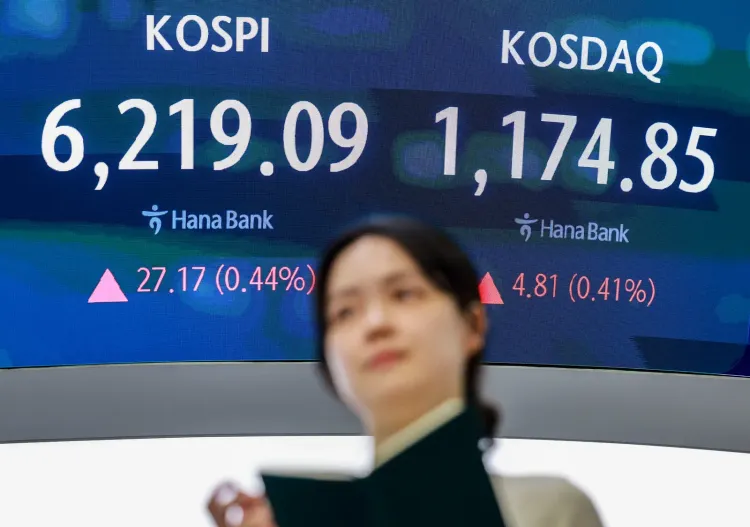
Separately, Lee Eog-weon, chairman of the Financial Services Commission (FSC), told parliament on the same day that the regulator may introduce further measures to cool single-stock leveraged exchange-traded funds (ETFs), which have been cited as a contributing factor to recent volatility in South Korea's stock market.
The FSC had earlier announced a hike in the minimum cash deposit required for single-stock leveraged ETF investment, effective Friday. The government accelerated the implementation of this deposit requirement by several weeks, citing the need to stabilise the market and protect retail investors amid heightened volatility. The two developments — the journalist indictments and the ETF curbs — together reflect growing regulatory concern over the integrity and stability of South Korea's capital markets.
Point of View
When corrupted, is a more efficient market manipulation tool than almost any trading algorithm. The fact that roughly 1,800 articles were published over nearly four years before prosecution suggests either a detection failure or an enforcement lag that prosecutors must now explain. South Korea's simultaneous move to tighten ETF leverage rules signals that regulators see retail investor protection as urgent — but repairing trust in financial media will take considerably longer than a deposit hike.
NationPress
28 Oct 2026
Frequently Asked Questions
What did the South Korean journalists allegedly do?
The journalists allegedly purchased low-volume or volatile stocks in advance, then published favourable news articles to inflate those prices before selling their holdings for profit. Prosecutors say five reporters, an accountant, and an investor collectively wrote around 1,800 articles between October 2020 and June 2024 as part of this scheme.
How much money was allegedly made in the scheme?
The eight indicted individuals allegedly pocketed more than 9 billion won (approximately $6.19 million) in total illicit gains. Of that, 8.55 billion won was attributed to the core group of seven, while a separately charged reporter allegedly made around 740 million won through 340 articles.
Who is prosecuting the case and what action will they take?
The Seoul Southern District Prosecutors Office is handling the case. Prosecutors have pledged to respond 'sternly' to market-disrupting conduct and said they will track down and confiscate all criminal proceeds from those convicted.
What are single-stock leveraged ETFs and why is South Korea regulating them?
Single-stock leveraged ETFs are exchange-traded funds that amplify the returns — and losses — of a single underlying stock, often attracting speculative retail investment. South Korea's Financial Services Commission has cited them as a factor contributing to recent stock market volatility and has moved to raise the minimum cash deposit required to invest in them, with further measures under consideration.
How does this case affect press credibility in South Korea?
The indictment raises serious questions about editorial oversight at the business publications involved, since the scheme reportedly ran for nearly four years across hundreds of articles. While the accused are individuals rather than their employers, the scale of alleged misconduct points to gaps in conflict-of-interest controls within South Korean financial media.