Balochistan enforced disappearances: 9 civilians detained by Pakistani forces
Synopsis
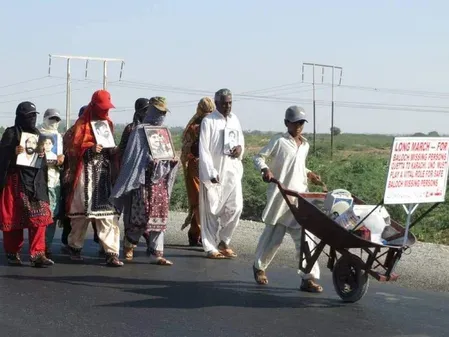
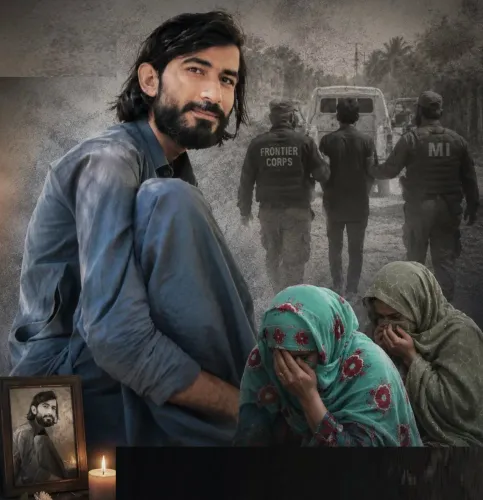
Nine civilians — including a 15-year-old tailor and a university student — have vanished into Pakistani custody across Balochistan in less than two weeks. The cases land against a damning HRCB report documenting 124 enforced disappearances and 53 killings in April alone, with house raids accounting for 98 of those abductions — a pattern critics say signals systematic, not incidental, targeting.
Key Takeaways
Nine civilians were reportedly detained and disappeared by Pakistani security forces across Balochistan between 6 June and 20 June 2025 .
Six cases were reported from Panjgur district ; others from Sariab and Chagai district .
The youngest victim, Sher Zaman Baloch , is 15 years old , taken from his tailoring workshop in Killi Almas on 17 June .
The Human Rights Council of Balochistan (HRCB) documented 124 enforced disappearances and 53 killings in April 2025 alone.
House raids accounted for 98 out of 124 enforced disappearance cases in the HRCB's April report.
Two men from Keech , missing since November 2024 , were released from Karachi's Mauripur area on 17 June .
At least nine civilians, including a 15-year-old tailor, two labourers, and a university student, have been reported missing after Pakistani security forces detained them in separate incidents across Balochistan province, according to local media reports. The cases, spread across Panjgur, Sariab, and Chagai districts, emerged between 6 June and 20 June 2025.
The Panjgur Cases
Six of the nine disappearances were reported from Panjgur district. According to local sources, Saadullah was forcibly taken by Pakistani forces from a shop in Kohda Hakim Bazaar in Parom on 15 June. Three men — Aziz, Sadiq, and Latif — were taken from their homes in Parom on 20 June, reportedly by security personnel.
Zahid, a university student from Parom, was detained from university premises in Panjgur city on 10 June. No information regarding the whereabouts of any of the six men has since emerged, according to local sources.
Other Districts: Sariab and Chagai
Adil Baloch, 21, a labourer, was detained by Counter Terrorism Department (CTD) personnel from the Sariab area on 6 June, according to his family. He has remained missing since. Sher Zaman Baloch, aged 15, was taken from his tailoring workshop in the Killi Almas area on 17 June; his family said they have received no information about his whereabouts. Separately, Obaid Baloch, 18, has remained missing after being taken into custody from Dalbandin in Chagai district on 14 June.
Notably, two men from Keech who had been missing since November 2024 were released from Karachi's Mauripur area on 17 June, offering a rare instance of individuals reappearing after prolonged disappearance.
Broader Pattern: HRCB Documents 124 Disappearances in April
The latest cases come amid a documented surge in enforced disappearances and killings across the province. On 1 June, the Human Rights Council of Balochistan (HRCB) released a report recording 53 killings and 124 enforced disappearances in April 2025 alone.
The 53 killings included 44 men and 9 women, with the identities of 7 victims unverified. According to the HRCB report, targeted killings were the most frequently recorded category at 16 cases, followed by bombardment and shelling (12 cases) and custodial killings (11 cases). Honour killings accounted for 7 cases, while fake encounters and firing incidents made up 4 and 3 cases respectively.
Of the 124 enforced disappearances, 8 were women and 5 were teenagers. The HRCB noted that house raids accounted for the overwhelming majority — 98 out of 124 cases — followed by detentions (16 cases) and road interceptions (8 cases). Summonses to camps were recorded in 2 cases. The organisation noted that while a limited number of victims were later released, most remain unaccounted for.
A Deepening Crisis
Enforced disappearances in Balochistan have been a persistent and deeply contested issue, with Pakistani authorities historically denying systematic targeting while human rights bodies continue to document fresh cases. The pattern identified by the HRCB — a heavy reliance on home-based raids — points to an operational method that critics argue bypasses due process entirely. With the latest nine cases adding to an already lengthy list, pressure on international human rights bodies to respond is likely to grow.
Point of View
53 killings, 98 of those disappearances through house raids) suggest an operational playbook, not random excess. What is striking is the profile of those taken: a 15-year-old tailor, a university student, day labourers — not profiles that fit any counter-terrorism rationale offered publicly. International human rights institutions have long flagged Balochistan, but documentation has rarely translated into accountability. Until it does, the numbers will keep rising.
NationPress
20 Sept 2026
Frequently Asked Questions
What happened to the nine civilians in Balochistan?
Nine civilians were reportedly detained by Pakistani security forces in separate incidents across Balochistan between 6 June and 20 June 2025, and have since gone missing. The cases span Panjgur, Sariab, and Chagai districts, with no information on the detainees' whereabouts provided to their families.
Who is the youngest person reported missing in these incidents?
Sher Zaman Baloch, aged 15, is the youngest among the nine. He was taken from his tailoring workshop in the Killi Almas area on 17 June 2025, and his family has received no information about him since.
What did the Human Rights Council of Balochistan report find?
The HRCB's report, released on 1 June 2025, documented 53 killings and 124 enforced disappearances in Balochistan in April 2025 alone. House raids were the dominant method, accounting for 98 of the 124 disappearance cases, with victims including 8 women and 5 teenagers.
Has anyone detained in Balochistan been released recently?
Yes. Two men from Keech who had been missing since November 2024 were released from Karachi's Mauripur area on 17 June 2025, according to local reports. However, the HRCB noted that most victims of enforced disappearance remain unaccounted for.
What methods do Pakistani forces reportedly use in Balochistan disappearances?
According to the HRCB's April 2025 report, house raids account for the overwhelming majority of enforced disappearances — 98 out of 124 cases. Detentions (16 cases), road interceptions (8 cases), and summonses to camps (2 cases) were also documented.