Abbas condemns 'genocidal war' in Gaza, pushes two-state solution at UNGA
Synopsis
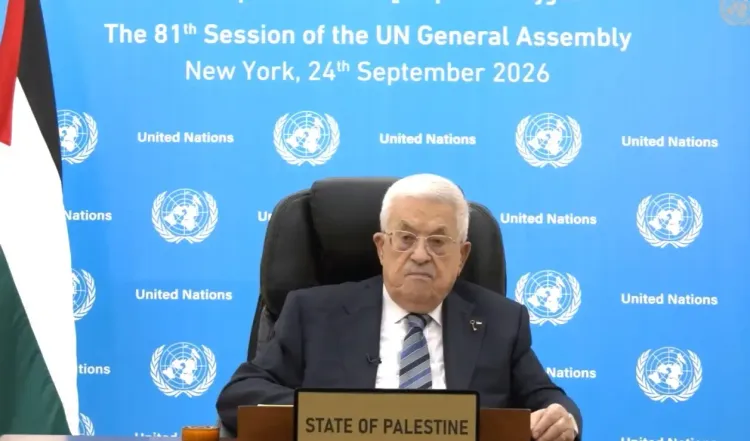
Speaking via video to the UN General Assembly after being denied a US visa, Palestinian President Mahmoud Abbas called Israel's Gaza campaign a 'genocidal war' that has killed roughly 70,000 — yet in the same breath reaffirmed a two-state solution and denounced terrorism. With Netanyahu due at the same podium hours later, the duelling speeches crystallised just how far apart the two sides remain from any negotiated end.
Key Takeaways
Mahmoud Abbas addressed the UN General Assembly via video on 25 September 2026 after being denied a US visa to attend in person.
He labelled Israel's Gaza offensive a 'genocidal war' , saying it has killed approximately 70,000 Palestinians .
Abbas reaffirmed the Palestinian Authority's commitment to a two-state solution recognising Israel's right to exist in peace.
He explicitly denounced terrorism and anti-Semitism , saying: 'We hate it.' Abbas welcomed Trump's Board of Peace initiative but said nothing had materialised on the ground yet.
Israeli Prime Minister Benjamin Netanyahu was scheduled to address the assembly hours after Abbas's speech.
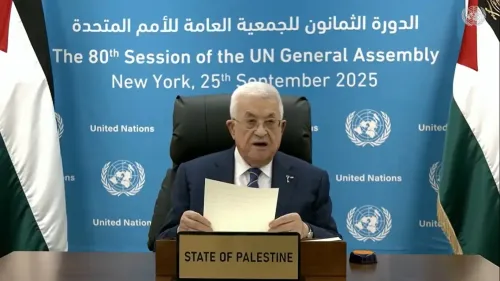
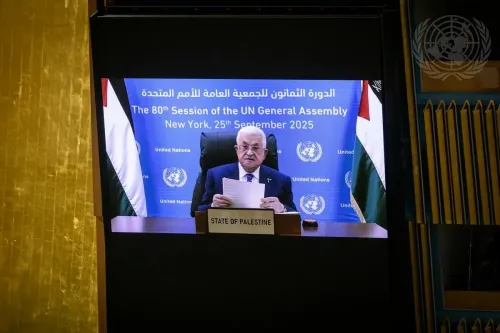
Palestinian President Mahmoud Abbas on Thursday, 25 September delivered a blistering address to the United Nations General Assembly, denouncing what he described as a 'genocidal war' by Israel in Gaza while reaffirming his commitment to a two-state solution that recognises Israel's right to exist in peace. Unable to attend in person after being denied a US visa, Abbas addressed world leaders via video link, his speech projected on two giant screens inside the General Assembly hall.
Abbas's Core Charges Against Israel
Abbas accused Israel of unleashing 'a genocidal war that has created an unprecedented humanitarian catastrophe' in Gaza. According to his address, the ongoing conflict has killed approximately 70,000 people — a figure he cited in the context of Israel's military response to the October 7, 2023 Hamas assault on Israeli territory, which left over 1,000 Israelis dead.
He further alleged that Israel was pursuing 'a malicious colonial scheme' in the West Bank aimed at forcing Palestinians from their land. His response was unequivocal: 'We will not leave our homeland.'
Reaffirming the Two-State Vision
Despite the charged language, Abbas was explicit about the Palestinian Authority's stated political goal. Palestinians seek, he said, 'a democratic state that respects the rule of law and human rights, a non-militarised state that lives in security and peace alongside the state of Israel.' He urged the international community to stand firm behind the two-state framework, warning that Israeli actions were not merely undermining the solution but now threatening 'the very life and existence of the Palestinian people on their homeland.'
On Trump's Peace Initiative and Terrorism
Abbas offered a nuanced response to US President Donald Trump's initiative to establish a Board of Peace involving several Muslim-majority nations to rebuild Gaza following the disarmament of Hamas and Israel's withdrawal. While welcoming the concept, he expressed frustration: 'Regretfully, we have not seen any of this materialise on the ground.'
Notably, Abbas explicitly denounced both terrorism and anti-Semitism. 'We hate it,' he said — a statement widely seen as an attempt to reinforce the Palestinian Authority's distance from Hamas and bolster its credibility before a global audience.
The Backdrop: Rival Protests, Netanyahu Next
Abbas spoke hours before Israeli Prime Minister Benjamin Netanyahu was scheduled to address the same assembly, setting up a sharp rhetorical contrast before world leaders. Outside the UN headquarters in New York, rival groups of demonstrators — some expressing solidarity with Israel, others condemning its actions — gathered under tight security. The back-to-back speeches underscored the deep international divisions the conflict has exposed. This comes amid a broader diplomatic push by multiple nations for a ceasefire and the resumption of a credible political process toward Palestinian statehood.
Point of View
Even as Trump floats a 'Board of Peace' that Abbas admits has not materialised on the ground. The gap between peace frameworks endorsed on the floor of the General Assembly and realities in Gaza and the West Bank has rarely been starker, and no speech — however forceful — closes it without a credible enforcement mechanism that the international community has so far failed to provide.
NationPress
25 Sept 2026
Frequently Asked Questions
What did Palestinian President Mahmoud Abbas say at the UN General Assembly?
Abbas condemned Israel's military campaign in Gaza as a 'genocidal war' that has killed about 70,000 people, while simultaneously reaffirming the Palestinian Authority's commitment to a two-state solution that recognises Israel's right to exist. He also denounced terrorism and anti-Semitism, and criticised the lack of progress on Trump's Board of Peace initiative.
Why did Abbas address the UNGA via video?
Abbas was denied a US visa to attend the UN General Assembly in person, so he delivered his speech remotely, with his address projected on two large screens before world leaders gathered in New York.
What is the two-state solution Abbas is calling for?
Abbas described the Palestinian vision as a democratic, non-militarised state living in security and peace alongside Israel, with respect for the rule of law and human rights. He urged the international community to uphold this framework, warning that Israeli actions now threaten Palestinian existence itself.
What is Trump's Board of Peace initiative, and what did Abbas say about it?
US President Donald Trump proposed a Board of Peace involving several Muslim-majority nations to fund the rebuilding of Gaza after Hamas is disarmed and Israel withdraws. Abbas welcomed the concept but expressed disappointment, stating: 'Regretfully, we have not seen any of this materialise on the ground.'
What was the context of Abbas's speech in terms of the wider UNGA session?
Abbas spoke hours before Israeli Prime Minister Benjamin Netanyahu was due to address the same assembly, creating a direct rhetorical contrast before world leaders. Outside the UN headquarters, rival pro-Israel and pro-Palestine demonstrators gathered under tight security, reflecting the deep international divisions over the conflict.