Is America Advancing with Phase Two of the Gaza Peace Plan?
Click to start listening

Synopsis
The US has embarked on phase two of its peace initiative in Gaza, shifting focus from a ceasefire to critical measures like demilitarisation and reconstruction. This phase aims to establish a transitional Palestinian administration and enhance governance, but it raises questions about the execution and timelines of these plans.
Key Takeaways
- Phase two of the Gaza peace plan emphasizes demilitarisation and governance.
- The National Committee for the Administration of Gaza (NCAG) will oversee transitional governance.
- Compliance from Hamas, especially regarding hostages, is crucial for progress.
- Regional actors like Egypt, Turkey, and Qatar play vital mediation roles.
- Specific timelines for implementation remain unclear.
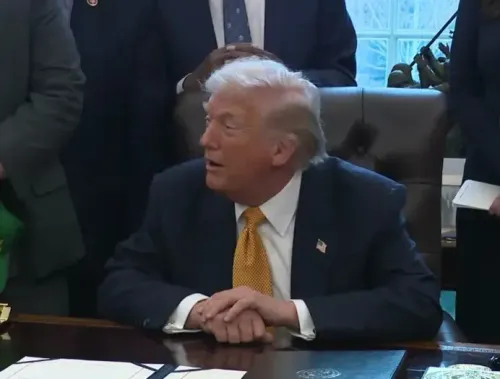
Washington, January 14 (NationPress) – On Wednesday, the United States unveiled phase two of President Donald Trump’s initiative aimed at resolving the conflict in Gaza. This new phase transitions the focus from a ceasefire to essential elements such as demilitarisation, technocratic governance, and comprehensive reconstruction, as highlighted in a statement by the US Special Envoy for Peace Missions.
“Today, on behalf of President Trump, we are proud to announce the initiation of Phase Two of the President’s 20-Point Plan to End the Gaza Conflict, which shifts from a ceasefire approach to demilitarisation, technocratic governance, and reconstruction,” said Special Envoy Steve Witkoff in a statement shared on social media.
The newly launched phase establishes what the US has termed a transitional technocratic administration in Gaza, officially designated as the National Committee for the Administration of Gaza (NCAG). This plan also initiates a comprehensive process of demilitarisation and rebuilding efforts in the region, focusing on the disarmament of armed factions operating outside a sanctioned framework.
Under the second phase, demilitarisation will concentrate “primarily on the disarmament of all unauthorised personnel,” marking a significant escalation in US involvement following the previous ceasefire agreement, according to Witkoff.
The US has explicitly stated its expectations for compliance from Hamas during this phase, particularly regarding outstanding obligations connected to hostages from the conflict. “The US anticipates that Hamas will fully adhere to its commitments, including the immediate return of the final deceased hostage,” Witkoff remarked.
The statement also cautioned of potential repercussions if these conditions are not fulfilled. “Neglecting to meet these demands will lead to serious consequences,” the envoy warned, without elaborating on what those measures would entail.
US officials portrayed phase two as a continuation of the tangible results achieved during the initial phase of the plan. Witkoff noted that phase one had already yielded significant humanitarian and security benefits on the ground.
“Notably, Phase One delivered historic humanitarian assistance, upheld the ceasefire, and facilitated the return of all living hostages along with the remains of twenty-seven of the twenty-eight deceased hostages,” he highlighted.
The US envoy also acknowledged the crucial role of regional players in facilitating progress thus far, expressing gratitude to nations involved in mediation efforts. “We are deeply appreciative of Egypt, Turkey, and Qatar for their vital mediation roles that have enabled all progress to date,” Witkoff stated.
While the announcement set forth broad goals for governance and reconstruction, it lacked specific timelines for the establishment of the NCAG and did not detail how demilitarisation would be executed on the ground. It also did not clarify the involvement of existing Palestinian institutions or international partners in overseeing the transition.
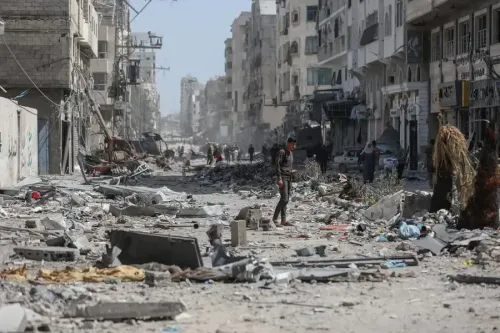
The initiation of phase two occurs as the US aims to solidify the achievements from the ceasefire and convert them into lasting political and security frameworks in Gaza, amidst ongoing global scrutiny regarding the humanitarian situation and the sustainability of the truce.
Point of View
I believe that the announcement of phase two in the Gaza peace plan is a significant step toward addressing longstanding issues in the region. While the emphasis on demilitarisation and governance is crucial, it remains essential to ensure that all parties adhere to their commitments to foster a sustainable resolution. The international community's role will be pivotal in supporting this process and ensuring humanitarian needs are prioritized.
NationPress
15/01/2026
Frequently Asked Questions
What is phase two of the Gaza peace plan?
Phase two focuses on transitioning from a ceasefire to measures like demilitarisation, governance, and reconstruction in Gaza.
What does demilitarisation entail?
Demilitarisation involves disarming all unauthorised personnel and reducing armed groups operating in Gaza.
What role does Hamas play in this phase?
Hamas is expected to comply with obligations related to hostages and support the demilitarisation efforts.
Who are the key regional actors involved?
Egypt, Turkey, and Qatar have been recognized for their mediation efforts aiding progress in the peace process.
Are there specific timelines for implementation?
The announcement did not specify timelines for establishing the transitional Palestinian administration or implementing demilitarisation.