Humanity's Trailblazers: Astronauts Return from Deep Space Expedition
Synopsis
On April 11, four astronauts marked a historic return from a groundbreaking deep space mission, reigniting hope for humanity's future in space exploration. Their journey not only set records but also showcased international collaboration amidst challenges.
Key Takeaways
Historic Return : Four astronauts returned from a groundbreaking mission in deep space.
Record-Breaking Distance : They traveled 404,409 kilometers, setting a new record for human space travel.
International Collaboration : The crew included astronauts from the USA and Canada, showcasing unity in space exploration.
Future Missions : NASA plans to launch Artemis III next year and aims for Mars exploration.
Technical Triumph : Despite challenges, the mission successfully completed all objectives.
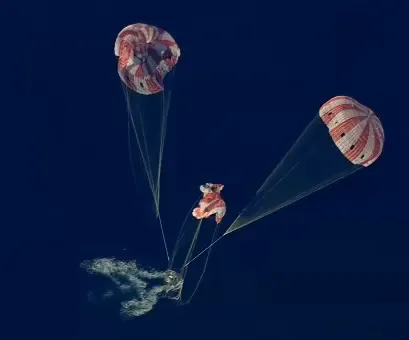
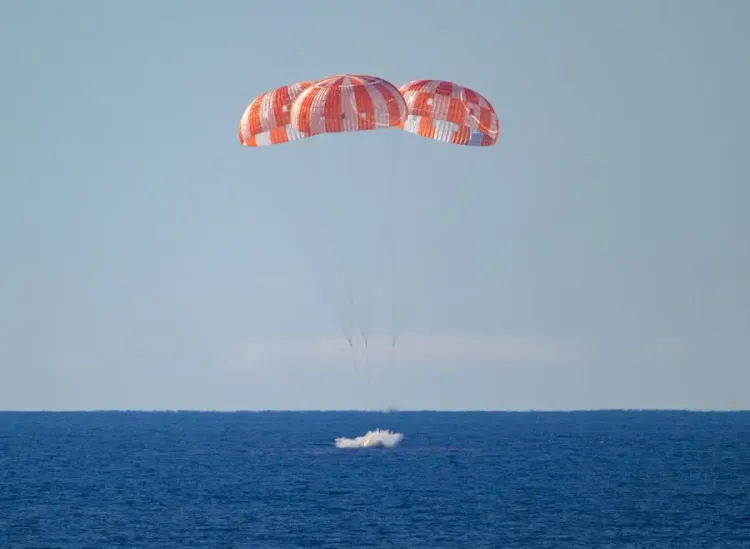
New York, April 11 (NationPress) Four astronauts have safely returned to Earth after an extraordinary journey to uncharted deep space, landing in the Pacific Ocean and paving the way for humanity’s future exploration of the moon and beyond.
This remarkable splash resonated throughout a world facing numerous crises, as millions tuned in on Friday, seeking a beacon of hope and triumph.
“What an incredible journey,” said Reid Wiseman, the commander of the Artemis II mission, upon their return.
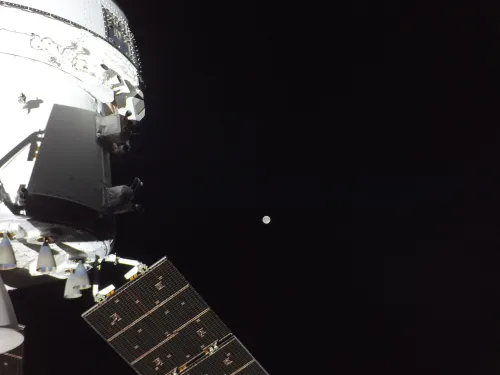
The mission was a breathtaking nine-day space odyssey, with the crew traveling 404,409 kilometers from Earth, orbiting the moon, and setting a record for the farthest distance traveled by humans, while glimpsing the moon's far side for the very first time.
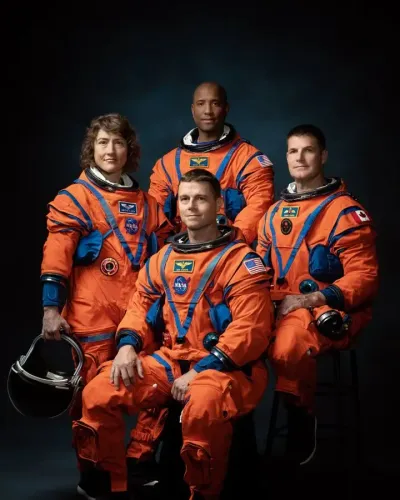
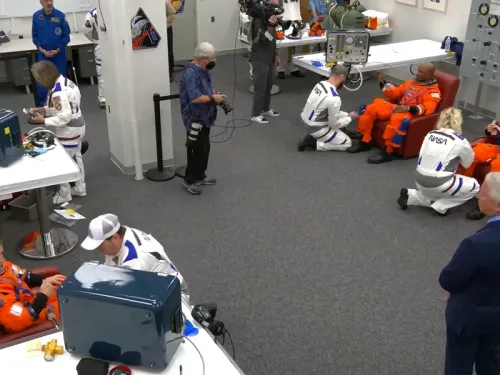
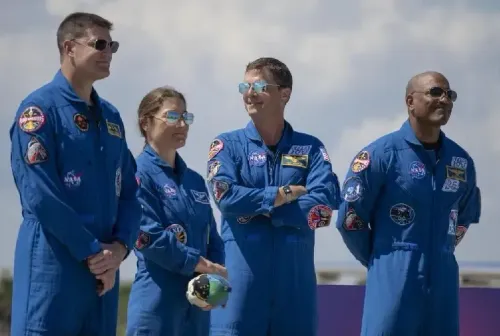
The team comprised three Americans: Commander Wiseman, Christina Koch, and Victor Glover, along with Jeremy Hansen, a Canadian astronaut, on an American spacecraft despite ongoing tensions between the two nations.
“These astronauts represent humanity’s ambassadors to the stars,” remarked Jared Isaacman, NASA's head, as they completed their journey.
Former President Donald Trump praised the mission on Truth Social, stating, “The entire trip was spectacular, and the landing was flawless.”
Canada’s Prime Minister Mark Carney congratulated the crew on X, celebrating their “historic achievement” with a warm, “Welcome home.”
Trump further expressed, “We’ll do this again, and our next step will be Mars,” highlighting the renewed space race that follows 56 years after the first human moon landing.
At Houston's Johnson Space Center, mission teams celebrated as NASA Associate Administrator Amit Kshatriya outlined their objectives: “Fifty-three years ago, humanity left the moon. This time, we’re returning to stay.”
“Let’s not just plant flags and depart; let’s establish a lasting presence with a firm commitment, gratitude for those who built our machines, and love for those we carry forward,” he added.
Next year, Artemis III is set to launch, with a crew tasked with testing the Orion for docking with a commercial spacecraft for a moon landing.
By 2028, humans are expected to return to the moon during the Artemis IV mission, with additional missions planned annually thereafter.
After establishing a lunar base, NASA's next major goal is to send astronauts to Mars, a planet where life forms may have once existed.
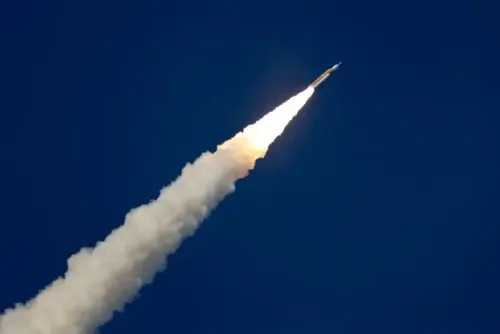
The Orion spacecraft traced a figure-eight path, launching on April 1 from Kennedy Space Center on the East Coast, looping around the moon before hurtling back to Earth, reaching speeds of 39,458 kilometers per hour before deploying parachutes to ensure a soft landing near San Diego.
Despite earlier concerns regarding the Orion's heat shield, it successfully withstood the extreme temperatures of 2,750 degrees Celsius during re-entry.
Medically trained Navy divers promptly checked the crew's health, and Wiseman confirmed, “Green,” indicating they were healthy.
The astronauts were then transferred via helicopter to the amphibious landing ship USS John Murtha, where they received a warm welcome before undergoing further medical evaluations. They are scheduled to return to Houston on Saturday.
During the mission, the crew encountered several familiar challenges, including a toilet malfunction, a Microsoft Outlook software issue, and a communications glitch, all of which were resolved swiftly.
Before the launch, Artemis II faced two delays due to a liquid hydrogen leak, a helium flow issue, and hatch pressurization problems, but all of that was behind them by Friday.
Point of View
It’s vital to acknowledge the monumental achievement of these astronauts, who not only pushed the boundaries of human exploration but also fostered a sense of unity during challenging times. This mission serves as a hopeful beacon for the future of space exploration, emphasizing international collaboration.
NationPress
19 Sept 2026
Frequently Asked Questions
What was the objective of the Artemis II mission?
The Artemis II mission aimed to explore deep space and set records for human travel, specifically looping around the moon.
When did the astronauts return to Earth?
The astronauts returned to Earth on April 11 after a nine-day mission.
What notable records did Artemis II set?
The mission set a record for the farthest distance traveled by humans in space, reaching 404,409 kilometers from Earth.
What are NASA's future plans after Artemis II?
NASA plans to launch Artemis III next year and aims to send astronauts to Mars following the establishment of a moon base.
What challenges did the crew face during the mission?
The crew encountered issues such as a toilet malfunction, software glitches, and communication system problems, all of which were promptly resolved.