African Union deploys 73-member mission to observe Ethiopia's June 1 election
Synopsis
The African Union has sent a 73-member observation mission — led by former Kenyan President Uhuru Kenyatta and drawn from 37 countries — to watch over Ethiopia's 1 June general election. The vote will determine the composition of parliament and, by extension, who becomes prime minister, making independent oversight critical at a pivotal moment for the Horn of Africa.
Key Takeaways
The African Union has deployed a 73-member Election Observation Mission (AUEOM) to Ethiopia ahead of the 1 June 2025 general election.
The mission is led by former Kenyan President Uhuru Kenyatta and draws observers from 37 African countries .
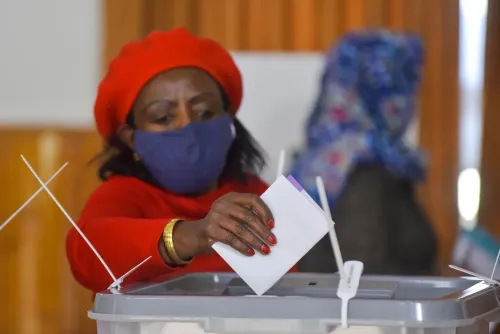
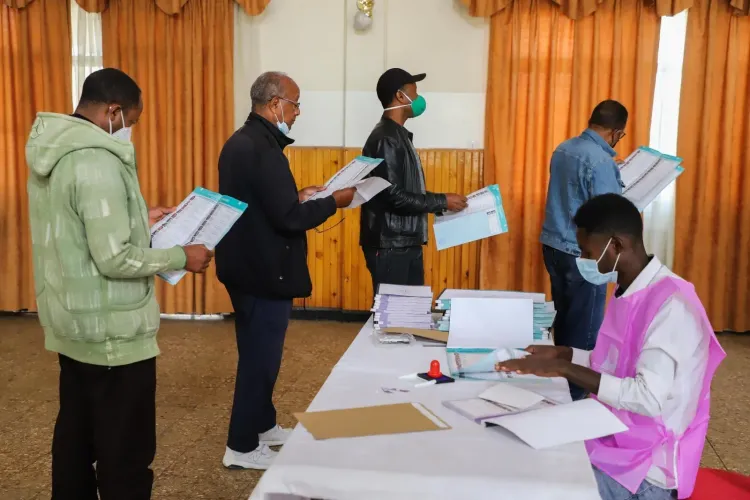
Observers will monitor the full election-day process across multiple Ethiopian regions, from poll opening to vote tabulation.
A preliminary findings statement is expected within days of the election; a final report will be published within two months .
The election determines seats in the House of Peoples' Representatives (HoPR) and regional councils; the majority party selects the prime minister .
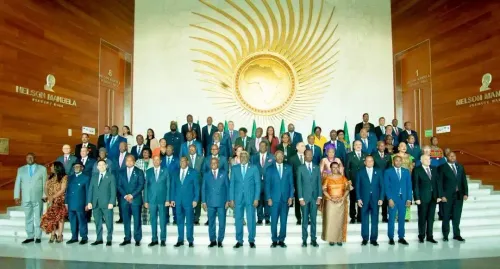
The African Union (AU) has deployed a 73-member Election Observation Mission (AUEOM) to monitor Ethiopia's seventh general election, scheduled for 1 June 2025. The mission, drawn from 37 African countries, was dispatched at the formal invitation of the Ethiopian government and is led by former Kenyan President Uhuru Kenyatta.
Composition and Mandate
The AUEOM brings together a broad cross-section of observers, including African envoys accredited to the AU, officials from election management bodies, civil society representatives, election experts, human rights specialists, gender and media experts, and representatives of youth organisations. Observers will be deployed across various regions of Ethiopia to cover the full arc of election-day procedures — from the opening of polls and voting to the closing, counting, and tabulation at individual polling stations.
What the Mission Will Do
In the lead-up to polling day, AU observers are expected to hold consultations with key Ethiopian stakeholders, including the National Election Board of Ethiopia (NEBE), political party representatives, candidates, civil society organisations, and other international election observation missions present in the country. This pre-election engagement is designed to provide the mission with a comprehensive baseline assessment of the electoral environment before votes are cast.
Timeline for Findings
The AUEOM is expected to release a preliminary statement on its findings a few days after the general election. A final and comprehensive report will follow within two months of the election. These reports will assess the conduct of the election against regional and international standards for democratic elections.
What Is at Stake in Ethiopia's Election
Ethiopia's 1 June vote is primarily for seats in the Ethiopian House of Peoples' Representatives (HoPR), the lower chamber of parliament, as well as members of regional state councils. Under the Ethiopian constitution, the political party or coalition that secures a majority of HoPR seats forms the government and selects the prime minister, who holds the highest executive authority in the country. This makes the outcome directly consequential for the nation's political direction. The election is Ethiopia's seventh general election, and it comes against a backdrop of ongoing post-conflict stabilisation efforts in several regions of the country.
Regional Significance
The AU's decision to field a large, multi-disciplinary observation mission underscores the continental body's focus on electoral integrity in the Horn of Africa. Notably, the presence of a former head of state — Kenyatta — as mission lead signals the political weight the AU is attaching to the process. Independent observation missions from other organisations are also expected to be present, further internationalising scrutiny of the vote.
Point of View
Headed by a former head of state — is a deliberate signal, not merely a procedural formality. Ethiopia's post-conflict credibility hinges in part on whether this election is seen as free and fair by its continental neighbours. Yet observation missions have historically been better at documenting irregularities than preventing them; the AUEOM's preliminary statement will carry weight only if it is candid rather than diplomatic. With the prime minister's mandate ultimately flowing from the HoPR result, the stakes for the mission's independence are high.
NationPress
26 Sept 2026
Frequently Asked Questions
What is the African Union Election Observation Mission to Ethiopia?
It is a 73-member mission deployed by the African Union to monitor Ethiopia's seventh general election on 1 June 2025. The mission, drawn from 37 African countries, is led by former Kenyan President Uhuru Kenyatta and was dispatched at the Ethiopian government's invitation.
When is Ethiopia's general election scheduled?
Ethiopia's seventh general election is scheduled for 1 June 2025. Voters will elect representatives to the House of Peoples' Representatives (HoPR) and members of regional state councils.
Why is the election significant?
The outcome determines which party or coalition controls the HoPR majority and thereby selects the prime minister, who holds the highest executive power in Ethiopia. The vote comes amid ongoing post-conflict stabilisation in parts of the country, raising the stakes for credible oversight.
When will the AU mission release its findings?
The AUEOM is expected to issue a preliminary statement within a few days of the election. A final, comprehensive report will be published within two months of polling day.
Who leads the AU observation mission to Ethiopia?
Former Kenyan President Uhuru Kenyatta leads the 73-member mission. His appointment as head of the AUEOM reflects the political significance the African Union is attaching to the electoral process in Ethiopia.