US, allies back civilian transition for Sudan within weeks
Synopsis
A sweeping coalition — the US, UK, France, Germany, Italy, the AU, EU, and UN — has jointly backed a Sudanese-led civilian dialogue to begin within weeks, with a six-month target to establish a civilian government. The statement includes an explicit warning of 'appropriate measures' against anyone who tries to derail the process — the sharpest signal yet of coordinated international pressure on Sudan's warring parties.
Key Takeaways
The US , UK , France , Germany , Italy , AU , EU , and UN jointly backed a civilian-led political dialogue for Sudan on 8 June .
The Quintet plans to begin a comprehensive civilian dialogue process 'in the coming few weeks,' with a target conclusion of six months .
The coalition warned that 'appropriate measures' will be considered against those who undermine the civilian transition.
The joint statement followed consultations in Addis Ababa from 3–5 June with Sudanese political stakeholders.
The signatories reiterated the need for a humanitarian truce leading to a permanent ceasefire, citing mass displacement, acute food insecurity, and attacks on civilians.
The statement endorsed the Berlin Principles for Sudan adopted at the Berlin Conference on 15 April .
The United States and a broad coalition of Western, African, and international partners on Monday, 8 June threw their collective weight behind a Sudanese-led political dialogue to begin within weeks, asserting that only a civilian-led transition can bring an end to Sudan's devastating civil war and restore lasting stability to the country.
Joint Statement from Addis Ababa
A joint statement issued following consultations in Addis Ababa was signed by the United States, United Kingdom, France, Germany, Italy, the African Union (AU), the European Union (EU), the United Nations (UN), and other partners. The signatories declared they remain united in the conviction that 'there can be no military solution to this crisis' and called for an inclusive political process reflecting 'the aspirations of the Sudanese people'.
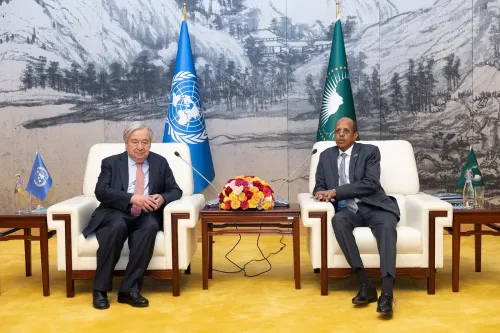
The statement followed consultations held by the Quintet — comprising the AU, Intergovernmental Authority on Development (IGAD), League of Arab States, EU, and UN — with Sudanese political stakeholders from 3–5 June in Addis Ababa, Ethiopia.
Humanitarian Alarm and Ceasefire Demand
The coalition expressed deep alarm over the worsening humanitarian crisis gripping Sudan. 'We express deep concern over the devastating humanitarian consequences of the ongoing conflict, where millions face displacement, acute food insecurity, and limited access to basic services, while attacks on civilians and infrastructure persist,' the statement read.
The signatories stressed that 'the protection of civilians must remain central' and reiterated 'the urgent need for a humanitarian truce, leading to a permanent ceasefire.' The conflict, now well into its second year, has displaced millions and pushed large parts of the country toward famine conditions, according to international humanitarian agencies.
Berlin Principles and International Coordination
The joint statement welcomed outcomes from the Berlin Conference on Sudan held on 15 April, including the adoption of the 'Berlin Principles for Sudan' and a civilian stakeholders' declaration calling for an end to the war and the launch of a Sudanese-owned political process. Those initiatives, the statement said, helped strengthen international coordination and support for 'a civilian-led path towards a durable peaceful settlement.'
Proposed Dialogue: Timeline and Scope
The international partners endorsed plans by the Quintet to begin 'in the coming few weeks' a comprehensive civilian-led dialogue process involving a broad cross-section of Sudanese political and civil actors. The proposed dialogue would include representatives of civil society, women's groups, youth organisations, and stakeholders reflecting Sudan's geographic and social diversity.
The process is expected to be transparent, credible, and free from coercion. The signatories expressed hope that the dialogue could be concluded 'ideally within six months' and lead to 'a clear pathway toward a transition process to an independent civilian-led government, grounded in legitimacy, accountability, and respect for human rights.' They described the establishment of such a government as 'indispensable to ensuring a durable end to the conflict.'
Warning Against Spoilers
Notably, the statement included a pointed warning: 'appropriate measures will be considered by the international community against those who seek to undermine the civilian transition process.' The language signals that the coalition is prepared to consider targeted consequences — potentially sanctions or diplomatic isolation — for actors who obstruct the civilian track. This comes amid ongoing fighting between the Sudanese Armed Forces (SAF) and the Rapid Support Forces (RSF), with neither side having agreed to a lasting ceasefire.
The next critical test will be whether the Quintet can convene a credible dialogue within its stated timeframe and whether key Sudanese factions agree to participate without preconditions.
Point of View
And past international frameworks for Sudan have collapsed under the weight of military actors who see political transition as a threat to their interests. A six-month dialogue window is ambitious given that the conflict is still kinetic. The real question is whether the Quintet can bring the armed factions to the table, or whether this civilian track runs parallel to — rather than replacing — the war.
NationPress
23 Oct 2026
Frequently Asked Questions
What did the US and its allies agree on regarding Sudan?
The US, UK, France, Germany, Italy, the AU, EU, UN, and other partners jointly backed the launch of a Sudanese-led civilian political dialogue to begin within weeks, with the goal of establishing a civilian-led transitional government within six months. They issued a joint statement from Addis Ababa on 8 June declaring there is 'no military solution' to Sudan's civil war.
What is the Quintet and what role does it play in Sudan?
The Quintet is a group comprising the African Union, IGAD, League of Arab States, EU, and UN. It held consultations with Sudanese political stakeholders in Addis Ababa from 3–5 June and has been endorsed to lead the comprehensive civilian dialogue process in the coming weeks.
What are the Berlin Principles for Sudan?
The Berlin Principles for Sudan were adopted at the Berlin Conference on Sudan held on 15 April. They form a framework for international coordination supporting a civilian-led path to a durable peace settlement, and were accompanied by a civilian stakeholders' declaration calling for an end to the war.
What consequences could spoilers of the Sudan transition face?
The joint statement warned that 'appropriate measures will be considered by the international community against those who seek to undermine the civilian transition process.' While not specifying the exact measures, the language is widely interpreted as a signal of potential sanctions or diplomatic consequences.
What is the humanitarian situation in Sudan?
The coalition expressed deep concern over mass displacement, acute food insecurity, and limited access to basic services affecting millions of Sudanese civilians. The statement called for an immediate humanitarian truce leading to a permanent ceasefire, as attacks on civilians and infrastructure continue.