Austria expels four Russian diplomats from Vienna amid espionage row
Synopsis
Austria has declared four Russian diplomats — including one from the OSCE's arms control desk — persona non grata, and Moscow has already warned retaliation is 'inevitable'. Coming weeks after Romania expelled a Russian diplomat over drone incursions, the Vienna move is the latest sign that European states are systematically dismantling Russia's intelligence-diplomatic infrastructure on their soil.
Key Takeaways
Austria expelled four Russian diplomats from Vienna on 23 October 2026 , declaring each persona non grata .
Three were from the Russian Embassy ; their activities were described as 'incompatible with their diplomatic status' — diplomatic shorthand for suspected espionage.
The fourth diplomat was from Russia's OSCE delegation and held the military security and arms control portfolio.
Russian Deputy Foreign Minister Dmitry Lubinsky warned that retaliation would 'inevitably' follow.
In July 2026 , Romania expelled a Russian diplomat after its forces downed three Russian-origin drones that violated its airspace.
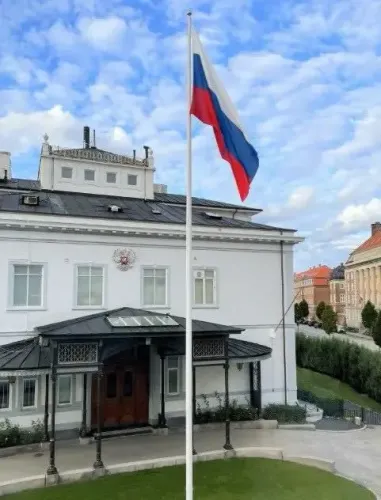
Austria on Friday, 23 October 2026, declared four Russian diplomats accredited in Vienna as persona non grata, ordering their expulsion in a move that signals a sharp deterioration in bilateral relations between the two countries. The Austrian Foreign Ministry confirmed the decision, making it one of the more significant diplomatic ruptures in recent months between a European capital and Moscow.
Who Was Expelled and Why
Of the four diplomats, three were members of the Russian Embassy in Vienna who had, according to the Ministry, carried out activities 'incompatible with their diplomatic status' — the standard formulation used in cases of suspected espionage or covert interference. Each of the three was formally declared persona non grata.
The fourth diplomat belonged to Russia's delegation to the Organisation for Security and Co-operation in Europe (OSCE), which is headquartered in Vienna, and held responsibility for military security and arms control matters. He too was declared persona non grata and ordered to leave Austrian territory.
Moscow's Warning of Retaliation
Russian Deputy Foreign Minister Dmitry Lubinsky responded swiftly on Friday, stating that a reaction would 'inevitably' follow. While no specifics were provided, such language from Moscow typically precedes a reciprocal expulsion of the host country's diplomats — a well-established pattern in European-Russian diplomatic disputes since 2022.
Austria's Move Follows a Pattern Across Europe
The Vienna expulsions are part of a broader trend of European Union member states tightening scrutiny of Russian diplomatic missions. Notably, in July 2026, Romania's Ministry of Foreign Affairs declared a member of the Russian Embassy in Bucharest undesirable and issued a five-day departure order, following repeated violations of Romanian airspace between 24 and 26 July 2026.
During that period, Romanian Armed Forces shot down three drones that had entered national territory without authorisation. Official prosecutor investigations confirmed the drones were of Russian origin. Bucharest summoned the Russian Ambassador and presented drone fragments as evidence, with Romanian Foreign Minister Oana-Silvia Toiu overseeing the demarche.
In a statement posted on X, the Romanian Ministry said: 'It is absolutely inadmissible and intolerable for the Russian Federation to continue violating Romania's airspace, which also constitutes NATO and European Union airspace.' Bucharest held Russia exclusively responsible for what it termed 'grave incidents' and the broader deterioration of regional security.
Geopolitical Context
Vienna's decision is particularly significant given Austria's historical neutrality and its role as a hub for multilateral diplomacy, including as the seat of the OSCE. The expulsion of an OSCE-accredited diplomat — responsible specifically for arms control — underscores how far the relationship has degraded. This comes amid ongoing EU-wide reviews of Russian intelligence activity on European soil, with several member states having expelled Russian personnel over the past two years.
What Happens Next
Moscow's pledge of an 'inevitable' response means Vienna should expect a reciprocal expulsion of Austrian diplomats from Moscow in the coming days. Analysts will also be watching whether the OSCE's functioning is affected, given that the expelled fourth diplomat held a sensitive arms-control portfolio. The episode is likely to fuel further calls within the EU for a coordinated approach to Russian diplomatic presence across member states.
Point of View
Which makes the accumulation of these European expulsions look less like isolated protests and more like a coordinated erosion of Russia's intelligence-diplomatic network across the continent. If Moscow retaliates symmetrically, as it almost always does, the OSCE's ability to function on arms control and military security — already under strain — will be further compromised at exactly the moment it is needed most.
NationPress
24 Oct 2026
Frequently Asked Questions
Why did Austria expel four Russian diplomats?
Austria expelled the diplomats because three of them had carried out activities 'incompatible with their diplomatic status' — the standard designation for suspected espionage or covert operations. A fourth, from Russia's OSCE delegation, was responsible for military security and arms control and was also declared persona non grata on 23 October 2026.
What does persona non grata mean in diplomatic terms?
Persona non grata is a legal term under international law by which a host country formally prohibits a foreign diplomat from remaining in or entering its territory in a diplomatic capacity. The diplomat concerned is typically required to leave within a set number of days.
How has Russia responded to Austria's expulsion?
Russian Deputy Foreign Minister Dmitry Lubinsky said on Friday that a response would 'inevitably' follow Austria's decision, though no specific measures were announced. Moscow has historically reacted to such expulsions with reciprocal ejections of the host country's diplomats.
Is Austria the only European country to expel Russian diplomats recently?
No. In July 2026, Romania expelled a Russian diplomat from its Bucharest embassy after Romanian Armed Forces downed three drones of confirmed Russian origin that violated Romanian airspace. Multiple EU member states have expelled Russian diplomatic staff over the past two years over espionage and interference concerns.
How does this affect the OSCE?
The expulsion of a Russian diplomat specifically accredited to the OSCE — who held responsibility for military security and arms control — could disrupt Russia's participation in sensitive arms control discussions within the organisation. The OSCE is headquartered in Vienna, and its functioning already faces strain from the broader Russia-West diplomatic breakdown.