EU summons Russian ambassadors over Leipzig drone attacks, more sanctions ahead

Synopsis
The EU has formally summoned Russian ambassadors and is weighing over 1,600 new sanctions listings after Germany officially blamed Moscow for the drone attacks at Leipzig Airport in August — a cluster of incidents that included a failed bomb, a DHL cargo plane strike, and military-grade explosives found near the airport. With Berlin closing Russia's Bonn consulate on 18 September, Europe's diplomatic confrontation with Moscow is entering a sharper phase.
Key Takeaways
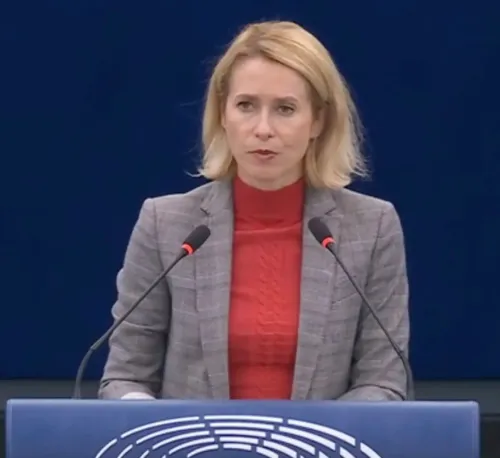
EU foreign policy chief Kaja Kallas confirmed on 2 September that Russian ambassadors have been summoned by the EU and multiple member states over the Leipzig Airport drone attacks.
The EU has 1,600 listings in the pipeline targeting Russia's military complex , with more potentially to be added.
Germany formally attributed the 4 August hybrid attack at Leipzig Airport to Russia , announced by Interior Minister Alexander Dobrindt and Foreign Minister Johann Wadephul .
Germany will close the Russian Consulate General in Bonn on 18 September and terminate the contract with the Russian House in Berlin .
A DHL cargo plane was struck by a drone and safely diverted to Hannover ; a third drone with military-grade explosives was found near the airport last week.
Chancellor Friedrich Merz vowed that perpetrators 'would pay a price,' calling Germany an increasing target of hybrid attacks.
The European Union has summoned Russian ambassadors across member states in response to a series of drone attacks linked to Leipzig Airport in Germany, EU foreign policy chief Kaja Kallas confirmed on Wednesday, 2 September, ahead of the Informal meeting of Foreign Affairs Ministers in Wicklow, Ireland. The diplomatic escalation follows Berlin's formal attribution of the attacks to Russia and a sweeping package of retaliatory measures announced by the German government on Tuesday.
What Kallas Said
'We have already summoned Russian ambassadors, so have also many Member States, and we will discuss what more can we do,' Kallas told reporters. She also indicated that the EU has 1,600 listings in the pipeline targeting Russia's military complex, with the possibility of additional entries. She clarified, however, that no final decisions would be taken at the Wicklow gathering — describing it as a consultative forum rather than a decision-making one.
The Leipzig Drone Incidents
The diplomatic crisis stems from a cluster of incidents at and around Leipzig Airport beginning in early August 2025. A drone fitted with an unidentified explosive device was discovered at the airport; the attack failed due to a malfunction of its detonator. Shortly thereafter, a DHL cargo aircraft collided at high speed with a flying object before being safely diverted to Hannover. Investigators subsequently found damage on the plane consistent with a drone strike, according to reports. A third drone along with military-grade explosives linked to the same incident was reportedly discovered in the vicinity of the airport the following week, local media reported.
Germany's Formal Attribution and Retaliation
German Interior Minister Alexander Dobrindt stated during a joint press conference with Foreign Minister Johann Wadephul in Berlin on Tuesday that the government had concluded 'that Russia is responsible for the hybrid attack in Leipzig on August 4.' Wadephul announced that Germany will close the Russian Consulate General in Bonn on 18 September, terminate the contract with the Russian House in Berlin, and summon the Russian ambassador. A broader package of retaliatory steps is also being rolled out, including expanded EU sanctions with travel bans and stricter entry controls for Russian nationals.
Merz Warns of Consequences
German Chancellor Friedrich Merz had warned last week that Germany 'has increasingly become the target of hybrid attackers,' adding that authorities were working intensively to identify those responsible. He vowed that 'the perpetrators would pay a price.' The Leipzig incidents are the latest in a pattern of alleged Russian hybrid operations targeting European infrastructure — a concern that has sharpened across EU capitals as the war in Ukraine continues.
What Comes Next
The Wicklow ministerial meeting is expected to set the stage for a formal EU-level response in the coming weeks. Additional sanctions listings targeting Russia's military-industrial complex remain under active discussion, and further bilateral measures from other EU member states are anticipated. The closure of the Russian Consulate General in Bonn is set to take effect on 18 September, marking one of the most concrete diplomatic steps taken by Germany against Russia in recent months.
Point of View
But the real signal is the EU's 1,600-listing sanctions pipeline: if activated in full, it would represent one of the most targeted blows yet to Russia's military-industrial network. What mainstream coverage underplays is the pattern — Leipzig is not an isolated incident but part of a documented series of alleged Russian sabotage operations across Europe, from arms depot fires to GPS jamming. The question is whether EU unity holds long enough to translate Kallas's language into binding decisions, or whether the Wicklow meeting produces yet another communiqué without enforcement teeth.
NationPress
17 Oct 2026
Frequently Asked Questions
Why did the EU summon Russian ambassadors over the Leipzig attacks?
The EU summoned Russian ambassadors after Germany formally attributed a series of drone attacks at Leipzig Airport in August to Russia, including a failed bomb attack on 4 August and a strike on a DHL cargo plane. EU foreign policy chief Kaja Kallas confirmed the summons on 2 September, ahead of a ministerial meeting in Wicklow, Ireland.
What happened at Leipzig Airport in August?
A drone fitted with an unidentified explosive device was found at Leipzig Airport in early August; it failed to detonate due to a malfunction. A DHL cargo plane was subsequently struck by a flying object and safely diverted to Hannover, with damage consistent with a drone strike. A third drone and military-grade explosives linked to the incident were reportedly discovered near the airport the following week.
What retaliatory measures is Germany taking against Russia?
Germany announced it will close the Russian Consulate General in Bonn on 18 September, terminate the contract with the Russian House in Berlin, and summon the Russian ambassador. A broader package including expanded EU sanctions, travel bans, and stricter entry controls for Russian nationals is also being rolled out.
What are the 1,600 EU sanctions listings Kaja Kallas mentioned?
Kallas stated that the EU has 1,600 listings in the pipeline targeting Russia's military complex, with the possibility of more being added. She noted the matter would be discussed at the Wicklow ministerial meeting but that no final decisions would be taken there.
Who is Kaja Kallas and what is her role in the EU?
Kaja Kallas is the European Union's High Representative for Foreign Affairs and Security Policy, effectively the bloc's top diplomat. She was speaking ahead of the Informal meeting of Foreign Affairs Ministers in Wicklow, Ireland, on 2 September when she confirmed the ambassador summons and outlined the EU's next steps.