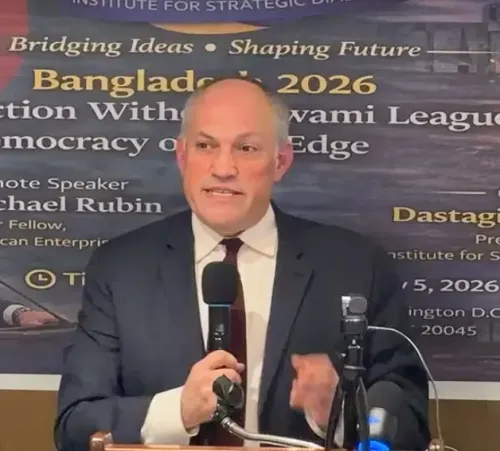
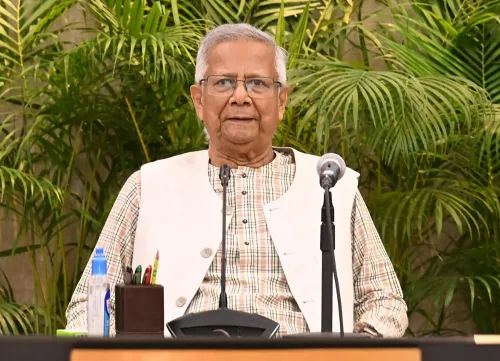
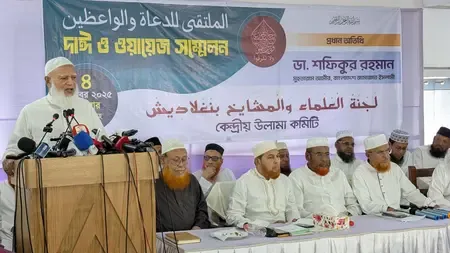
Is Bangladesh's Awami League Right to Claim Yunus's Government is Favoring Islamists?
Synopsis
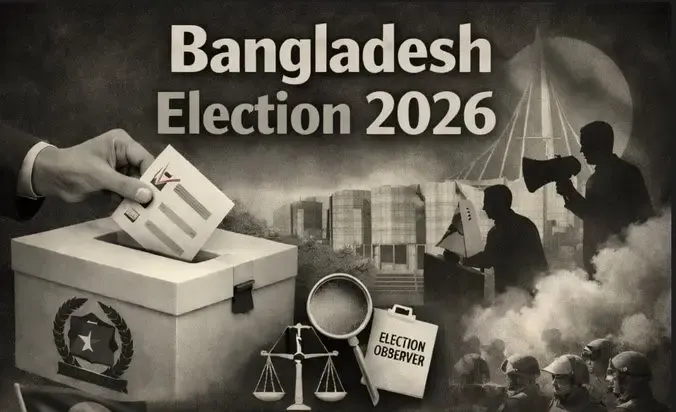
The Awami League of Bangladesh has voiced serious concerns over the Muhammad Yunus-led interim government, alleging that the impending February 2026 elections are designed to exclude the party and facilitate the rise of extremist forces. This claim raises significant questions about the integrity of the electoral process and the future of democracy in the country.
Key Takeaways
The Awami League claims the Yunus government is enabling Islamist forces.
The February 2026 elections are criticized as undemocratic.
Exclusion of the Awami League could lead to political instability.
Voter suppression is condemned as an affront to democracy.
The party urges international scrutiny of the electoral process.
Dhaka, Dec 31 (NationPress) The Awami League of Bangladesh accused the interim government led by Muhammad Yunus on Wednesday of facilitating the rise of Islamist factions and criminal leadership by prohibiting the party from participating in the February 2026 elections.
The party asserted that the upcoming elections, which are being portrayed as a restoration of democracy, are fundamentally based on systematic exclusion.
“By preventing the Awami League, the dominant political party representing nearly 60 percent of the electorate, from competing, the Yunus administration has guaranteed that a significant portion of the populace will be excluded from the electoral process. An election that sidelines the majority can hardly be called democratic; it is a manipulation,” the Awami League expressed.
The Awami League further argued that the Bangladesh Election Commission's suspension of its registration, coupled with legal constraints imposed during the Yunus administration, was not a mere reformative step but rather a “deliberate political attack.” The party contended that, unable to outshine the Awami League in a fair contest, the Yunus-led government opted for outright exclusion—a move it characterized as not an “electoral adjustment,” but “mass disenfranchisement stemming from fear.”
“A credible democracy does not outlaw its largest political entity and still claim legitimacy. Democracies engage in competition; authoritarian regimes eliminate their opponents. By crossing this threshold, Yunus has transformed the state into a political instrument and the election into a manipulated process with a predetermined result,” the party added.
“Voters are not being penalized for wrongdoing or corruption. They are being punished for their political affiliations. Their votes are nullified even before they are cast. When a government fears its voters more than it values elections, democracy does not merely weaken; it collapses,” they stated.
The Awami League expressed that the primary motive behind Yunus’s intention to exclude the party from the February 2026 election is to allow extremist groups and discredited criminal networks to seize power. While acknowledging potential personal motives, the party contended that this strategy is not merely revenge but exclusion—because the presence of the Awami League would hinder these extremist factions from gaining office.
The Awami League cautioned that when elections lack genuine choices, the repercussions extend beyond the ballot box, destabilizing the entire political landscape.
“The lesson from history is clear: elections devoid of competition foster radicalization, legitimize political violence, and ultimately erode public confidence in voting as a mechanism for change. Once the populace realizes that outcomes are predetermined, the significance of ballots diminishes, and extremism fills the void,” it remarked.
Emphasizing that the international community should not validate an election conducted under a manipulated political environment, the Awami League stated, “Observation without participation is endorsement by silence.”
Point of View
This situation reflects the ongoing tensions in Bangladesh's political arena. The claims made by the Awami League highlight the delicate balance between democracy and authoritarianism, raising vital questions about representation and electoral fairness. As such, it is crucial for the nation to engage in constructive dialogue and uphold democratic principles.
NationPress
28 Sept 2026
Frequently Asked Questions
What are the claims made by the Awami League regarding the Yunus government?
The Awami League claims that the Muhammad Yunus-led interim government is facilitating the rise of Islamist forces by preventing the party from participating in the February 2026 elections, thus undermining democracy.
How does the Awami League describe the upcoming elections?
The Awami League describes the upcoming elections as fundamentally undemocratic, asserting that they are based on systematic exclusion of the majority.
What does the Awami League say about the implications of excluding them from the elections?
They argue that excluding the largest political party undermines democratic legitimacy and could lead to increased radicalization and political violence.
What does the Awami League believe about voter suppression?
The party believes that voters are being punished not for criminal acts, but for their political affiliations, which diminishes the value of their votes.
What is the Awami League's stance on international observation of the elections?
The Awami League insists that international observers should not endorse elections conducted under a rigged political environment, emphasizing the need for genuine participation.