Are Bangladesh's Elections Merely For Show? Awami League Raises Concerns
Synopsis
The Awami League in Bangladesh has raised alarms regarding the upcoming elections, alleging that Chief Advisor Muhammad Yunus has strategically sidelined the party, preventing 40% of voters from participating. This has led to concerns over democratic integrity, the rise of extremist groups, and threats to minority rights.
Key Takeaways
40% of voters potentially excluded from February 2026 elections.
Concerns over political suppression and lack of democratic engagement.
Rise of extremist groups gaining influence.
Threats to minority rights and women's freedoms escalated.
Allegations of an 'Islamist-influenced' order emerging.
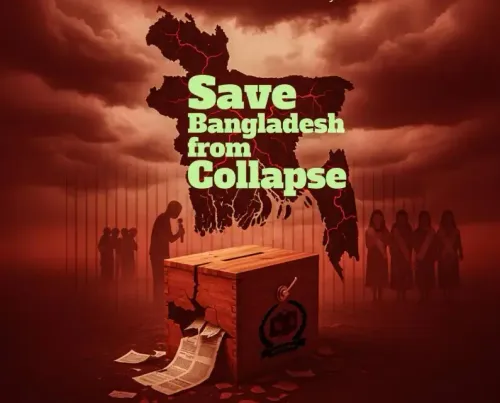
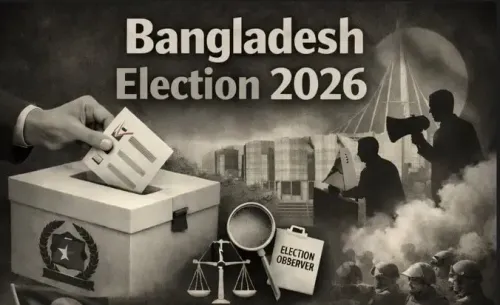
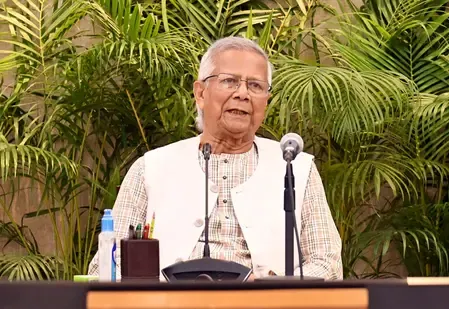
Dhaka, Dec 4 (NationPress) The Awami League of Bangladesh has claimed that the Chief Advisor of the interim government, Muhammad Yunus, has effectively prevented nearly 40 percent of the nation’s voters from participating in the February 2026 elections by halting all activities of the party.
This single directive has transformed the approaching election into a “carefully orchestrated event” that excludes genuine competition.
According to the Awami League, “When Yunus put a stop to all Awami League activities, it was more than just an administrative action; it represented an unprecedented political suppression in Bangladesh’s history. With one executive decision, he silenced the country’s largest political entity and effectively muted the voices of nearly 40 percent of the electorate. There was no debate, no due process, and no public mandate—just unchecked authority,” stated the party.
The party asserted that this situation is neither coincidental nor a misunderstanding but rather part of a strategic pattern. They warned that as the main political force in the country is sidelined, radical Islamist organizations such as Jamaat-e-Islami and Hefazat-e-Islam are beginning to gain influence not seen in many years.
“While Yunus is excluding millions from the democratic process, he is inadvertently inviting in the very elements Bangladesh has long sought to control. Lacking popular support, he has relied on groups like Jamaat-e-Islami and Hefazat-e-Islami to establish his new political foundation. These factions, previously restricted due to their violent and extremist agendas, are now receiving fresh legitimacy, freedom, and protection in return for rallying support for Yunus,” highlighted the Awami League.
Simultaneously, the party pointed out that assaults on women’s rights, increasing pressure on minorities, and “moral policing” have become alarmingly prevalent in Bangladesh.
“Gradually, Bangladesh appears to be heading towards a direction reminiscent of a softer version of Talibanisation, executed not by radicals in the streets, but rather through decisions made at the highest levels of government,” asserted the Awami League.
The party emphasized that by prohibiting the Awami League from competing, Yunus has effectively transformed the forthcoming election into a manufactured ceremony. With the leading political force eliminated, the outcome is alleged to be essentially predetermined, paving the way for an “Islamist-influenced” regime arising from a ballot that lacks real significance.
“This is the Taliban model in operation: elections conducted for show, with power determined in advance,” declared the Awami League.
As extremist groups gain political traction, the party warned that Bangladesh is confronting escalating intolerance, diminishing freedoms, and an increasing threat to minorities. They highlighted that such instability transcends borders, undermining regional security and harming the nation’s international reputation.
Point of View
It’s crucial to approach the current political climate in Bangladesh with a balanced perspective. The allegations made by the Awami League highlight significant concerns regarding democratic processes and potential shifts towards extremist influences. While these claims warrant scrutiny, it’s equally vital to ensure that all narratives are explored to uphold national integrity and public trust.
NationPress
25 Sept 2026
Frequently Asked Questions
What did the Awami League claim about the upcoming elections?
The Awami League claimed that Chief Advisor Muhammad Yunus has effectively barred nearly 40% of voters from participating in the February 2026 elections by halting all party activities.
What are the implications of Yunus's actions according to the Awami League?
The Awami League asserts that Yunus's actions create a political environment that favors extremist groups and undermines democratic principles in Bangladesh.
How does the Awami League view the current political situation?
The Awami League believes that the political climate is shifting towards an 'Islamist-influenced' order, diminishing freedoms and increasing intolerance.