Will Mamata Banerjee Continue Her Fight Against Communal Politics on Babri Mosque Demolition Anniversary?
Click to start listening
Synopsis
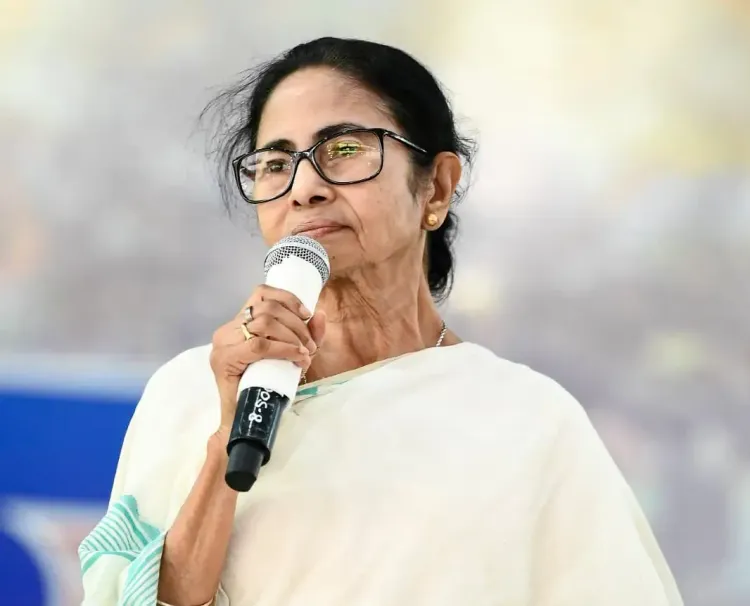
As the Babri Mosque demolition anniversary approaches, West Bengal Chief Minister Mamata Banerjee reaffirms her commitment to combat communal politics. She calls for unity and peace among the diverse communities of Bengal, emphasizing that religion is personal, but festivals unite all. Will her message resonate in a politically charged environment?
Key Takeaways
- Mamata Banerjee warns against communal politics.
- Calls for unity among diverse religions.
- Trinamool Congress celebrates Harmony Day annually.
- Foundation stone for a Babri Mosque laid in Murshidabad.
- Significance of Babri Mosque in India's history emphasized.
Kolkata, Dec 6 (NationPress) Commemorating the Babri Mosque demolition anniversary, which the Trinamool Congress marks annually as “Harmony Day”, West Bengal Chief Minister Mamata Banerjee issued a veiled warning to the Bharatiya Janata Party (BJP), emphasizing her ongoing battle against communal politics driven by certain vested interests.
“Those who delight in fueling the flames of communalism to undermine our nation, our struggle against them will persist,” the Chief Minister conveyed in a social media statement released on Saturday.
Simultaneously, she urged the citizens to reinstate the rich heritage of peace and unity within the state on this significant day.
“Unity is Strength. I extend heartfelt greetings to everyone on ‘Unity Day’/‘Harmony Day’. The land of Bengal is synonymous with unity. This land has produced greats like Rabindranath, Nazrul, and Ramakrishna-Vivekananda—it has never submitted to division and will continue to stand united,” she stated in her social media post.
Banerjee highlighted that West Bengal’s populace, representing various faiths including Hinduism, Islam, Sikhism, Christianity, Jainism, and Buddhism, knows how to coexist harmoniously. “We share our happiness because we believe that religion belongs to the individual, but festivals belong to everyone,” she remarked.
Later on Saturday, the Trinamool Congress will host its annual 'Sampriti Diwas (Harmony Day)' event at Esplanade in Central Kolkata, featuring the party's senior leadership.
Conversely, a foundation stone-laying ceremony for a Babri Mosque will take place in Beldanga, Murshidabad district, organized by the now-suspended Trinamool Congress legislator from Bharatpur constituency, Humayun Kabir. This proposed mosque will reflect the original structure in Ayodhya, Uttar Pradesh, which was demolished on December 7, 1992.
Point of View
Mamata Banerjee's call for unity and her fight against communalism resonate strongly. As a national editor, it's crucial to recognize the ongoing struggle against divisive politics. The Trinamool Congress's stance on promoting harmony reflects a significant aspect of India's diverse social fabric, which must be preserved amidst rising tensions.
NationPress
06/12/2025
Frequently Asked Questions
What is Harmony Day?
Harmony Day is observed by the Trinamool Congress to commemorate the Babri Mosque demolition, promoting peace and unity among different communities.
What message did Mamata Banerjee convey?
Mamata Banerjee emphasized her commitment to combat communal politics and urged citizens to restore peace and unity in West Bengal.
What events are planned for Harmony Day?
The Trinamool Congress will hold its annual 'Sampriti Diwas' program in Central Kolkata, while a foundation stone-laying ceremony for a Babri Mosque will occur in Murshidabad.
Why is the Babri Mosque significant?
The Babri Mosque demolition on December 6, 1992, remains a pivotal moment in India's political history, symbolizing deep communal divides.
What religions were mentioned by Banerjee?
Banerjee acknowledged Hinduism, Islam, Sikhism, Christianity, Jainism, and Buddhism as part of West Bengal's diverse cultural fabric.