Anurag Thakur on the Tricolour: 'Every Indian's Bond Is Emotional'

Synopsis
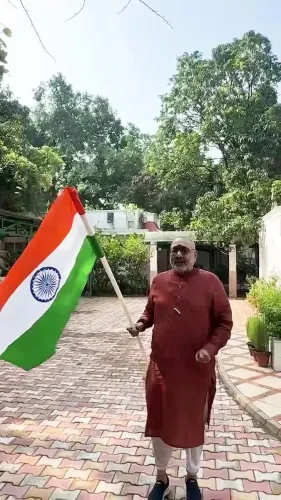
BJP MP Anurag Thakur, posting from New Delhi on 13 August 2026, said the Tricolour unites every Indian — rich or poor — through an emotional bond, two days before Independence Day 2026.
Key Takeaways
BJP MP Anurag Thakur posted from New Delhi on 13 August 2026 , two days before Independence Day.
He stated that every Indian's bond with the Tricolour is emotional, cutting across economic lines.
The post was in Hindi and accompanied by a video.
The message aligns with BJP's recurring emphasis on national symbols in the lead-up to 15 August .
Thakur is a former Union Minister for Information & Broadcasting and Youth Affairs & Sports , representing Hamirpur, Himachal Pradesh .
Two days before Independence Day 2026, BJP MP Anurag Thakur distilled something that cuts across every economic divide in India — the Tricolour belongs to everyone. Posting from New Delhi on 13 August 2026, Thakur put it simply: rich or poor, every Indian's connection to the national flag is emotional — and a source of pride.
In Hindi, he wrote: 'अमीर हो या ग़रीब, तिरंगे से हर भारतीय का जुड़ाव भावनात्मक है…और हमें इस पर गर्व है' — 'Whether rich or poor, every Indian's bond with the Tricolour is emotional… and we are proud of it.'
The Tricolour as a unifying thread
The message lands in a familiar register for BJP leaders in the run-up to 15 August — invoking national symbols as a bridge across class lines. The Tricolour has historically served as one of the few images that transcends caste, language, and income in Indian public life, making it a recurring centrepiece of Independence Day messaging across party lines.
Thakur, who served as Union Minister for Information & Broadcasting and Youth Affairs & Sports, has been a consistent voice on themes of national pride and cultural identity. His framing here — anchoring patriotism not in ideology but in shared emotion — is deliberate and broad-based.
Ahead of flag-hoisting across the country
With Independence Day hours away, flag-hoisting ceremonies are scheduled at Red Fort in Delhi and at state capitals, district headquarters, and schools across India. The period traditionally sees a surge in public engagement with national symbols — from rooftop Tricolours to mass pledge ceremonies.
That surge of visible patriotism is exactly the backdrop against which Thakur's post resonates — not as a policy statement, but as a mood-setter for a nation on the eve of its independence anniversary.
When the flag goes up on 15 August, it will fly over the same sky for the farmer in Hamirpur and the executive in Mumbai — that, in essence, is the point Thakur is making.
Point of View
The message sidesteps divisive political terrain and pitches directly to the broadest possible audience. It fits a longer arc in which the party has systematically expanded the cultural footprint of national symbols — from the 'Har Ghar Tiranga' campaign onward. The timing, 48 hours before 15 August, maximises organic amplification as flag-hoisting sentiment peaks across the country.
NationPress
13 Aug 2026
Frequently Asked Questions
What did Anurag Thakur post about the Tricolour?
On 13 August 2026, Anurag Thakur posted that every Indian — rich or poor — shares an emotional bond with the Tricolour, and that this is a source of national pride.
When did Anurag Thakur make the Tricolour post?
He posted on 13 August 2026, two days before India's Independence Day on 15 August 2026.
Who is Anurag Thakur?
Anurag Thakur is a BJP Lok Sabha MP from Hamirpur, Himachal Pradesh, and a former Union Minister for Information & Broadcasting and Youth Affairs & Sports.
What is the significance of the Tricolour ahead of Independence Day?
The Tricolour is India's national flag and a central symbol of Independence Day celebrations on 15 August, with flag-hoisting ceremonies held across the country from Red Fort to local schools.
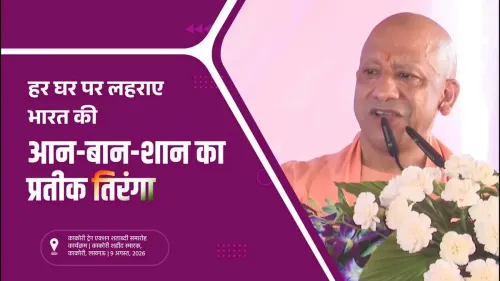
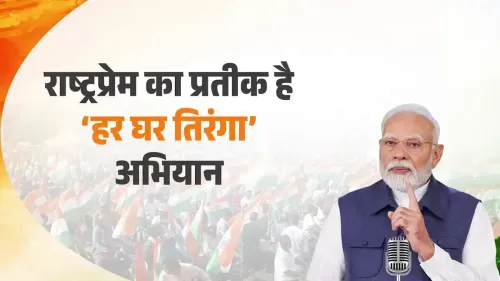
What is the 'Har Ghar Tiranga' campaign?
'Har Ghar Tiranga' is a government-backed campaign encouraging every Indian household to hoist the national flag around Independence Day, aimed at deepening mass engagement with the Tricolour.