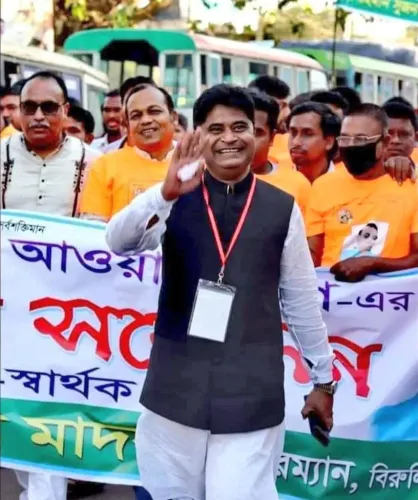
Awami League leader dies in Bangladesh jail a day after bail granted
Synopsis
Ranjit Kumar Ghosh, a 75-year-old Awami League leader, died at Kishoreganj District Jail in Bangladesh the day after being granted bail — reportedly because release clearance never arrived. His death is the latest in a string of custodial fatalities involving Awami League members since Bangladesh's 2024 political upheaval, and has prompted the party to demand an independent investigation into what it calls a 'profound crisis of justice and accountability.'
Key Takeaways
Ranjit Kumar Ghosh , 75 , general secretary of the Awami League's Chowddoshata union unit, died at Kishoreganj District Jail on Monday, 10 November .
He had been granted bail on Sunday but was not released because prison authorities had not received the required clearance by end of day.
Ranjit had been detained since August 2024 in connection with a case linked to the July 2024 Uprising in Bangladesh.
Jail superintendent Jahanara Begum confirmed his health deteriorated suddenly before he was rushed to Shaheed Syed Nazrul Islam Medical College Hospital , where he was declared dead.
The Awami League condemned the death on Tuesday via a post on X , calling it part of 'an increasingly disturbing pattern of deaths in Bangladesh's prisons.' The party has demanded an independent investigation and scrutiny of treatment of all political detainees in Bangladesh.
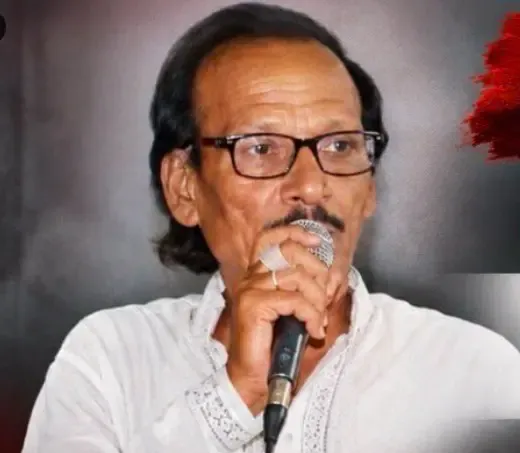
An Awami League leader died in custody at Kishoreganj District Jail in Bangladesh on Monday, 10 November 2026, just one day after being granted bail — the latest in a mounting series of custodial deaths involving the party's members since the country's 2024 political upheaval. The deceased, Ranjit Kumar Ghosh, 75, was general secretary of the Awami League's Chowddoshata union unit in Kishoreganj Sadar upazila.
What Happened
According to local media reports, Ranjit's health deteriorated suddenly on Monday morning, prompting prison authorities to rush him to Shaheed Syed Nazrul Islam Medical College Hospital in Kishoreganj, where doctors pronounced him dead shortly after arrival. Jahanara Begum, superintendent of Kishoreganj District Jail, confirmed that his condition worsened rapidly before he was transferred to hospital.
Ranjit had been granted bail on Sunday, but remained incarcerated because prison authorities had not received the required release clearance before the end of the day, Bangladesh's leading newspaper The Daily Star reported. His relatives said he had been taken into police custody in connection with a case linked to the July 2024 Uprising and was sent to jail on court orders, where he had remained since August 2024.
Awami League's Condemnation
On Tuesday, the Awami League publicly condemned the failure to release Ranjit despite the bail order, calling his death emblematic of a troubling trend. In a post on X, the party wrote: 'An elderly political leader, suffering from serious medical conditions, spent months behind bars. Even after being granted bail, he was not released. Instead of returning home to his family, he was taken to a hospital, where he was pronounced dead. His death adds to an increasingly disturbing pattern of deaths in Bangladesh's prisons.'
The party further stated: 'This is the reality of Bangladesh today: a profound crisis of justice, accountability and the rule of law. Not democracy, but lawlessness. Ranjit Kumar Ghosh deserved dignity, adequate medical care and the protection of the law. His death demands an independent investigation, full accountability for any wrongdoing, and urgent scrutiny of the treatment of political detainees throughout Bangladesh. The right to life is not a political privilege. It is a fundamental human right.'
A Widening Pattern of Custodial Deaths
Ranjit's death is part of a broader pattern of fatalities among Awami League members held in Bangladeshi jails following the 2024 political upheaval that upended the country's political landscape. Critics argue that the continued detention of elderly and ailing leaders — combined with procedural delays in executing bail orders — amounts to systemic neglect, if not deliberate harm. The Awami League claims that political affiliation has led to prolonged imprisonment under conditions that do not meet basic standards of care.
Notably, this is not an isolated incident. The pattern of custodial deaths involving Awami League figures has drawn concern from rights groups monitoring Bangladesh's prison system, though no official government response has yet been recorded in relation to Ranjit's specific case.
Key Questions Going Forward
The circumstances surrounding Ranjit's death raise at least two urgent questions: why the bail clearance was not processed within the allotted time, and whether the prison system provided adequate medical attention to a 75-year-old detainee with reportedly serious health conditions. The Awami League has called for an independent investigation, though it remains unclear whether Bangladeshi authorities will act on that demand. Rights observers and opposition figures are likely to press for answers as scrutiny of the country's detention conditions intensifies.
Point of View
And that is precisely the problem. When systemic delays can override a court's order and effectively keep a 75-year-old ailing man behind bars until he dies, it is no longer a question of bureaucratic inefficiency alone. Bangladesh's post-2024 political landscape has produced conditions in which the procedural safeguards meant to protect detainees appear selectively applied. The Awami League's call for an independent investigation is legitimate, but whether the current dispensation in Dhaka has either the will or the institutional independence to pursue one remains deeply uncertain.
NationPress
10 Nov 2026
Frequently Asked Questions
Who was Ranjit Kumar Ghosh and why was he in jail?
Ranjit Kumar Ghosh, 75, was the general secretary of the Awami League's Chowddoshata union unit in Kishoreganj Sadar upazila, Bangladesh. He was taken into police custody in connection with a case linked to the July 2024 Uprising and had been held at Kishoreganj District Jail since August 2024 on court orders.
Why was Ranjit Kumar Ghosh not released after being granted bail?
Although Ranjit was granted bail on Sunday, he was not released because prison authorities did not receive the required release clearance before the end of the day, according to jail superintendent Jahanara Begum, as reported by The Daily Star. He died in custody the following Monday before the paperwork could be processed.
What has the Awami League said about his death?
The Awami League condemned the death on Tuesday, calling it part of 'an increasingly disturbing pattern of deaths in Bangladesh's prisons.' In a post on X, the party demanded an independent investigation, full accountability, and urgent scrutiny of the treatment of political detainees across Bangladesh.
Is this an isolated incident or part of a broader trend?
According to the Awami League and local media reports, Ranjit's death is the latest in a series of custodial deaths involving the party's members since Bangladesh's 2024 political upheaval. Rights observers have flagged the pattern, though the Bangladeshi government has not yet formally responded to the specific case.
What happens next following Ranjit Kumar Ghosh's death?
The Awami League has called for an independent investigation into the death and broader scrutiny of conditions for political detainees in Bangladesh. It remains unclear whether authorities will act on this demand. The case is likely to increase pressure on the Bangladeshi government from rights groups and opposition figures.