Awami League Remembers Pilkhana Massacre Victims, Decries Convict Releases as Unjust
Synopsis
On the anniversary of the Pilkhana massacre, Bangladesh's Awami League honors the victims while criticizing the unjust release of convicted individuals and political exploitation of the tragedy.
Key Takeaways
Awami League commemorates victims of the Pilkhana massacre.
Criticism of political exploitation surrounding the incident.
Former government released convicted individuals linked to the massacre.
Calls for trust in the justice system and accountability.
The massacre remains a significant event in Bangladesh's history .
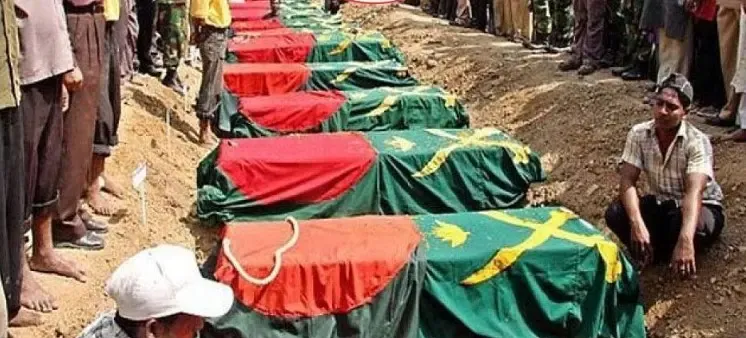
Dhaka, Feb 25 (NationPress) The Awami League of Bangladesh paid tribute on Wednesday to the victims of the 2009 Pilkhana massacre, emphasizing the need to cease the "political exploitation" surrounding this tragic event.
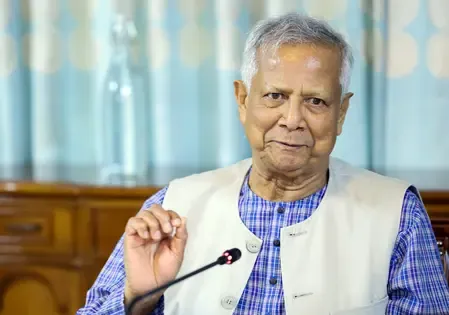
The party criticized the former interim government, led by Muhammad Yunus, which is accused of absolving 293 individuals convicted for the massacre that claimed the lives of 74 people, including both military personnel and civilians.
During the commemorative observance of the February 25 incident, the Awami League reflected on the lives lost in what they termed the "mutiny within Bangladesh's border guard force".
On that day in 2009, several hundred members of the Bangladesh Rifles (BDR) instigated an armed revolt at the Pilkhana headquarters, resulting in the deaths of 57 army officers and 17 civilians during the three-day "BDR Week".
The Awami League asserted that shortly after their decisive electoral victory in December 2008, the government led by Sheikh Hasina was confronted with this "calculated and brutal attack", which they claimed aimed to incite civil unrest and destabilize the fledgling administration.
Nevertheless, under Hasina's "skilled and strategic" leadership, the party noted that the mutineers eventually surrendered their weapons and released the hostages, thus concluding the rebellion.
The investigation, prosecution, and trial regarding this heartbreaking event commenced without delay, characterized by what the party described as a "transparent judicial process".
In 2013, the trial court handed down capital punishment to 152 individuals, life sentences to 160, and various prison terms to 256 more. Subsequently, in 2017, the High Court affirmed the death penalties for 139, life imprisonment for 185, and differing sentences for 228 others.
However, following the removal of the Awami League from power, the interim government permitted the release of hundreds of former BDR personnel implicated in the massacre.
The Awami League condemned the former Yunus-led interim government's decision to release 293 convicted individuals as "unjust" and suggested that calls for renewed investigation and the establishment of a new inquiry committee were "politically motivated".
The party pointed out that the National Independent Commission, which was set up by the interim government in December 2024 to probe the killings during the 2009 BDR mutiny, submitted a report last year that remains undisclosed, with many convicted individuals reportedly set free.
The Awami League labeled this initiative as an attempt to "undermine the judicial process and deflect responsibility for the tragedy onto the party".
Expressing condolences to the victims' families, the Awami League urged for "confidence in Bangladesh's criminal justice system" and called for an end to the "political exploitation of the Pilkhana incident".
Point of View
The Awami League's commemoration of the Pilkhana massacre highlights the unresolved issues surrounding the event and the consequences of political maneuvering. This incident stands as a critical moment in Bangladesh's history, emphasizing the need for accountability and a transparent justice system.
NationPress
20 Sept 2026
Frequently Asked Questions
What was the Pilkhana massacre?
The Pilkhana massacre occurred on February 25, 2009, when members of the Bangladesh Rifles staged an armed revolt, resulting in the deaths of 74 individuals, including 57 army officers.
Who was responsible for the Pilkhana massacre?
The massacre was instigated by several hundred members of the Bangladesh Rifles during a revolt at their headquarters in Pilkhana.
What actions did the Awami League take regarding the massacre?
The Awami League has called for an end to political exploitation of the incident and has criticized the former interim government's decision to release convicted individuals.
How did the judicial process unfold after the massacre?
A transparent judicial process led to the conviction of numerous individuals, with death sentences and life imprisonments handed down in subsequent trials.
What is the current status of the convicted individuals?
Many convicted individuals were released after the ousting of the Awami League government, which the party has condemned as unjust.