What Do Decades of Enforced Disappearances in Balochistan Reveal About Pakistan's Repression?
Synopsis
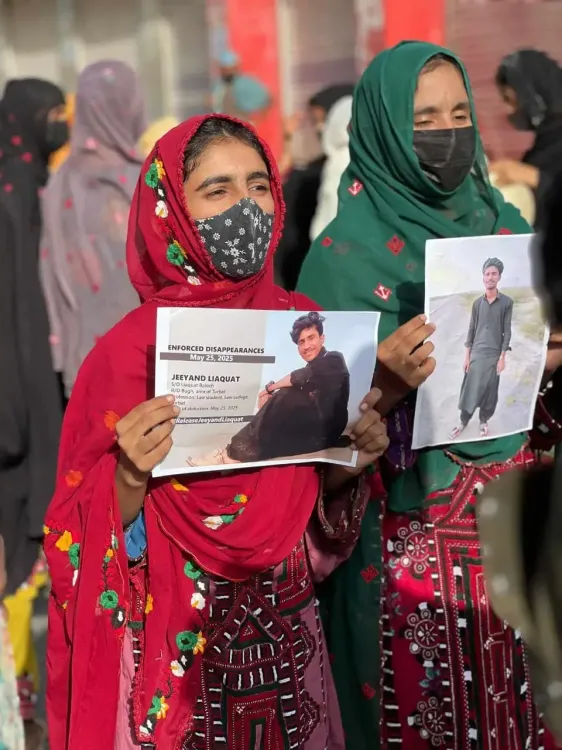
This report sheds light on the alarming trend of enforced disappearances in Balochistan, highlighting the severe human rights violations occurring against the backdrop of a strained relationship between the province and Pakistan's central government. What are the implications of these events, and why does the world remain silent?
Key Takeaways
Enforced disappearances have become a long-standing issue in Balochistan.
The central government employs oppressive measures to silence political dissent.
Human rights organizations report significant numbers of forced disappearances and killings.
Accountability and transparency in investigations are severely lacking.
International calls for action often go unheeded.
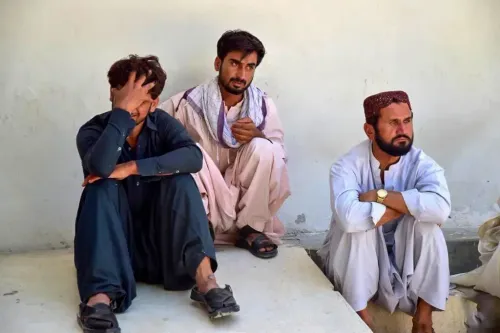
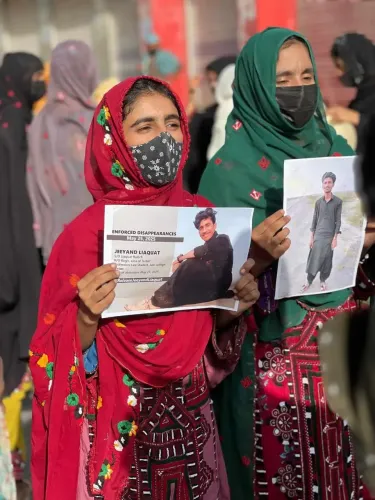
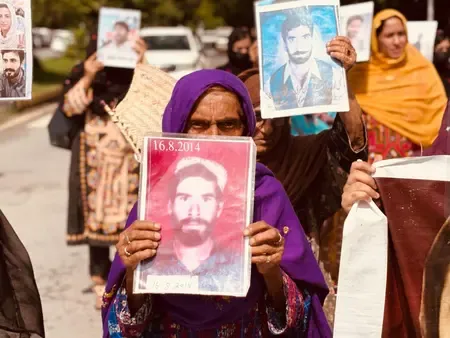
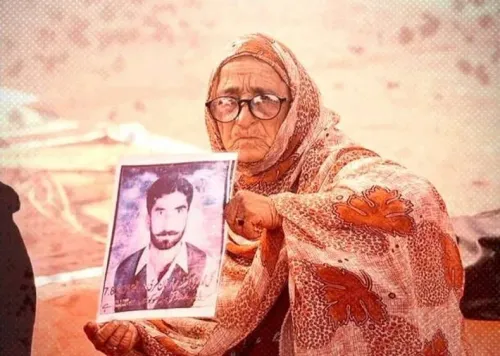
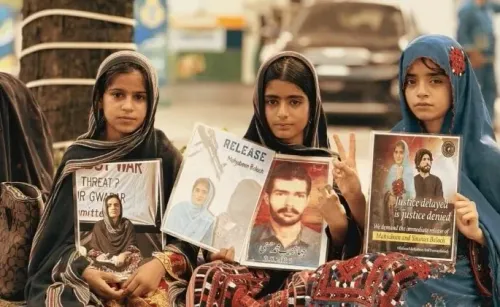
Quetta, Oct 16 (NationPress) Enforced disappearances have tragically become a routine occurrence in Balochistan, a province rich in resources, yet plagued by a strained relationship with Pakistan's central government. This government has relied heavily on security tactics to stifle political demands, as highlighted in a report released on Thursday.
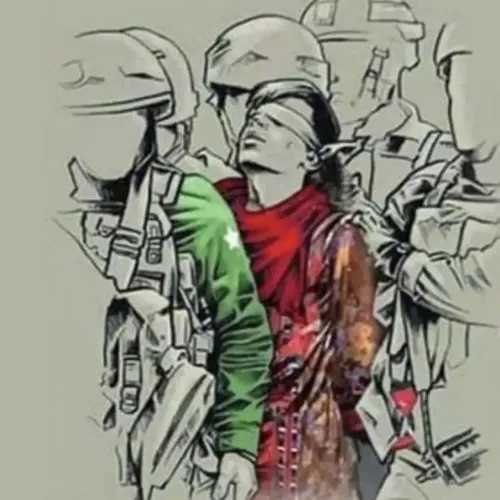
The report cites findings from both domestic and international human rights organizations, indicating that these abductions are predominantly executed by Pakistan's military and intelligence agencies.
In recent years, human rights observers have recorded significant instances of forced disappearances and extrajudicial killings. Even governmental bodies in Pakistan have recognized the gravity of the situation. The Commission of Inquiry on Enforced Disappearances noted that nearly 3000 individuals have vanished since 2011 in Balochistan, according to a report by The Diplomat.
The Human Rights Council of Balochistan documented 601 enforced disappearances and 525 killings in 2023, alongside 830 disappearances and 480 killings in 2024. Among these, 278 individuals were identified, while 202 remain unnamed, underscoring the severe challenges in accessing information, conducting investigations, and ensuring accountability.
The report points out that numerous international human rights groups blame Pakistan's paramilitary Frontier Corps and the Counter Terrorism Department (CTD) for these abductions.
The Pakistan Army and Inter-Services Intelligence (ISI) provide cover for these operations, exploiting expansive counterterrorism powers granted under lenient state laws to detain individuals without formal charges and maintain secrecy over cases.
Authorities in Pakistan frequently invoke the Anti-Terrorism Act of 1997 and public order laws to detain protesters and human rights defenders. In June 2025, matters worsened when Balochistan enacted the Anti-Terrorism (Balochistan Amendment) Act of 2025, introducing Section 11-EEEE. This allows the provincial government, a designated 'detaining authority', and, in cases where Section 4 is invoked, the armed forces, civil armed units, and intelligence agencies to order preventive detentions for up to three months on ‘reasonable suspicion’.
Individuals detained under these laws will be held in specific detention centers. The amendment is applicable for six years and can be extended for another two.
Sadly, the report states that the global community remains largely silent on this pressing issue. Human rights violations do not garner equal attention worldwide, with Balochistan serving as a stark example.
UN Special Rapporteurs and working groups have sounded the alarm regarding the persistent occurrence of enforced disappearances in Balochistan, urging Pakistan to criminalize this practice, carry out independent investigations, and ratify the International Convention for the Protection of All Persons from Enforced Disappearance.
While UN mechanisms issue recommendations and letters, they lack the authority to enforce compliance. Without a tangible political cost, such appeals seldom lead to meaningful change or resolution of the issues at hand.
Point of View
Our commitment to highlighting human rights issues remains steadfast. The ongoing enforced disappearances in Balochistan are a troubling reflection of state repression that demands national and international scrutiny. We stand resolutely with the people of Balochistan in their pursuit of justice and accountability.
NationPress
30 Sept 2026
Frequently Asked Questions
What are enforced disappearances?
Enforced disappearances refer to the practice of individuals being abducted by state authorities or agents, with the state denying any responsibility for their whereabouts.
Who is responsible for the enforced disappearances in Balochistan?
Reports indicate that the Pakistan military, intelligence services, and paramilitary forces like the Frontier Corps are primarily responsible for these abductions.
How many people have gone missing in Balochistan since 2011?
According to official reports, approximately 3000 individuals have been reported missing in Balochistan since 2011.
What measures have been suggested to address this issue?
International human rights groups have called for Pakistan to criminalize enforced disappearances, conduct independent investigations, and ratify relevant international conventions.
Why does the international community remain silent on Balochistan's plight?
The report suggests that human rights violations in Balochistan do not receive sufficient international attention, highlighting a disparity in global human rights advocacy.