Bangladesh dengue outbreak: 59 dead, cases near 18,000 as Dhaka bears brunt
Synopsis
Bangladesh's dengue crisis is accelerating well before its seasonal peak — 59 dead and nearly 18,000 cases logged, with Dhaka city alone accounting for over 4,400 infections. Experts are warning that the real surge may still be weeks away, and that the country's reactive, fragmented mosquito control system is structurally incapable of stopping it.
Key Takeaways
At least 59 people have died from dengue in Bangladesh in 2025 , with 17,880 cases recorded as of 8 August .
Dhaka division is the worst-hit region with 6,871 cases and 26 deaths ; Dhaka city alone accounts for 4,404 cases and 25 fatalities .
Barishal (3,647), Chattogram (3,082), and Khulna (2,272) follow in caseload; Khulna has the second-highest death toll at 12 .
Experts attribute the crisis to reactive mosquito control, high urban density, and the absence of a centralised national vector control authority.
Dengue cases are expected to keep rising through August and potentially peak in September 2025 , according to Jahangirnagar University professor Kabirul Bashar .
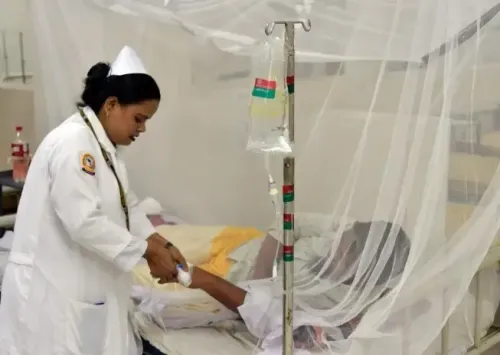
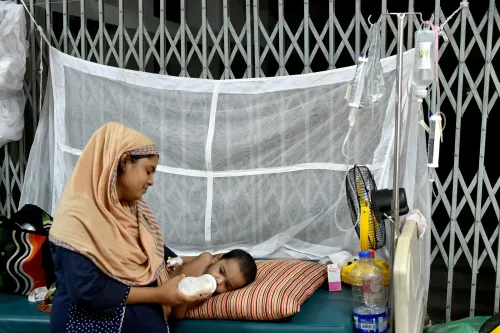
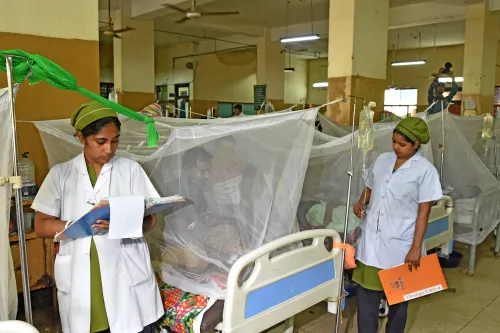
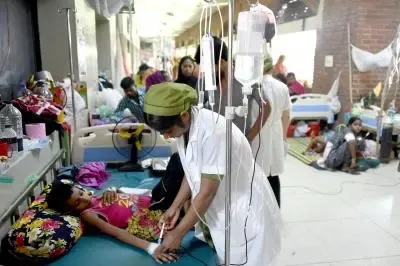
Bangladesh's dengue outbreak has worsened sharply, with at least 59 deaths and 17,880 cases reported so far in 2025, according to data from the country's Directorate General of Health Services (DGHS). Dhaka division has emerged as the worst-affected region, accounting for the largest share of both infections and fatalities.
Regional Breakdown of Cases and Deaths
Dhaka division has recorded 6,871 cases this year, with 4,404 of those concentrated in Dhaka city alone. The division also leads in fatalities, with 26 deaths — 25 of them within Dhaka city.
Barishal division reported the second-highest caseload at 3,647, followed by Chattogram with 3,082 and Khulna with 2,272. On the fatality front, Khulna recorded 12 deaths, while Chattogram and Mymensingh logged 7 and 6 deaths respectively, according to Bangladesh's The Daily Star.
Why Dhaka Remains a Persistent Hotspot
GM Saifur Rahman, Associate Professor in the Department of Zoology at the National University of Bangladesh, said the numbers reflect Dhaka's combination of high population density, persistent Aedes aegypti mosquito breeding, and inadequate vector control measures.
Saifur noted that breeding sites are widespread even in institutional spaces. 'Just a few days ago, while supervising an examination at Central Metropolitan Women's College, I found Aedes mosquito larvae in a small container of water. Such breeding sites are common across the city, indicating that Aedes mosquitoes are reproducing continuously in residential areas,' he was quoted as saying by The Daily Star.
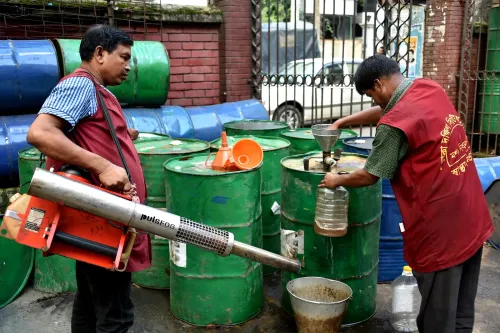
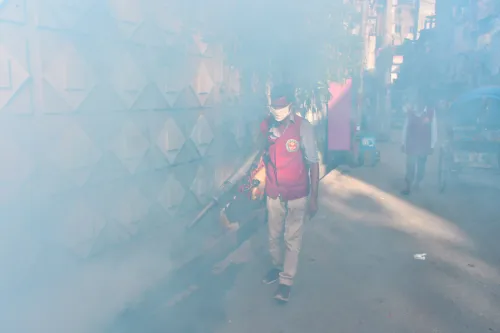
He further warned that mosquito control in Bangladesh has been largely reactive. 'The most effective strategy would be to intensify mosquito control during periods when dengue transmission is relatively low. At that time, breeding sites are fewer, and interventions can be more effective. Instead, mosquito control usually intensifies only after the dengue season begins, by which time infections are already increasing rapidly,' Saifur said.
Experts Call for a National Mosquito Control Authority
Saifur argued that Bangladesh's failure to establish an effective, centralised mosquito control mechanism has compounded the crisis. He called for the formation of a national mosquito control authority staffed with expert entomologists to coordinate, monitor, and oversee vector control measures nationwide. 'Until we establish a coordinated national control system, dengue cases are likely to continue rising,' he warned.
This comes amid a broader pattern of dengue escalation across South and Southeast Asia, where rapid urbanisation and inconsistent public health infrastructure have made Aedes mosquito control increasingly difficult.
Peak Season May Extend Into September
Kabirul Bashar, Professor of the Zoology Department at Jahangirnagar University, cautioned that the outbreak's peak may not arrive in August. 'The peak may not occur in August. It's possible that this year's peak will come in September. What we can say is that the upward trend is likely to continue through August and into September,' he said.
With case counts and fatalities still climbing, public health authorities face mounting pressure to shift from seasonal response to year-round, prevention-first vector control — a structural change experts say is long overdue.
Point of View
000 cases before the seasonal peak is a structural failure, not a weather event. The country has been cycling through the same pattern for years: reactive spraying, post-outbreak urgency, and no durable inter-agency mechanism. The call for a national mosquito control authority is not new, but the political will to build one has consistently lagged the body count. With urbanisation accelerating and climate conditions extending the Aedes breeding window, Bangladesh risks making dengue a year-round emergency rather than a seasonal one.
NationPress
22 Sept 2026
Frequently Asked Questions
How many people have died from dengue in Bangladesh in 2025?
At least 59 people have died from dengue in Bangladesh so far in 2025, according to data from the Directorate General of Health Services (DGHS). A total of 17,880 cases have been reported as of 8 August.
Which region of Bangladesh is worst affected by dengue?
Dhaka division is the worst-affected region, recording 6,871 cases and 26 deaths in 2025. Dhaka city alone accounts for 4,404 cases and 25 of those fatalities.
When is the dengue outbreak in Bangladesh expected to peak?
Experts at Jahangirnagar University have warned that the peak may not come in August and could extend into September 2025. The upward trend in cases is expected to continue through both months.
What are experts recommending to control dengue in Bangladesh?
Experts are calling for the creation of a national mosquito control authority staffed by entomologists to coordinate year-round, preventive vector control. They argue that current measures are reactive — intensifying only after the dengue season begins — making them far less effective.
What makes Dhaka particularly vulnerable to dengue outbreaks?
Dhaka's high population density, warm climate, and widespread Aedes mosquito breeding sites — including small water containers in residential and institutional areas — create near-ideal conditions for dengue transmission. Inadequate and reactive vector control has compounded the problem year after year.