Bangladesh dengue deaths hit 87 in September, highest monthly toll of 2026
Synopsis
Bangladesh's dengue crisis is escalating faster than at any point this year — 87 deaths in September alone, spread across all 64 districts, with the government's own health minister warning the peak is still to come in the last week of September and early October. The country's coordination failures are years in the making; the window to act is shrinking by the day.
Key Takeaways
87 dengue deaths recorded in Bangladesh in September 2026 alone — the highest monthly toll this year.
Total fatalities for 2026 stand at 184 , with 61,972 confirmed cases since January, per DGHS data.
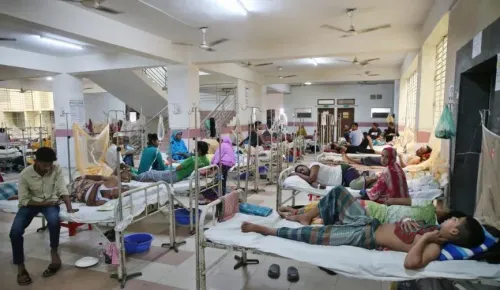
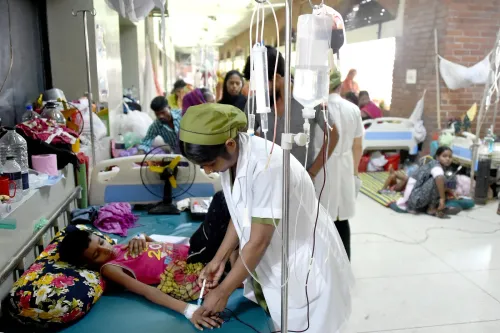
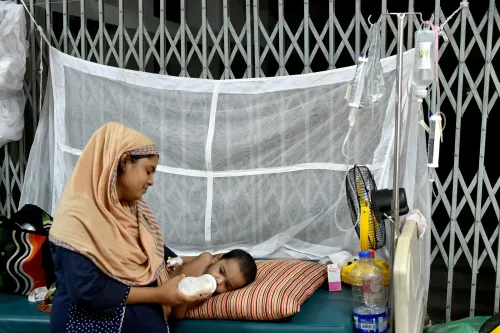
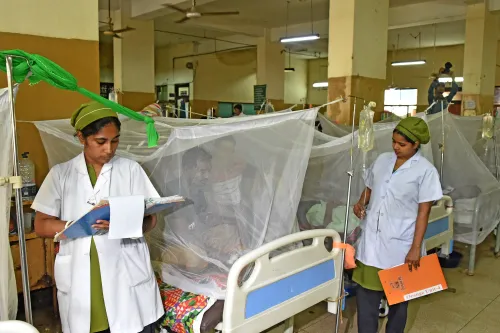
Dengue has spread to all 64 districts of Bangladesh, with hundreds hospitalised daily.
State Minister MA Muhit warned the peak period is expected in the last week of September and early October .
The government launched a three-month prevention campaign this month, but critics cite a persistent lack of coordination as the core failure.
Bangladesh has recorded 87 dengue-related deaths in September 2026 alone — the highest monthly fatality count from the mosquito-borne disease this year — as the outbreak continues to accelerate ahead of what health officials warn will be a peak transmission window.
According to data released by the Directorate General of Health Services (DGHS) under Bangladesh's Ministry of Health and Family Welfare, six additional deaths were confirmed in the 24 hours ending at 8:00 am local time on Sunday, 21 September, pushing the country's cumulative dengue death toll for 2026 to 184.
Scale of the Outbreak
Confirmed dengue cases have climbed to 61,972 since January, with 1,593 new infections reported in the same 24-hour period, per DGHS figures. The pace of spread is sharply accelerating: 26,126 cases were recorded in just the first 20 days of September, compared with 20,536 across the entire month of August.
Monthly deaths this year trace a steep upward curve — 13 in June, 36 in July, 43 in August, and now 87 so far in September. The pattern mirrors the seasonal surge driven by the monsoon and post-monsoon accumulation of stagnant water that breeds Aedes mosquitoes.
Spread Across All 64 Districts
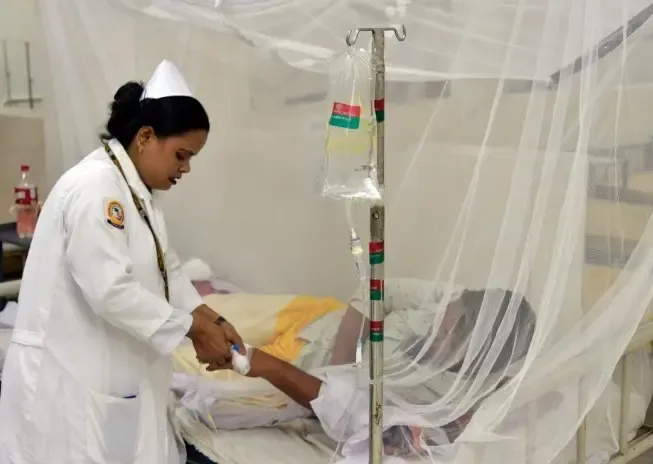
Dengue has now been reported in all 64 districts of Bangladesh, according to Bangladeshi daily Prothom Alo, with several hundred people being hospitalised every day. Deaths from the largely preventable illness are being reported on an almost daily basis, the newspaper noted.
This is no longer a Dhaka-centric public health crisis — the nationwide spread signals a structural gap in vector-control capacity at the district and upazila levels, where coordination and resources are thinner.
Government Response and Warning
Bangladesh's State Minister for Health and Family Welfare MA Muhit, speaking at an event at the Dhaka Reporters Unity on 9 September, acknowledged that infections had already begun to rise and warned that the peak period is expected in the last week of September and early October.
The government launched a three-month campaign earlier this month to contain the disease. However, critics argue that the response has been insufficient. Prothom Alo reported that despite years of media coverage and public debate, the government's commitment to dengue prevention has remained weak, with a lack of inter-agency coordination cited as the most persistent structural failure.
About Dengue Fever
Dengue is a viral disease transmitted primarily by Aedes aegypti mosquitoes. Symptoms include high fever, severe headache, muscle and joint pain, exhaustion, swollen lymph nodes, vomiting, and a characteristic rash. Severe cases can progress to dengue haemorrhagic fever, which carries a higher fatality risk if not managed promptly.
With the peak transmission window still days away, health authorities face mounting pressure to deploy resources rapidly. The coming fortnight will be critical in determining whether Bangladesh's emergency response can flatten the fatality curve.
Point of View
A government campaign, and a familiar critique about coordination failures — yet the structural problems remain unresolved. What is different this year is the speed: 87 deaths in the first three weeks of September, spread across all 64 districts, suggests the outbreak has outpaced the state's response capacity well before the declared peak. The three-month campaign launched this month looks reactive rather than anticipatory, and with the minister himself flagging a worse week ahead, the cost of institutional inertia is being counted in lives.
NationPress
21 Sept 2026
Frequently Asked Questions
How many people have died from dengue in Bangladesh in 2026?
As of 21 September 2026, Bangladesh has recorded 184 dengue deaths this year, according to the Directorate General of Health Services. Of these, 87 deaths occurred in September alone — the highest monthly toll of the year.
How many dengue cases have been confirmed in Bangladesh in 2026?
Bangladesh has confirmed 61,972 dengue cases since January 2026, with 1,593 new cases reported in the 24 hours ending on the morning of 21 September. The outbreak has now spread across all 64 districts of the country.
When is the dengue peak expected in Bangladesh?
State Minister for Health MA Muhit warned on 9 September that the peak transmission period is expected in the last week of September and early October 2026 . Health authorities are urging heightened vigilance during this window.
What is the Bangladesh government doing to contain the dengue outbreak?
The government launched a three-month dengue prevention campaign earlier in September 2026. However, critics and media reports have flagged persistent coordination failures across agencies as a structural weakness that has hampered an effective response for several years.
Why is dengue spreading so rapidly across Bangladesh?
Dengue is transmitted by Aedes mosquitoes, which breed in stagnant water — conditions exacerbated by monsoon rainfall. The post-monsoon period typically coincides with peak transmission. Analysts point to inadequate vector-control coordination at the district level and a reactive rather than preventive policy approach as key drivers of the annual surge.