Bangladesh Editors' Council condemns Dhaka journalist attack by Jamaat workers
Synopsis
Jamaat-e-Islami workers allegedly assaulted journalists covering a party event in Dhaka's Dhanmondi 32 on 23 June, injuring two reporters. Bangladesh's Editors' Council has rejected Jamaat's 'misunderstanding' defence and demanded a credible probe — even as the CPJ warns that the BNP government's first 100 days have delivered little on its promise to protect the press.
Key Takeaways
Jamaat-e-Islami workers allegedly attacked journalists in Dhanmondi 32, Dhaka on 23 June , during a party political programme.
Jamuna Television reporter Rabbi Siddiqui and Daily Sakal reporter Mahfuzur Rahman Shishir were among those injured.
Bangladesh's Editors' Council rejected Jamaat's 'misunderstanding' explanation and demanded a swift, impartial investigation.
The Committee to Protect Journalists (CPJ) earlier urged Prime Minister Tarique Rahman to act on press freedom pledges after his government's first 100 days .
Dozens of journalists perceived as supportive of former PM Sheikh Hasina have been detained or charged since August 2024 , according to the CPJ.
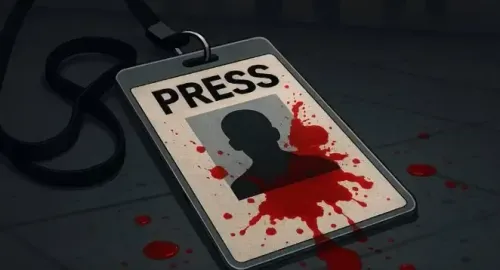
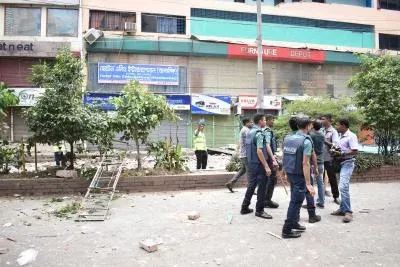
Bangladesh's Editors' Council has strongly condemned the assault on journalists in Dhaka's Dhanmondi area, demanding a swift, impartial, and credible investigation into the 23 June incident, according to local media reports. The attack, allegedly carried out by workers of the radical Islamist party Jamaat-e-Islami, left two journalists injured and has drawn sharp criticism from press freedom advocates.
What Happened in Dhanmondi 32
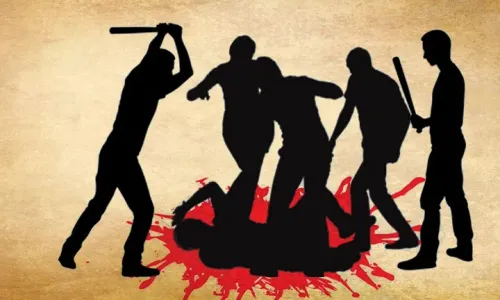
Workers of Jamaat-e-Islami allegedly attacked several journalists in the Dhanmondi 32 area on 23 June, accusing them of being associates of the Awami League. The incident occurred while journalists were covering a political programme organised by the Dhaka South unit of Jamaat.
Among those injured were Jamuna Television Senior Reporter Rabbi Siddiqui and Daily Sakal Multimedia Reporter Mahfuzur Rahman Shishir. Citing witnesses, Bangladeshi outlet Views Bangladesh reported that Shishir was grabbed by the collar before being punched and kicked after he fell to the ground.
Speaking to fellow journalists, Shishir said, 'Jamaat activists have beaten and injured me. This is shameful. You talk about press freedom. Is grabbing a journalist by the collar and beating him an example of that freedom?'
Editors' Council Rejects Jamaat's 'Misunderstanding' Claim
In a statement issued on Thursday, 26 June, the Editors' Council flatly rejected Jamaat's characterisation of the incident as a 'misunderstanding.' 'There can be no justification for attacking journalists while they are carrying out their professional duties,' the Council stated.
The organisation warned that such attacks threaten press freedom, impede journalists' right to gather news, and erode freedom of expression more broadly. It called on authorities to identify those responsible through a credible investigation and ensure appropriate legal action, while also urging the government to provide a safe environment for journalists to work without fear or intimidation.
A Pattern of Escalating Attacks
This incident is not isolated. According to reports, attacks on journalists in Bangladesh escalated during the tenure of the previous Muhammad Yunus-led interim government and have continued under the current Bangladesh Nationalist Party (BNP) administration led by Prime Minister Tarique Rahman.
Earlier in June, the Committee to Protect Journalists (CPJ) — an international press freedom group — urged Prime Minister Rahman to make good on his electoral promise to protect media freedom, following his government's first 100 days in office. The CPJ called for an end to what it described as 'partisan persecution of journalists.'
'Press freedom in Bangladesh has too often been treated as an opportunity for each new government to turn the law against journalists allegedly aligned with the previous administration. Prime Minister Tarique Rahman's government pledged to be different — but 100 days in, meaningful progress remains limited,' said Kunal Majumder, CPJ Asia-Pacific programme coordinator.
CPJ's Demands and the Broader Crisis
The CPJ noted that dozens of journalists whose coverage was perceived as supportive of former Prime Minister Sheikh Hasina have been detained or charged since August 2024. The organisation called for the release of imprisoned journalists, the dropping of politically motivated cases, an end to smear campaigns, and reforms to laws that enable the criminalisation of journalism.
'The government can start by releasing imprisoned journalists and dropping politically motivated cases, ending political vendettas against the press, protecting journalists from mob violence, halting smear campaigns, and fixing laws that make all of this possible,' Majumder added. 'These steps would ensure the same standard is applied to every journalist, regardless of who they are perceived to support. That is what breaking the cycle looks like.'
With the Editors' Council's condemnation now on record and international scrutiny mounting, the BNP government faces growing pressure to demonstrate that its commitment to press freedom extends beyond electoral rhetoric.
Point of View
Not a state actor, suggesting the climate of impunity has spread well beyond government corridors. Unless the Editors' Council's demand for a credible investigation produces arrests, the attack will be remembered as another data point in Bangladesh's deteriorating press freedom index — not a turning point.
NationPress
26 Jun 2026
Frequently Asked Questions
What happened to journalists in Dhanmondi, Dhaka on 23 June?
Workers of Jamaat-e-Islami allegedly attacked several journalists in the Dhanmondi 32 area of Dhaka on 23 June while they were covering a political programme organised by the party's Dhaka South unit. At least two reporters — Jamuna Television's Rabbi Siddiqui and Daily Sakal's Mahfuzur Rahman Shishir — were injured in the assault.
What did Bangladesh's Editors' Council say about the attack?
The Editors' Council strongly condemned the attack in a statement issued on 26 June, rejecting Jamaat-e-Islami's claim that a 'misunderstanding' caused the incident. It called for a swift, impartial, and credible investigation and urged authorities to take appropriate legal action against those responsible.
Why did Jamaat-e-Islami workers allegedly target the journalists?
According to reports, Jamaat workers accused the journalists of being associates of the Awami League, the party of former Prime Minister Sheikh Hasina. The journalists were present to cover a Jamaat political programme when the alleged assault took place.
What has the Committee to Protect Journalists said about press freedom in Bangladesh?
The CPJ urged Prime Minister Tarique Rahman to honour his electoral pledge to protect media freedom, warning that his government's first 100 days had delivered limited progress. The organisation noted that dozens of journalists perceived as supportive of Sheikh Hasina have been detained or charged since August 2024 and called for their release and the dropping of politically motivated cases.
Is the Dhanmondi attack part of a broader pattern in Bangladesh?
Yes. Attacks on journalists reportedly escalated during the previous Muhammad Yunus-led interim government and have continued under the current BNP administration. The CPJ has described the pattern as 'partisan persecution of journalists,' with successive governments using legal and extrajudicial means against reporters perceived as aligned with rival political parties.