Are Secret Bomb Kitchens and Looted Arms Putting Bangladesh’s Elections at Risk?
Synopsis
Bangladesh's escalating criminal activities threaten the upcoming elections. With gangs looting weapons and establishing bomb-making facilities, the nation's security is at stake. As political tensions rise, the potential for violence looms large, raising concerns for both Bangladesh and India.
Key Takeaways
Rising crime in Bangladesh threatens electoral integrity.
Gangs have looted firearms, enhancing their influence.
Bomb-making facilities pose a significant security risk.
Political instability allows gangs to operate with impunity.
Collaboration with external agencies like ISI raises concerns.
New Delhi, Dec 1 (NationPress) Bangladesh is experiencing a notable surge in its criminal underworld, where violence and extortion are becoming commonplace. Following the unrest in 2024 that resulted in the collapse of the Sheikh Hasina administration, the nation has been engulfed in turmoil.
While the security forces in Bangladesh were preoccupied with managing the chaos, a significant expansion of a vast criminal network occurred. Numerous police stations and outposts in Dhaka were systematically looted by members of prominent gangs. These criminals seized SMGs, LMGs, pistols, shotguns, and Chinese rifles, which were subsequently transported to the Geneva Camp and Pallabi Bihari Camp—now recognized as major hubs for illicit activities.
Reports from intelligence agencies indicate that these gangs are heavily involved in drug trafficking, theft, and extortion. Several youth gangs within these organizations are engaged in extensive drug transactions and coercive practices.
Officials reveal that these gangs are not a new phenomenon; they have existed for a long time but were kept in check by Hasina's administration. However, since the fall of her government on August 5, 2024, these gangs have re-emerged and are currently flourishing in Dhaka due to decreased oversight.
Another official voiced concerns about the open operation of these gangs, stating that they face minimal restrictions. While there appears to be some political support for these groups, the reality is that Dhaka's security framework is overwhelmed and unable to effectively address this issue. The nation is gearing up for a critical election, and security forces are focused on ensuring a smooth electoral process, allowing these gangs to thrive in densely populated areas like the Bihari camps.
Indian intelligence agencies assert that the rise of such gangs poses risks not only to Bangladesh's security but also to India's national safety. Beyond engaging in drug trafficking and extortion, these gangs have established permanent bomb-making facilities in Sectors 4 and 7 of the Geneva Camp.
These facilities are referred to as secret kitchens for bomb manufacturing by Bangladeshi authorities. Officials in New Delhi caution that these secret kitchens represent a significant security threat, as these gangs lack the ideological motivations characteristic of established terrorist organizations in Bangladesh.
Agencies such as the ISI may seek to leverage these gangs' capabilities. They could produce bombs in substantial quantities for financial gain. The ISI is likely to acquire these explosives and distribute them to terror factions operating within Bangladesh.
Pakistan has ambitious plans in Bangladesh following the fall of the Hasina government, primarily aimed at undermining India. They have dispatched ISI and military officials to Dhaka to engage with leaders of terror groups. The ISI aims to facilitate cooperation between terror organizations in Bangladesh and Pakistan, even sending high-ranking members of Lashkar-e-Taiba to train and coordinate with factions like Harkat-ul-Jihadi Islami (HuJI) and Jamaat-ul-Mujahideen Bangladesh (JuMB).
Plans are also underway to send Lashkar-e-Taiba chief Hafiz Saeed to Bangladesh shortly. Although Bangladeshi police are attempting to clamp down on these gangs, their efforts have met with limited success. Many believe these gangs receive political backing, raising concerns as elections draw near.
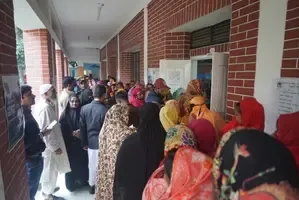
A stable and peaceful Bangladesh is vital for India. New Delhi is eager to reset relations with Dhaka, and achieving this requires a peaceful and transparent electoral process. There are fears of potential violence during the elections scheduled for February, with some politicians likely to exploit these gangs for protection.
Officials warn that given the vast arsenal these gangs possess and their established networks, there is a significant risk that vested interests may employ them to disrupt Bangladesh's elections.
Point of View
It's imperative to reflect on the current state of Bangladesh's security landscape. The resurgence of criminal gangs amidst political upheaval is alarming. As we approach crucial elections, safeguarding democratic processes must remain a priority, and all stakeholders should work together to ensure peace and stability.
NationPress
19 Sept 2026
Frequently Asked Questions
What is the current situation in Bangladesh regarding crime?
Bangladesh is facing a significant rise in crime, particularly involving gangs engaging in violence and extortion, especially following the political unrest that led to the fall of the Sheikh Hasina government.
How are these gangs impacting the upcoming elections?
The gangs are posing a serious threat to the electoral process, with concerns that they might be used by politicians for protection, potentially leading to violence during the elections.
What are the bomb-making facilities mentioned?
The bomb-making facilities, referred to as 'secret kitchens', have been established by gangs in the Geneva Camp, raising significant security concerns for both Bangladesh and neighboring India.
What is the role of external agencies like the ISI?
Agencies like the ISI are reportedly looking to exploit the capabilities of these gangs to further their interests, including the procurement of explosives for terror activities.
Why is a stable Bangladesh important for India?
A stable and peaceful Bangladesh is crucial for India as it seeks to maintain regional security and strengthen diplomatic ties with Dhaka, especially in light of potential threats from organized crime and terrorism.