Are Bangladesh Elections Facing Uncertainty Amid US Withdrawal?
Synopsis
The upcoming elections in Bangladesh cast a shadow of uncertainty as US support diminishes, raising alarms about democratic integrity and regional stability. With geopolitical implications for India, the situation calls for attention as the nation navigates political transitions amidst ongoing social challenges.
Key Takeaways
US engagement in Bangladesh is declining , raising concerns about democratic support.
The upcoming elections face uncertainty regarding their fairness and credibility.
Regional dynamics and political transitions complicate the situation.
Bangladesh struggles with ongoing challenges, including poverty and environmental risks.
Sustained international involvement is essential for democratic institutions.
Washington, Jan 28 (NationPress) Concerns are mounting regarding the upcoming elections in Bangladesh as the US's involvement wanes and support for democracy diminishes, leading to worries about the nation's political stability, which has significant implications for India’s security landscape, a senior US legislator indicated.
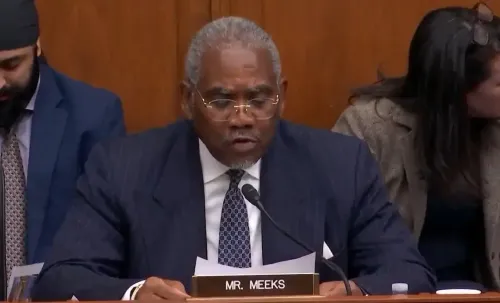
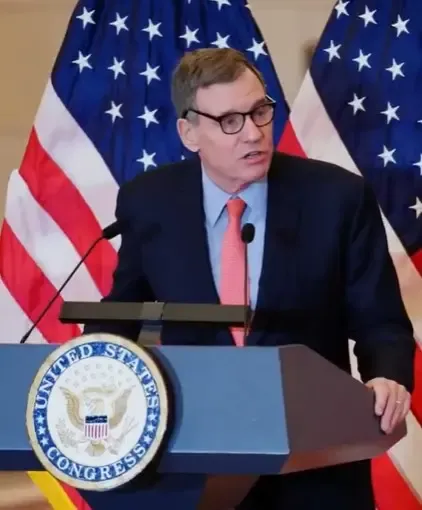
Mark Warner, the chairman of the Senate Intelligence Committee, shared in an exclusive interview with IANS that he is unable to ascertain whether the elections scheduled for February 12 will be free and fair. “I do not know,” he stated when queried about the elections' credibility.
Warner noted that the US's influence has lessened on the ground. “With the dismantling of American soft power and USAID… we don’t have the same connections now that we had,” he referred to the cessation of USAID by the Trump Administration.
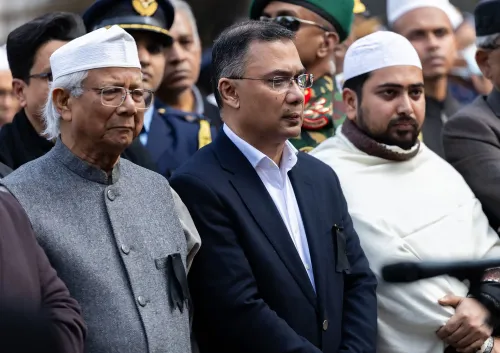
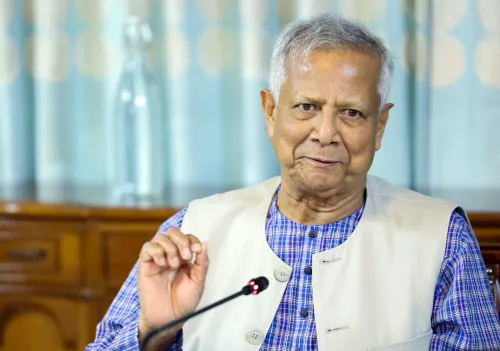
He expressed that there was initial optimism following the political transition in Bangladesh. “We were all hopeful… after the revolution,” Warner remarked, alluding to the advent of Mohammad Yunus as a temporary caretaker.
However, he mentioned that this optimism has dissipated. “The young people in Bangladesh are finding it’s harder to govern,” he stated.
Warner warned that regional dynamics could further exacerbate the situation. “I’m not sure how much resentment on the Bangladesh side, because I believe the former prime minister has still sought refuge… in India,” he commented.
Despite the prevailing uncertainty, he expressed hope that the electoral process would remain democratic. “I’m hopeful for free elections in Bangladesh,” he responded to a query.
Warner pointed out that Bangladesh is grappling with multiple challenges beyond the political sphere. He highlighted poverty, economic strain, and environmental threats as ongoing issues.
Addressing concerns regarding extremism, Warner advised against making broad generalizations. “We’ve not seen the radical Islamic ideology appear too much in Bangladesh,” he observed, emphasizing that isolated incidents should not dictate the country’s trajectory.
He positioned Bangladesh within the broader context of India’s security framework, stating, “India lives in a dangerous neighborhood.”
Warner identified challenges not only within Bangladesh but also in Myanmar and Pakistan. He noted that instability in the region poses long-term risks for India.
He remarked that the decline in US development assistance carries strategic implications. “America’s power came not just through its military and business,” he explained.
For many years, he noted, US influence also stemmed from development and democracy-promotion efforts. “Soft power on how you assist economic development and democracy-building” has been crucial, he added.
Warner indicated that reductions in these programs have diminished US leverage in countries like Bangladesh and warned that lapses in engagement could arise during critical political transitions.
He underscored the necessity of sustained international involvement. Warner argued that democratic institutions require long-term support, rather than sporadic focus.
Current developments in Bangladesh, he asserted, also intersect with broader geopolitical rivalries in South Asia.
Bangladesh has experienced significant political transformations in recent years, with its elections closely monitored by neighboring countries and global partners.
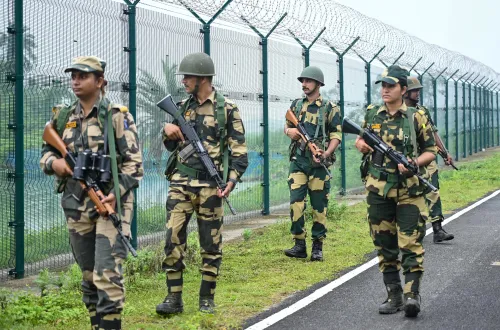
For India, maintaining stability in Bangladesh is crucial, given their extensive border, robust trade relations, and shared security concerns related to migration and regional power dynamics.
Point of View
It is essential to acknowledge the complexities surrounding Bangladesh's political landscape. While the uncertainty is palpable, our commitment remains steadfast in delivering unbiased coverage. We stand with the nation in its pursuit of democratic principles and resilience amid challenges.
NationPress
23 Sept 2026
Frequently Asked Questions
What are the implications of US withdrawal from Bangladesh?
The withdrawal of US support could lead to diminished political stability and democratic integrity in Bangladesh, affecting regional security dynamics.
How does Bangladesh's political situation impact India?
Bangladesh’s stability is crucial for India due to shared borders and security concerns, particularly regarding migration and regional influence.
What challenges does Bangladesh face besides political issues?
In addition to political instability, Bangladesh contends with persistent challenges such as poverty, economic stress, and environmental threats.
Is there a risk of extremism in Bangladesh?
While isolated incidents have occurred, the radical Islamic ideology has not significantly manifested in Bangladesh, according to recent assessments.
What role does US engagement play in Bangladesh?
US engagement historically provided soft power and support for development and democracy, influencing political stability and governance.