Why Do Bangladesh's Elections Matter So Much to India?
Synopsis
As Bangladesh's elections unfold amid reports of violence, the implications for India are significant. With a shared border of 4,000 kilometers, the stability of Bangladesh directly affects India's security and diplomatic relations.
Key Takeaways
Bangladesh's elections are critical for regional stability.
India shares a 4,000-km border with Bangladesh, impacting security.
The BNP is seen as a more favorable partner compared to the Jamaat .
Political stability in Bangladesh is essential for India's Act East policy.
Close monitoring of the electoral outcomes is vital for India .
New Delhi, Feb 12 (NationPress) The highly anticipated elections in Bangladesh commenced on Thursday, marked by reports of vote theft and violence.
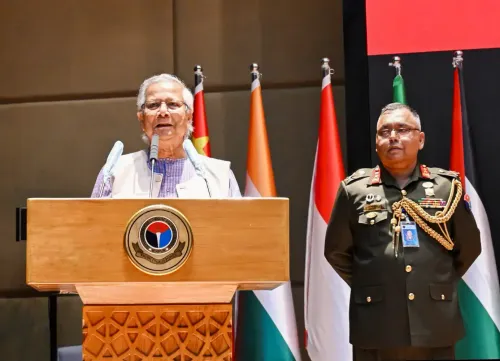
Following the removal of Sheikh Hasina, relations between India and Bangladesh have significantly deteriorated, with the interim government headed by caretaker Muhammad Yunus leaning increasingly towards Pakistan and China.
Due to Islamabad's influence, he has enacted policies that adversely affect India's interests.
India has maintained a firm stance advocating for the restoration of democracy in Bangladesh, emphasizing the necessity for elections to take place promptly.
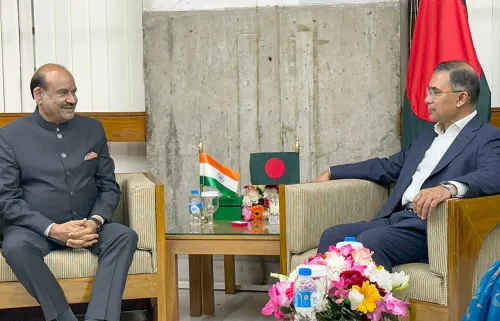
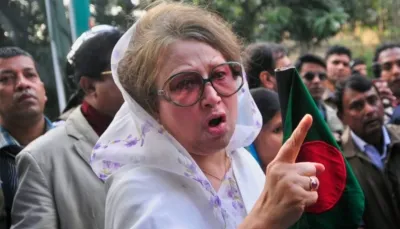
Engagement with members of the Bangladesh Nationalist Party (BNP), the leading contender in these elections, has been ongoing. Both parties have expressed a willingness to reestablish ties based on the election results.
New Delhi is closely monitoring the elections as they hold significant implications for India, particularly concerning security.
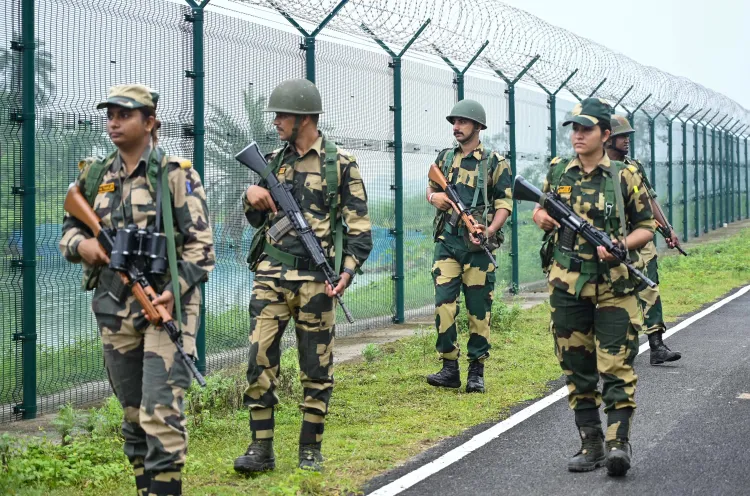
India shares a vast 4,000-kilometre border with Bangladesh, the longest with any neighboring country. A stable Bangladesh is vital, especially since numerous sections of this border are unfenced, facilitating illegal immigration, cattle smuggling, narcotics trade, and the circulation of counterfeit currency.
An official emphasized that the stability of Bangladesh is a pressing concern. A robust government in Bangladesh would enhance border security through diplomatic engagement.
There are also apprehensions regarding terrorism from Bangladesh infiltrating India.
Under Yunus, several radicals and terrorists have been released, receiving training from the ISI to potentially target India.
Before the downfall of the Sheikh Hasina administration, counter-terrorism cooperation had been a cornerstone of the bilateral relationship. Joint counter-terror operations had been effectively coordinated.
India aims to maintain this balance, making the establishment of a democratically elected government essential.
Bangladesh and India have long been economic partners. A stable Bangladesh is crucial for India’s Act East policy. During Hasina’s leadership, economic cooperation expanded beyond trade to include energy collaboration and power exchange.
These matters are significant, and both nations wish to preserve their integrity. Experts suggest that this stability hinges on political continuity.
Any disruption in Bangladesh could jeopardize the progress both nations have achieved over the years. India hopes for a BNP victory, as collaboration with this party would be more manageable compared to the Jamaat-e-Islami.
An official remarked that it would be incorrect to assume that ties would completely collapse if the Jamaat comes to power. Past collaborations occurred when the Jamaat was allied with the BNP. However, the current political landscape is different, with the Jamaat and BNP now in opposition to each other, complicating relations with a Jamaat government, known for its proximity to Pakistan.
Additionally, the Jamaat has adopted a hardline approach and harbors numerous anti-India radicals. Given these considerations, a BNP government would be more favorable for India.
Nonetheless, the Jamaat acknowledges the need to maintain some level of connection with India.
At a recent press briefing, Jamaat leader Shafiqul Rahman remarked on relations with India, stating: "Can you see how colorful it is?"
The Jamaat and BNP have exchanged accusations regarding their relationships with India. The Jamaat claims that the BNP is overly aligned with India, while the BNP accuses the Jamaat of being a Pakistan proxy.
Another official highlighted the necessity of a smooth electoral process in Bangladesh to establish a government. Under Yunus, interactions had become extremely challenging due to his complete subservience to Pakistan. In contrast, a democratically elected administration would foster a more constructive dialogue, the official noted.
Point of View
It is imperative to recognize that stability in Bangladesh is vital for India's national interests. The ongoing elections present a pivotal moment that could shape the future of bilateral relations, and our commitment is to advocate for democratic processes that ensure regional security and cooperation.
NationPress
23 Sept 2026