Bangladesh garment workers block Dhaka-Tangail highway, torch police box over Tk 30,000 wage demand
Synopsis
Bangladesh's garment heartland ground to a halt on 1 November as workers in Gazipur and Ashulia blocked a major highway, torched a police box, and forced over 50 factory closures — all demanding a Tk 30,000 minimum monthly wage. With BGB troops deployed and clashes leaving a police officer injured, the protest marks one of the most disruptive wage actions in recent months in the sector that drives Bangladesh's export economy.
Key Takeaways
Garment workers blocked the Dhaka-Tangail highway in Gazipur from 9:30 am on 1 November , demanding a minimum monthly wage of Tk 30,000 .
Protesters set fire to a police box in Konabari ; five BGB platoons were deployed to manage the unrest.
Over 50 garment factories in Ashulia declared a holiday amid parallel protests demanding higher wages and an end to blacklisting.
At least 11 factories in Kathgara had already announced closures on Saturday , a day before the highway blockade.
One police officer was injured after being hit by bricks and stones thrown by protesters during clashes in Ashulia .
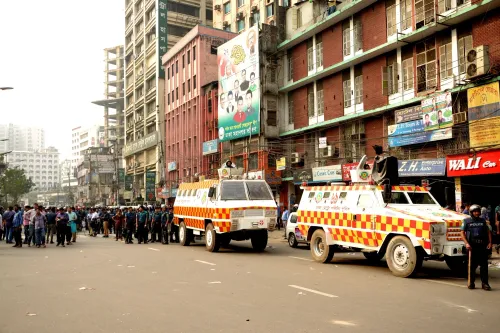
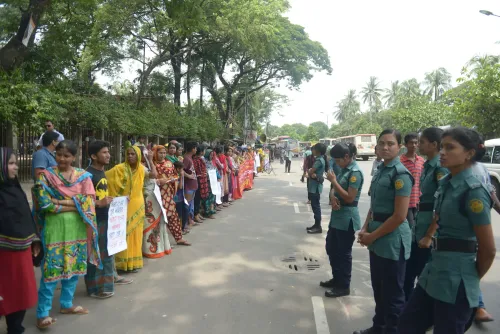
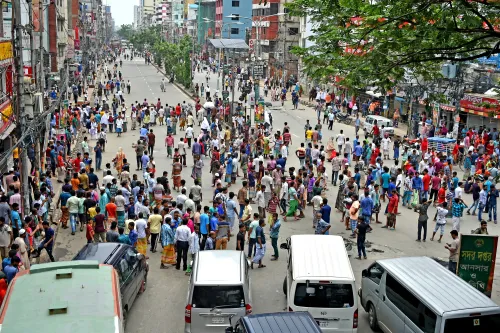
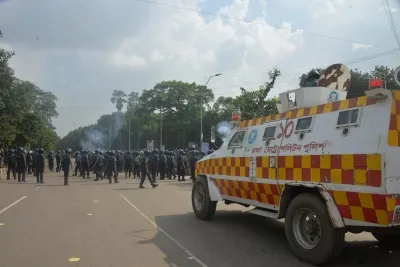
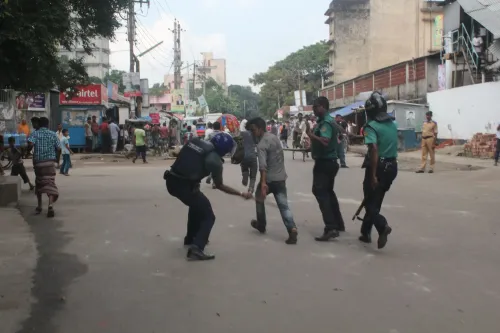
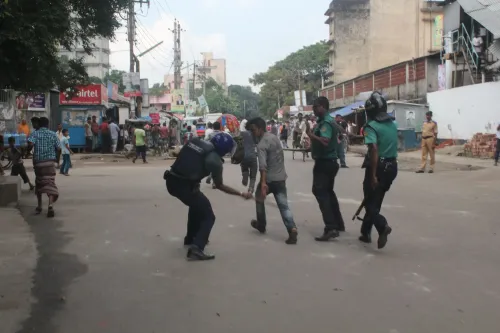
Garment workers in Bangladesh's Gazipur blocked the Dhaka-Tangail highway and set a police box in Konabari ablaze on Sunday, 1 November, as protests over a minimum monthly wage of Tk 30,000 intensified across key industrial zones. Five platoons of the Border Guard Bangladesh (BGB) were deployed to contain the unrest, according to local media reports.
How the Protests Unfolded
Workers began blocking the Dhaka-Tangail highway at 9:30 am, bringing traffic to a complete standstill. Protesters took positions at multiple points along the route, including Mouchak, Chandra Polli Bidyut, Safipur Bazar, and Telichala in Kaliakair upazila. Workers from numerous factories joined the demonstration, forcing the suspension of operations across several units.
Iftekhar Hossain, officer-in-charge of Konabari police station, confirmed that protesters set fire to a police box on the highway in the Konabari area. Shahidul Islam, officer-in-charge of Kaliakair police station, said traffic disruption persisted as workers continued to hold their positions, according to reports from the Dhaka Tribune.
Factory Closures and Wider Impact
The unrest extended beyond Gazipur. Over 50 garment factories in Ashulia announced a holiday on Sunday following similar worker protests demanding the Tk 30,000 minimum monthly wage, an end to blacklisting, and other benefits, according to industrial police cited by The Daily Star. Workers from several factories also gathered on the Abdullahpur-Baipail road in the Narsinghpur area to press their demands.
Notably, the protests had begun a day earlier. On Saturday, workers from various garment factories staged demonstrations in Ashulia, with at least 11 factories announcing closures in Kathgara and surrounding areas, the Dhaka Tribune reported.
Clashes and Injuries
Ashulia Industrial Police-1 Superintendent Mohammad Mominul Islam Bhuiyan said one police personnel was injured after being struck by bricks and stones hurled by protesters. Clashes broke out between workers and police as demonstrators also threw projectiles at nearby factory premises. An official from a garment factory in the Kathgara Amtala area, speaking on condition of anonymity, said the majority of factories in the zone had declared holidays.
Context and What's at Stake
Bangladesh's garment industry is the country's largest export earner and a critical supplier to global fashion brands. Recurring wage protests reflect a longstanding tension between factory owners — many of whom cite tight margins amid global buyer pressure — and workers who argue that existing pay scales have failed to keep pace with inflation. This is not the first large-scale shutdown in these industrial corridors; Ashulia and Gazipur have been flashpoints in previous wage cycles as well. The scale of Sunday's closures and the deployment of BGB forces signals that authorities view the situation as requiring urgent containment.
Point of View
A major highway blocked, BGB deployed — is a signal that Bangladesh's periodic garment wage cycle has entered a more volatile phase. The Tk 30,000 demand is not new, but the simultaneity of protests across Gazipur and Ashulia, and the willingness to destroy public property, suggests accumulated grievance rather than spontaneous action. Bangladesh's garment export machine depends on cheap labour to stay price-competitive; every escalation like this forces brands and buyers to reassess sourcing risk. The government faces a familiar bind: settle at Tk 30,000 and pressure factory owners, or hold firm and risk prolonged disruption to a sector that accounts for over 80% of the country's export revenue.
NationPress
1 Nov 2026
Frequently Asked Questions
Why are Bangladesh garment workers protesting in November 2024?
Workers are demanding a minimum monthly wage of Tk 30,000, along with an end to blacklisting and other benefits. The protests began on Saturday and escalated on Sunday, 1 November, with highway blockades and factory closures across Gazipur and Ashulia.
Which areas were most affected by the garment worker protests?
The Dhaka-Tangail highway in Gazipur was blocked at multiple points including Mouchak, Chandra Polli Bidyut, Safipur Bazar, and Telichala in Kaliakair upazila. Over 50 factories in Ashulia also declared holidays amid simultaneous protests there.
Were there any injuries or violence during the protests?
Yes. One police officer was injured after protesters threw bricks and stones during clashes in Ashulia, according to Ashulia Industrial Police-1 Superintendent Mohammad Mominul Islam Bhuiyan. Protesters also set a police box in Konabari on fire.
How did authorities respond to the highway blockade and unrest?
Five platoons of the Border Guard Bangladesh (BGB) were deployed in Gazipur to control the situation. Police officers from Konabari and Kaliakair stations monitored the highway disruptions, which persisted through the day.
What is the significance of the garment sector in Bangladesh?
Bangladesh's garment industry is the country's largest export earner, accounting for the vast majority of its export revenue and employing millions of workers. Wage protests and factory closures in the sector have recurring economic and political consequences for the country.