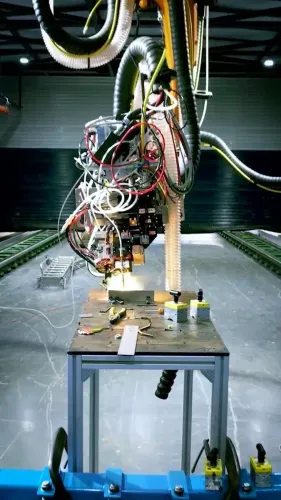
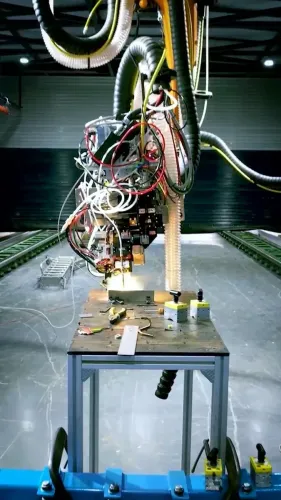
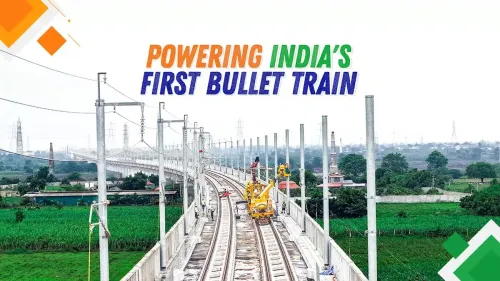
Shekhawat Spotlights Making of India's First Bullet Train

Synopsis
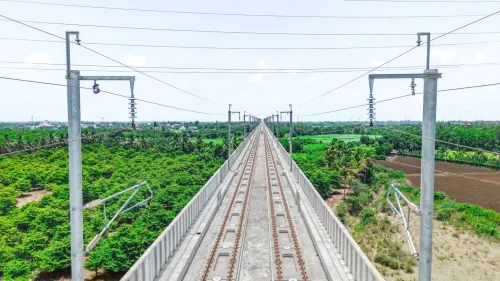
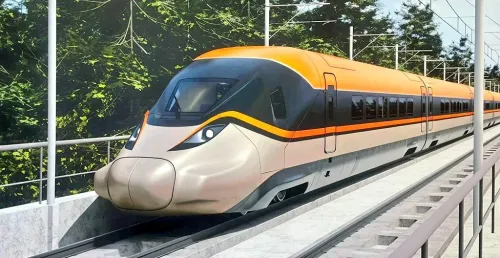
Union Minister Gajendra Singh Shekhawat shared a video on X spotlighting the making of India's first Bullet Train — the 508-km Mumbai-Ahmedabad High-Speed Rail Corridor built on Japanese Shinkansen technology with 81% JICA financing, first agreed in 2015.
Key Takeaways
Union Minister Gajendra Singh Shekhawat shared a 'making of' video about India's first Bullet Train on 1 November 2026 .
The Mumbai-Ahmedabad High-Speed Rail Corridor spans 508 km and is based on Japanese Shinkansen technology.
81 per cent of the project is financed through soft loans from Japan's JICA , agreed under a December 2015 bilateral MoU.
Indian Railways is the executing body, integrating a new high-speed standard into the national network.
The corridor is the anchor project under India's National Rail Plan , which envisions several high-speed lines across the country.
The project also includes a technology transfer component aimed at enabling domestic manufacturing and maintenance of high-speed rolling stock.
India's most ambitious railway project is getting a close-up. Union Culture and Tourism Minister Gajendra Singh Shekhawat on Sunday, 1 November 2026, shared a video on X teasing an inside look at the making of Bharat's first Bullet Train, inviting followers with a simple, charged question: 'Are you ready?'
The 508-km corridor that changed Indian rail ambition
The project at the heart of this moment is the Mumbai-Ahmedabad High-Speed Rail Corridor — a 508-kilometre line being built on Shinkansen technology sourced from Japan. The two countries signed a foundational MoU in December 2015, unlocking soft loans from the Japan International Cooperation Agency (JICA) that finance 81 per cent of the project cost, one of the most generous bilateral infrastructure financing deals India has ever secured.
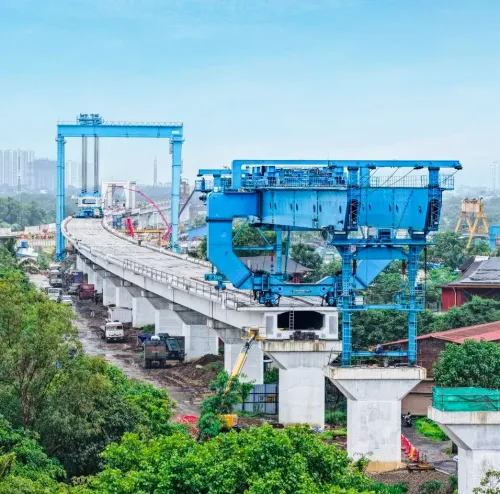
The corridor links Mumbai and Ahmedabad, two of India's largest commercial hubs, and promises to shrink a journey that takes roughly six hours by conventional express train to under three. Indian Railways is the executing authority, integrating an entirely new technology standard — elevated viaducts, dedicated track, pressurised coaches — into a network that still runs some of the world's busiest mixed-traffic lines.
Japan's fingerprints: technology transfer on a national scale
The Shinkansen is not simply a fast train imported wholesale — it is a philosophy of precision engineering arriving in Indian soil. Under the 2015 bilateral agreement, Japan committed to transferring design, construction, and operations expertise, with a long-term goal of enabling India to manufacture and maintain high-speed rolling stock domestically. That technology-transfer dimension places this project squarely inside India's broader push to graduate from buyer to builder in advanced infrastructure.
The corridor is also the anchor of a larger vision. India's National Rail Plan envisions multiple high-speed corridors radiating from major metros; the Mumbai-Ahmedabad line is the proof-of-concept that must succeed before the rest can be funded, designed, and sold to a sceptical parliamentary gallery still watching land-acquisition timelines and cost revisions.
Why a minister of culture is amplifying a railway story
Shekhawat's post is a reminder that in the current political moment, infrastructure is culture — a statement about national identity as much as logistics. The Bullet Train has long been invoked in public discourse as a symbol of an aspirational, modernising India, and a video framed as 'the making of' carries the register of a cinematic reveal, not a project update. The choice of that framing — building anticipation rather than announcing a completion — signals that the government sees communication around this project as part of the project itself.
Point of View
The government is reclaiming the project's aspirational identity ahead of what are expected to be critical construction milestones on the first operational section. The post also reflects a broader BJP communications pattern of positioning transformative infrastructure as a cultural statement — national pride delivered at 300 km/h. For Opposition benches, the test remains whether the 'making-of' video is followed by a credible commissioning date.
NationPress
1 Nov 2026
Frequently Asked Questions
What is India's first Bullet Train project?
It is the Mumbai-Ahmedabad High-Speed Rail Corridor, a 508-km line being built using Japanese Shinkansen technology under a bilateral agreement signed in December 2015.
Who is funding India's Bullet Train?
Japan's JICA (Japan International Cooperation Agency) is providing soft loans that cover 81 per cent of the project cost, making it one of the largest bilateral infrastructure financing deals in India's history.
What technology is used in India's Bullet Train?
The project uses Japan's Shinkansen high-speed rail technology, which includes dedicated elevated track, pressurised coaches, and a precision operations system — with a long-term goal of technology transfer to India.
Why did Gajendra Singh Shekhawat post about the Bullet Train?
As a senior Union Minister and BJP leader, Shekhawat shared a video on 1 November 2026 teasing a 'making of' look at the Bullet Train, framing the project as a milestone in India's modernisation story.
What is India's National Rail Plan and how does the Bullet Train fit in?
India's National Rail Plan envisions multiple high-speed corridors linking major cities; the Mumbai-Ahmedabad line is the first and serves as the proof-of-concept project that will shape the future of high-speed rail expansion across the country.