Giriraj Singh dismisses opposition rally as hollow show
Synopsis
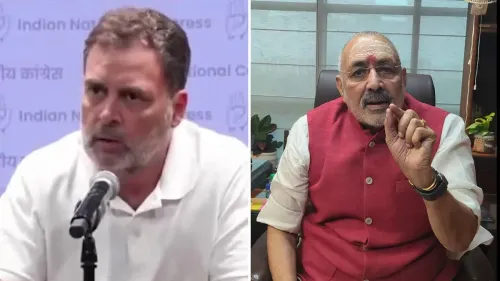
Union Textiles Minister Giriraj Singh rejected opposition claims of 10 lakh attendees at a 20-party Ramlila Maidan rally as false, calling the gathering a 'dhong' and arguing India's youth are nationalist and will not be swayed by such politics.
Key Takeaways
Giriraj Singh called the claim of 10 lakh attendees at an opposition rally 'outright lies' on 1 November 2026 .
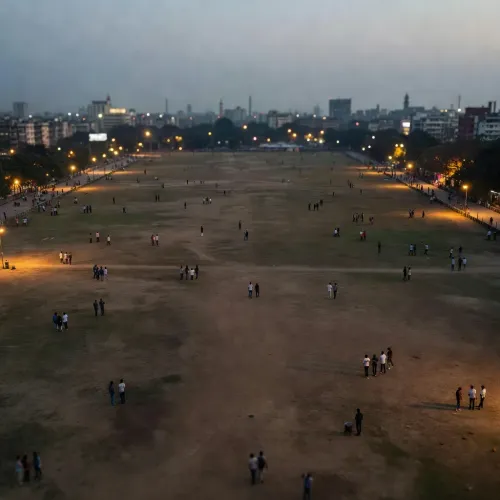
He questioned the physical capacity of Ramlila Maidan , arguing the public knows the ground cannot hold such numbers.
The minister described the 20-party opposition alliance as a dhong — a hollow pretence.
Singh argued India's youth is nationalist and that 'aerial and anarchic politics' will never succeed.
Official crowd estimates from Delhi police or municipal authorities had not been confirmed at time of posting.
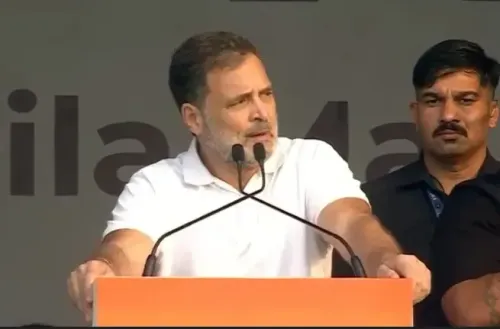
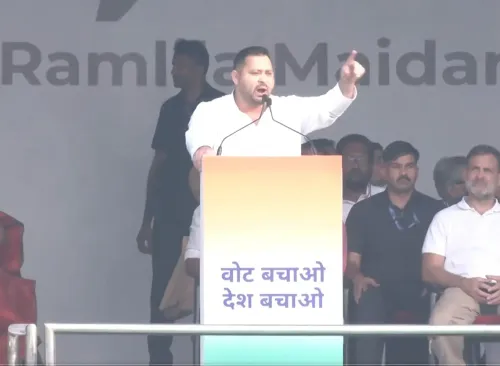
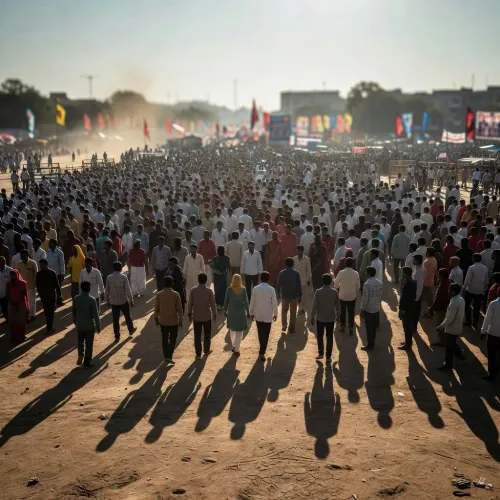
A 20-party opposition rally at Ramlila Maidan, New Delhi, claimed attendance of 10 lakh — and Union Textiles Minister Giriraj Singh was ready with a sharp, public rebuttal before the night was out.
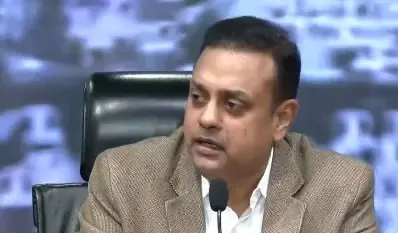
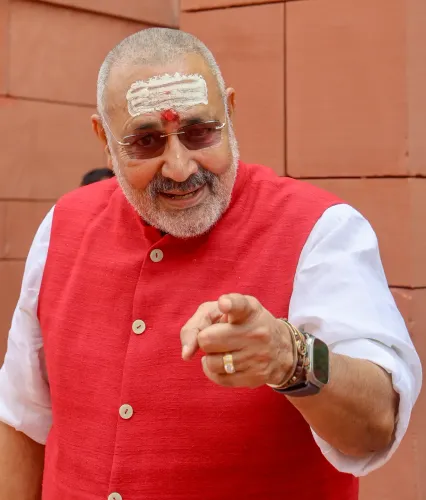
Posting on X on Sunday, 1 November 2026, Singh called the attendance figure a 'jhooth' — an outright lie — and questioned the very logic of the claim. 'Ramlila Maidan ki kshamata hi kitni hai, yah janta achhi tarah jaanti hai' ('The public knows exactly what Ramlila Maidan's capacity is'), he wrote, implying the ground simply cannot hold the numbers the opposition advertised.
The Ramlila Maidan capacity question
Ramlila Maidan is a storied public ground in central Delhi — the site of landmark rallies, protests, and mass gatherings since the independence era. Its holding capacity is frequently cited in political disputes precisely because it is a known, finite space, and both the ruling party and opposition have historically used official crowd estimates as a political weapon. Singh's invocation of the ground's capacity is a well-worn but effective rhetorical move: it shifts the burden from rhetoric to arithmetic.
The '20-party alliance' framing
Singh did not stop at the numbers. He described the multi-party gathering as a 'dhong' — a pretence or sham — suggesting that the alliance of 20 parties is held together by political convenience rather than genuine common ground. This follows a familiar pattern in Indian electoral politics: as opposition coalitions assemble, ruling-party figures characterise them as opportunistic, short-lived, and ideologically hollow. The minister's post fits squarely into that playbook.
Nationalism and the youth vote
The sharpest line in Singh's post may be its final one: 'Desh ka yuva rashtravadi hai' — India's youth is nationalist — and this kind of 'aerial and anarchic politics' will never succeed. By invoking young voters, Singh is contesting the opposition's implicit claim to represent frustration and aspiration among India's youth demographic. It is a direct argument about who owns the future electorate, not just today's rally.
Whether official police or municipal crowd estimates for the 1 November rally align with either side's figures remains to be confirmed. What is already clear is that the BJP's counter-messaging machinery moved within hours — and targeted the three pressure points that tend to land: the crowd number, the alliance's credibility, and the appeal to nationalist sentiment among young Indians.
Point of View
Attack the coalition's coherence, and plant a flag with young voters — all in three sentences. The move reflects a broader BJP strategy of pre-emptively delegitimising opposition mass mobilisations before independent crowd estimates can circulate. By anchoring the rebuttal to Ramlila Maidan's finite physical capacity, Singh forces a verifiable test rather than an ideological argument. The youth-nationalism framing is the sharpest edge: it signals that the ruling party intends to fight the next electoral cycle on identity and patriotism, not on the opposition's chosen terrain of grievance and alliance arithmetic.
NationPress
1 Nov 2026
Frequently Asked Questions
What did Giriraj Singh say about the opposition rally at Ramlila Maidan?
Singh called the claim of 10 lakh attendees an outright lie, questioned Ramlila Maidan's capacity to hold such numbers, described the 20-party gathering as a hollow pretence, and said India's nationalist youth would never be swayed by such politics.
How many people can Ramlila Maidan hold?
Ramlila Maidan in central Delhi is a large historic ground but has a finite capacity; official estimates vary by event configuration. Singh cited its well-known capacity limits as evidence that the 10 lakh figure was implausible.
Which opposition parties were involved in the Ramlila Maidan rally on 1 November 2026?
Singh referenced a 20-party opposition grouping, but the specific parties involved in the 1 November 2026 rally have not been independently verified from available information.
Why does crowd size at political rallies matter in India?
Crowd size is used by all parties as a proxy for public support and momentum; ruling parties routinely challenge inflated opposition figures, while opposition alliances use large rallies to signal unity and viability ahead of elections.
What is Giriraj Singh's political position?
Giriraj Singh is a senior BJP leader, Union Minister of Textiles in the Indian government, and a Lok Sabha Member of Parliament from Begusarai, Bihar.