Rahul Gandhi's Ramlila rally: spectacle vs ground reality in 2026
Synopsis
Rahul Gandhi's Ramlila Maidan rally was visually arresting — open bus, saffron-clad runner, thousands in attendance. But Congress won just 1 of 28 MLC seats across four states, and Modi's Rashtriya Ekta Diwas speech in Gujarat hit back without naming names. The gap between social media spectacle and ballot-box result is the real story here.
Key Takeaways
Rahul Gandhi held a large Opposition rally at Ramlila Maidan , New Delhi , on 1 November 2026 .
In recent MLC elections across 28 seats in four states , the Congress won just one seat .
The coalition behind Gandhi includes parties that recently suffered electoral defeats in West Bengal , Kerala , Maharashtra , and Jammu and Kashmir .
Gandhi has publicly named Chief Election Commissioner Gyanesh Kumar , Home Minister Amit Shah , and PM Modi as political targets.
PM Modi , speaking on Rashtriya Ekta Diwas in Gujarat , warned of forces 'engaged in conspiracies to divide the nation' and called for citizens to identify foreign links — without naming anyone directly.
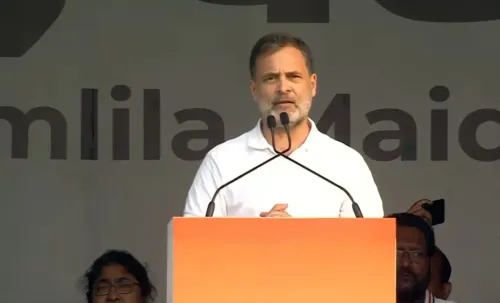
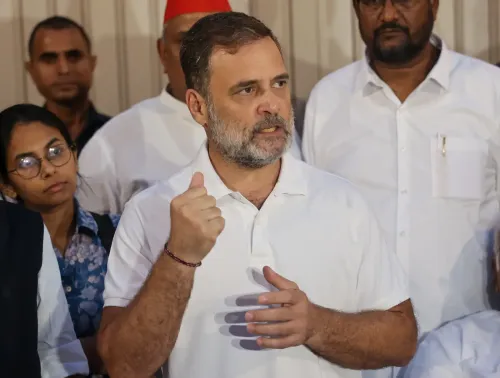
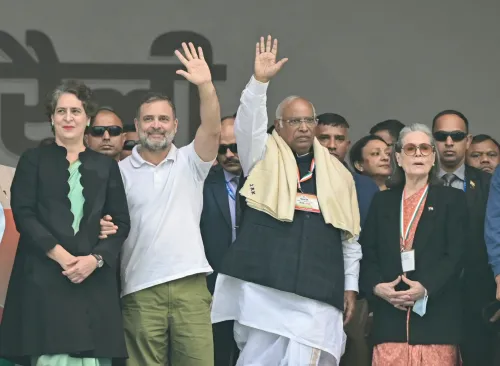
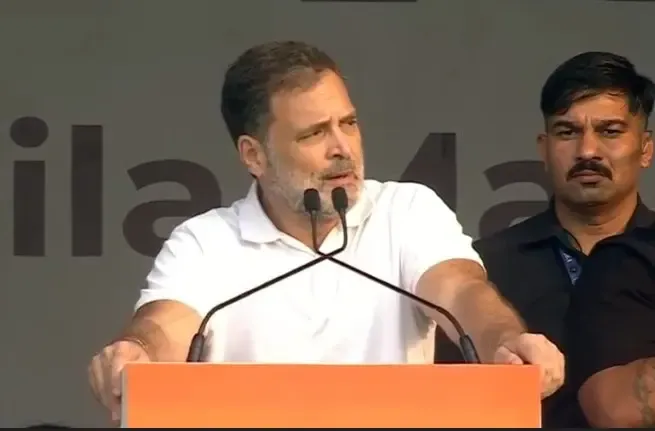
Rahul Gandhi's high-profile rally at Ramlila Maidan in New Delhi on 1 November 2026, complete with a dramatic open-bus procession flanked by Opposition leaders, has reignited debate over whether the Congress leader's street politics is translating into genuine electoral traction — or whether it remains a social media spectacle disconnected from ground reality.
The Rally and What It Signalled
The scenes were undeniably arresting: Rahul Gandhi seated at the front of an open bus, Opposition leaders ranged behind him, and a man in saffron headgear running barefoot with a fluttering Tricolour. Ramlila Maidan drew thousands, predominantly from Congress-ruled states, in a show of solidarity around an issue Gandhi is attempting to build into a broader movement for regime change. The event generated considerable traction on social media, with reels and posts recording high view counts.
Yet analysts note that viral visibility and electoral outcome are two different measurements. In an age of manufactured spectacle, a well-produced rally can dominate timelines without shifting a single vote.
The Electoral Reality Check
Recent by-elections offer a sobering counterpoint. In MLC elections across 28 seats in four states, the Indian National Congress won just one seat — a result attributed largely to the individual standing of the winning candidate rather than any broader wave generated by Gandhi's campaigning. These contests were fought on the ground, not on social media feeds.
Earlier, Gandhi attempted to weaponise the Special Intensive Revision (SIR) as a defining issue during the Bihar elections, but the effort failed to resonate with voters, who turned out in large numbers and handed a decisive victory to the Bharatiya Janata Party (BJP)-led National Democratic Alliance (NDA).
The Alliance Behind the Campaign
A closer look at the leaders who have rallied behind Gandhi reveals a coalition of parties that have each faced their own recent electoral reverses. Mamata Banerjee of the All India Trinamool Congress (TMC) lost the West Bengal Assembly elections; the Left has ceded its foothold in Kerala; Akhilesh Yadav is working to rebuild his base in Uttar Pradesh; Mehbooba Mufti's party suffered setbacks in the Jammu and Kashmir Assembly polls; and Farooq Abdullah's party is navigating internal discord. Sanjay Raut and Supriya Sule, meanwhile, represent parties that lost power in Maharashtra. Critics argue the grouping reads less like a unified ideological front and more like an assembly of political actors seeking rehabilitation.
Gandhi's Political Targets and the Constitutional Question
Gandhi has been explicit about his political targets: Chief Election Commissioner Gyanesh Kumar, Home Minister Amit Shah, and Prime Minister Narendra Modi. His activities in recent months — questioning the Election Commission of India (ECI), challenging electoral mandates, and organising what observers have called a mock Parliament — have drawn scrutiny.
Notably, he has been photographed repeatedly carrying a pocket-sized copy of the Constitution even as his public attacks have extended to constitutional institutions. Commentators have pointed to the contradiction. The ECI, the Supreme Court, and the office of the Prime Minister are, as critics and supporters alike acknowledge, open to scrutiny — but, as observers argue, substantiated criticism differs from allegations that have yet to be backed by verifiable evidence.
The episode is reminiscent of Gandhi's September 2013 intervention, when he denounced a controversial ordinance proposed by his own party's United Progressive Alliance (UPA) government at a press conference — tearing up a copy while then Prime Minister Manmohan Singh was on an official visit to the United States. Critics at the time called it theatrical; supporters said it showed independence. More than 13 years later, a similar debate over the line between political theatre and substantive opposition is playing out.
Modi's Rashtriya Ekta Diwas Remarks
Against this backdrop, Prime Minister Modi made pointed remarks during his speech in Gujarat on Rashtriya Ekta Diwas. Without naming anyone directly, he warned that certain forces were 'continuously engaged in conspiracies to divide the nation' and that attempts were being 'made to divide and pit against one another the children of Mother India.' He added that, after 'more than a decade of frustration and disappointment', these forces had 'come out in the open.'
Modi further called on citizens to 'identify who is secretly meeting whom abroad, which anti-India forces are supporting whom, and who is speaking the language of India's enemies,' urging collective vigilance against the use of social media 'as a weapon' to 'spread rumours' and 'damage India's image.' These remarks, observers note, were calibrated to invite inferences without spelling them out — a rhetorical strategy that simultaneously galvanises supporters and places the burden of denial on the Opposition.
As the political contest sharpens, the question of whether Gandhi's movement gains mass traction — or remains confined to the spectacle-sphere — will ultimately be answered at the ballot box, where India's voters have consistently exercised their own judgment.
Point of View
But the MLC results — one seat from 28 — are the more honest metric. Gandhi's current political project appears to be coalition-building among the electorally wounded rather than expansion into new voter blocs. Modi's Rashtriya Ekta Diwas remarks were strategically vague: strong enough to frame the narrative, careful enough to avoid the specificity that invites rebuttal. The deeper question neither side is addressing is whether India's democratic institutions — the ECI, the Supreme Court — are strengthened or weakened when they become the primary terrain of partisan combat, from both sides of the aisle.
NationPress
1 Nov 2026
Frequently Asked Questions
What happened at Rahul Gandhi's Ramlila Maidan rally on 1 November 2026?
Rahul Gandhi led a large Opposition rally at Ramlila Maidan in New Delhi on 1 November 2026, arriving in an open bus flanked by Opposition leaders in a high-profile show of solidarity. The event drew thousands of attendees, predominantly from Congress-ruled states, and generated significant social media attention.
How has Congress performed in recent elections despite the rallies?
Congress won just one of 28 seats contested in recent MLC elections across four states — a result attributed mainly to the individual candidate's standing rather than any wave generated by Rahul Gandhi. The party also failed to make the SIR a decisive issue in the Bihar elections, where the BJP-led NDA won convincingly.
Which Opposition leaders joined Rahul Gandhi at Ramlila Maidan?
Leaders present or supportive included Mamata Banerjee, Akhilesh Yadav, Mehbooba Mufti, Farooq Abdullah, Sanjay Raut, and Supriya Sule — most of whom lead parties that have faced significant electoral setbacks in their respective states in recent contests.
What did PM Modi say on Rashtriya Ekta Diwas about the Opposition?
Speaking in Gujarat on Rashtriya Ekta Diwas, PM Modi warned without naming anyone that certain forces were 'engaged in conspiracies to divide the nation' and called on citizens to identify who was meeting foreign contacts, which anti-India forces were supporting domestic actors, and how social media was being used to damage India's image.
What is the historical parallel being drawn to Rahul Gandhi's 2013 ordinance episode?
In September 2013, Rahul Gandhi publicly denounced a controversial ordinance proposed by his own party's UPA government — tearing up a copy at a press conference while PM Manmohan Singh was abroad. Critics draw a parallel between that act of political theatre and his current campaign against constitutional institutions, arguing the style of confrontational spectacle has remained consistent over more than 13 years.