World Bank: Pakistan drives extreme poverty surge in MENAAP region
Synopsis
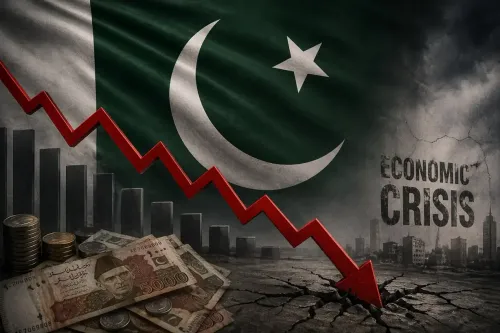
Nearly half of the MENAAP region's extreme poor — those living on under $3 a day — are in Pakistan, according to the World Bank's October 2026 update. With the Strait of Hormuz closed and regional economies set to shrink by 2.1% in 2026, Pakistan's poverty crisis is no longer just a domestic story — it is the region's defining economic fault line.
Key Takeaways
Pakistan accounts for nearly 48% of the MENAAP region's population living below the extreme-poverty line of $3 a day , according to the World Bank's October 2026 economic update.
A further 47% of the region's extreme poor live in Afghanistan , Syria , and Yemen .
MENAAP economies that grew an average of 3.3% in 2025 are projected to contract by 2.1% in 2026 , driven by a conflict that began in February 2026 .
The closure of the Strait of Hormuz has hit Gulf oil producers hardest — unlike previous energy crises — and disrupted tourism, aviation, and supply chains.
Pakistan's economy is forecast to grow 3.8% in 2026-27 , with a fiscal deficit of 3.5% of GDP .
A World Bank report has identified Pakistan as the primary driver of rising extreme poverty across the Middle East, North Africa, Afghanistan, and Pakistan (MENAAP) region, with nearly half of the region's poorest people now residing there. The findings, published in the bank's October 2026 Middle East, North Africa, Afghanistan and Pakistan Economic Update, paint a sobering picture of deepening deprivation in a region already battered by conflict, climate stress, and trade disruption.
Pakistan at the Centre of Regional Poverty
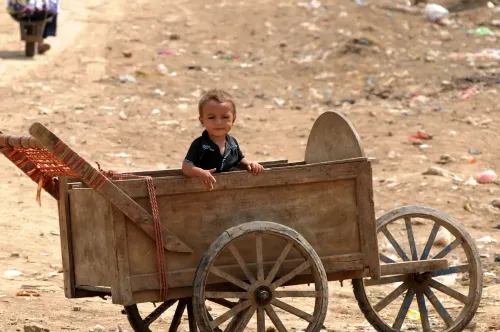
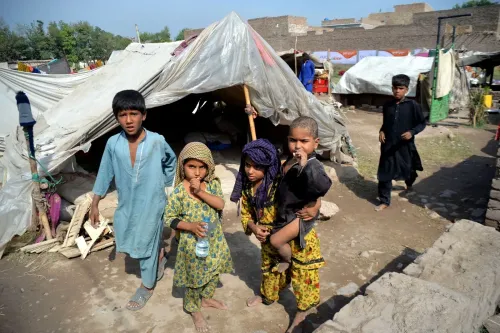
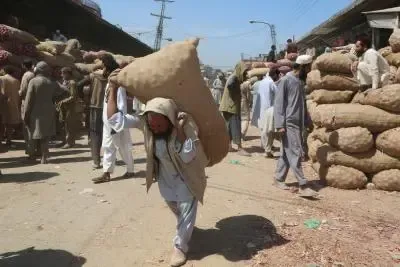
According to the World Bank report, nearly 48% of the MENAAP region's population living below the extreme-poverty line of $3 a day is concentrated in Pakistan. A further 47% of the region's extreme poor reside in Afghanistan, Syria, and Yemen. The report describes this concentration as "especially pronounced," noting that a handful of countries account for virtually the entire regional poverty burden.
The findings underscore how Pakistan — the region's most populous nation — has become the dominant face of extreme deprivation in an arc stretching from North Africa to South Asia. Conflict, disrupted trade, and escalating climate risks are compounding the pressures on households already struggling to afford food and basic essentials.
Regional Economy Faces Sharp Contraction
The report outlines a dramatic economic reversal for the broader MENAAP region. After expanding by an average of 3.3% in 2025, regional economies are projected to contract by 2.1% on average in 2026 — a swing largely attributed to a conflict that began in February 2026.
Notably, the report flags that Gulf oil producers — historically insulated or even buoyed during energy crises — have this time borne some of the highest costs, because the Strait of Hormuz has been closed. The disruption has cascaded well beyond energy markets. "The impact of this conflict is not limited to the energy sector. It is also severely disrupting tourism, aviation and supply chains. Rising uncertainty is also weighing on financial markets and business confidence," the report stated.
Pakistan's Own Economic Outlook
Despite its outsized share of regional poverty, the World Bank projects Pakistan's economy will grow by 3.8% in the 2026-27 fiscal year, with its fiscal deficit expected to stand at 3.5% of GDP. Critics argue, however, that aggregate growth figures mask the depth of household-level distress, particularly in rural and peri-urban areas where food insecurity is most acute.
This is not the first time the World Bank has flagged Pakistan's poverty trajectory — earlier editions of the same update series have tracked a deteriorating trend since the currency and debt crises of 2022-23. The October 2026 edition suggests that trajectory has not reversed.
What the Numbers Mean for the Region
The combined share of extreme poverty in Pakistan, Afghanistan, Syria, and Yemen — nearly 95% of the MENAAP total, according to the report's figures — reflects how geopolitical fragility and economic vulnerability are mutually reinforcing. Countries without durable peace or macroeconomic stability are locked out of the investment and trade flows that could reduce poverty at scale.
As the region heads deeper into 2026, the World Bank's projections suggest the economic outlook will worsen before it improves, with the ripple effects of the Hormuz disruption and conflict yet to fully work through supply chains and government finances.
Point of View
But the more uncomfortable truth is structural: Pakistan has repeatedly appeared in these updates without a credible poverty-reduction trajectory taking hold. Aggregate GDP growth of 3.8% is meaningless if it does not reach the households the report is counting. Meanwhile, the Hormuz closure reorders who bears risk in the region — Gulf exporters are no longer a safe harbour — which will reshape aid flows, remittances, and diaspora investment that Pakistan depends on. The real question the report leaves unanswered is whether any international financial architecture is equipped to address a poverty crisis of this scale in a nuclear-armed state facing simultaneous climate, fiscal, and geopolitical shocks.
NationPress
1 Nov 2026
Frequently Asked Questions
What does the World Bank's October 2026 report say about Pakistan's poverty?
The World Bank's October 2026 MENAAP Economic Update finds that nearly 48% of the region's population living below the extreme-poverty line of $3 a day resides in Pakistan. The report identifies Pakistan as the primary driver of rising extreme poverty across the Middle East, North Africa, Afghanistan, and Pakistan region.
Which countries account for most of the MENAAP region's extreme poor?
Pakistan alone accounts for nearly 48% of the MENAAP region's extreme poor. Afghanistan, Syria, and Yemen together account for a further 47%, meaning these four countries represent virtually the entire regional poverty burden.
Why is the MENAAP regional economy expected to contract in 2026?
The World Bank projects the MENAAP region's economies will contract by an average of 2.1% in 2026, after growing 3.3% in 2025. The primary driver is a conflict that began in February 2026, which has closed the Strait of Hormuz, disrupted tourism, aviation, and supply chains, and weighed on business confidence and financial markets.
What is Pakistan's own economic growth forecast for 2026-27?
The World Bank forecasts Pakistan's economy will grow by 3.8% in the 2026-27 fiscal year, with a fiscal deficit of 3.5% of GDP. However, analysts note that headline growth figures may not reflect the scale of household-level poverty highlighted elsewhere in the same report.
Why are Gulf oil producers suffering more than usual from this energy crisis?
Unlike previous energy shocks — when Gulf oil exporters typically benefited from higher prices — the current crisis involves the closure of the Strait of Hormuz, which has directly hit Gulf producers' ability to export. The World Bank report notes this makes the present conflict's economic impact fundamentally different from earlier crises.